


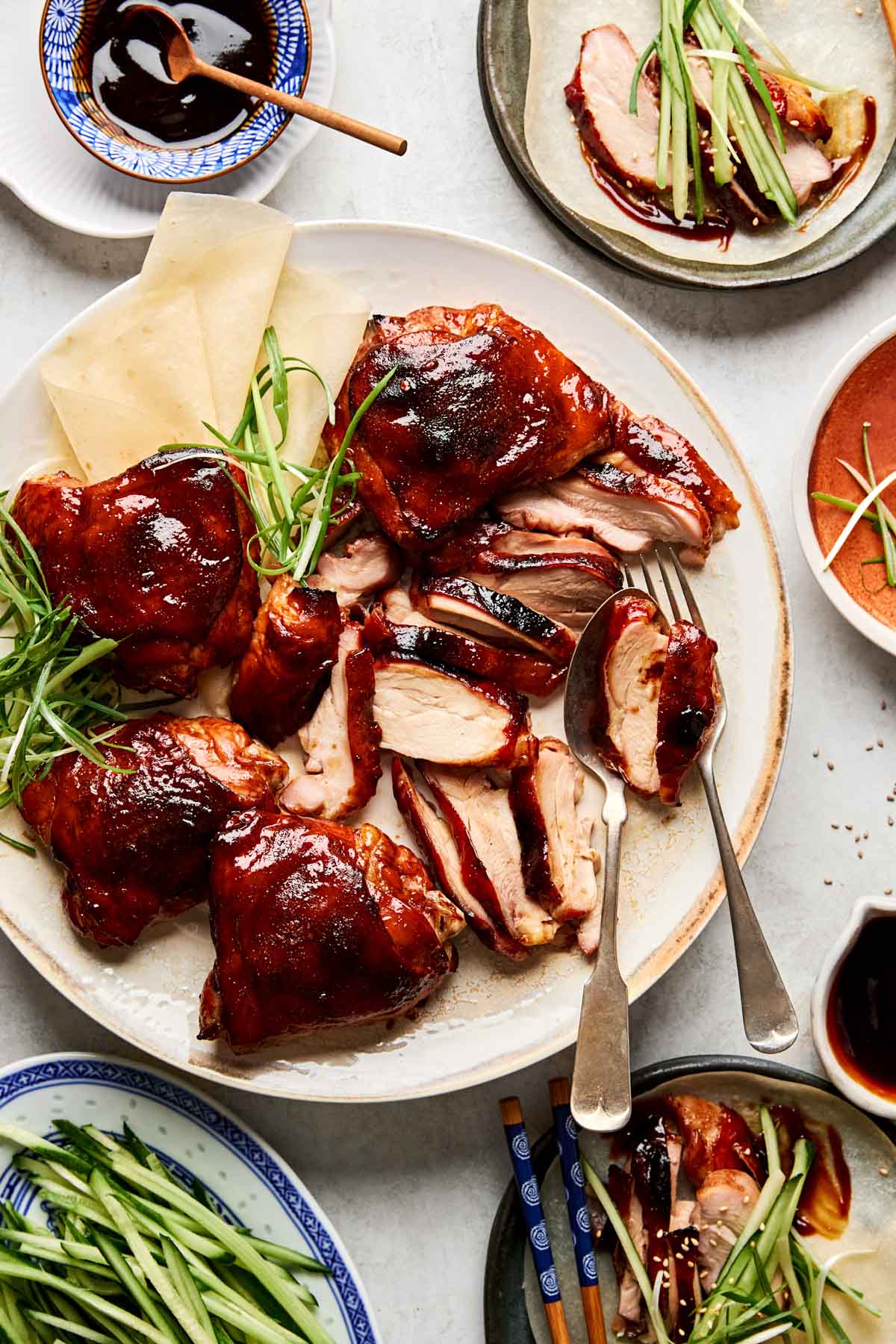
Sticky-Sweet Peking Chicken Is the Easiest Way to Get a Taste of Chinatown at Home – Without the Duck!
I can still vividly remember trailing behind my Mom and Aunties as we walked through Honolulu’s Chinatown, trying not to get distracted by the warm egg tarts, fluffy buns, and glossy, mahogany Peking ducks steaming up the shop windows. 🤩 If it were a special day, we’d bring a whole duck home with us and fight over every last bite of crunchy skin.
But when Mom and I returned home to rural Wisconsin, there was no bustling market selling roasted duck…or much access to duck at all! So if you’re trying to recreate those traditional flavors with a little more convenience – trust me, I get it. This Chinese Peking chicken recipe is made for those moments.
Mom’s always had a knack for creating authentic flavors at home using simple ingredients – and she did it again with these Peking Chicken Thighs! We’ve done all the research and recipe testing for you. The results capture the magic of classic Chinese Peking duck – succulent meat, glossy glaze, shatteringly crisp skin 🤤 – all made in your kitchen. No trip to Chinatown needed!

Maximum Flavor, Minimal Effort
3 foolproof secrets to low-fuss, flavor-packed dinners, learned from years working in restaurants.
Quick Background: What Is Peking Duck – and Why Use Chicken?
If you’ve never had Peking duck before, you’re in for a treat. It’s one of the most iconic Chinese dishes and is commonly served as the centerpiece at celebratory meals like weddings, Lunar New Year, or family banquets.
What makes it so special is the delicious contrast between the rich, succulent meat and paper-thin, crackly skin. 🤤
Traditional restaurants achieve this with a precise technique: preparing a whole duck, treating it ahead of time to keep the skin dry, and hanging it vertically to roast in a specialty oven so the meat cooks evenly and the skin crisps beautifully. And the result is perfection. ✨
🤷🏻♀️ So why chicken, then? ⇢ For starters, most home kitchens aren’t set up for traditional techniques. Mom and I designed this Chinese Peking chicken recipe to deliver all the signature savory-sweet flavor, juicy meat, and beautifully rendered skin – without any fancy equipment. It’s surprisingly simple – you just use easy-to-find chicken thighs!
Essentials for Peking Chicken at Home
 Buy Now →
Stainless Steel Measuring Cups & Spoons
Buy Now → Buy Now →
  Buy Now →
 Key Ingredients
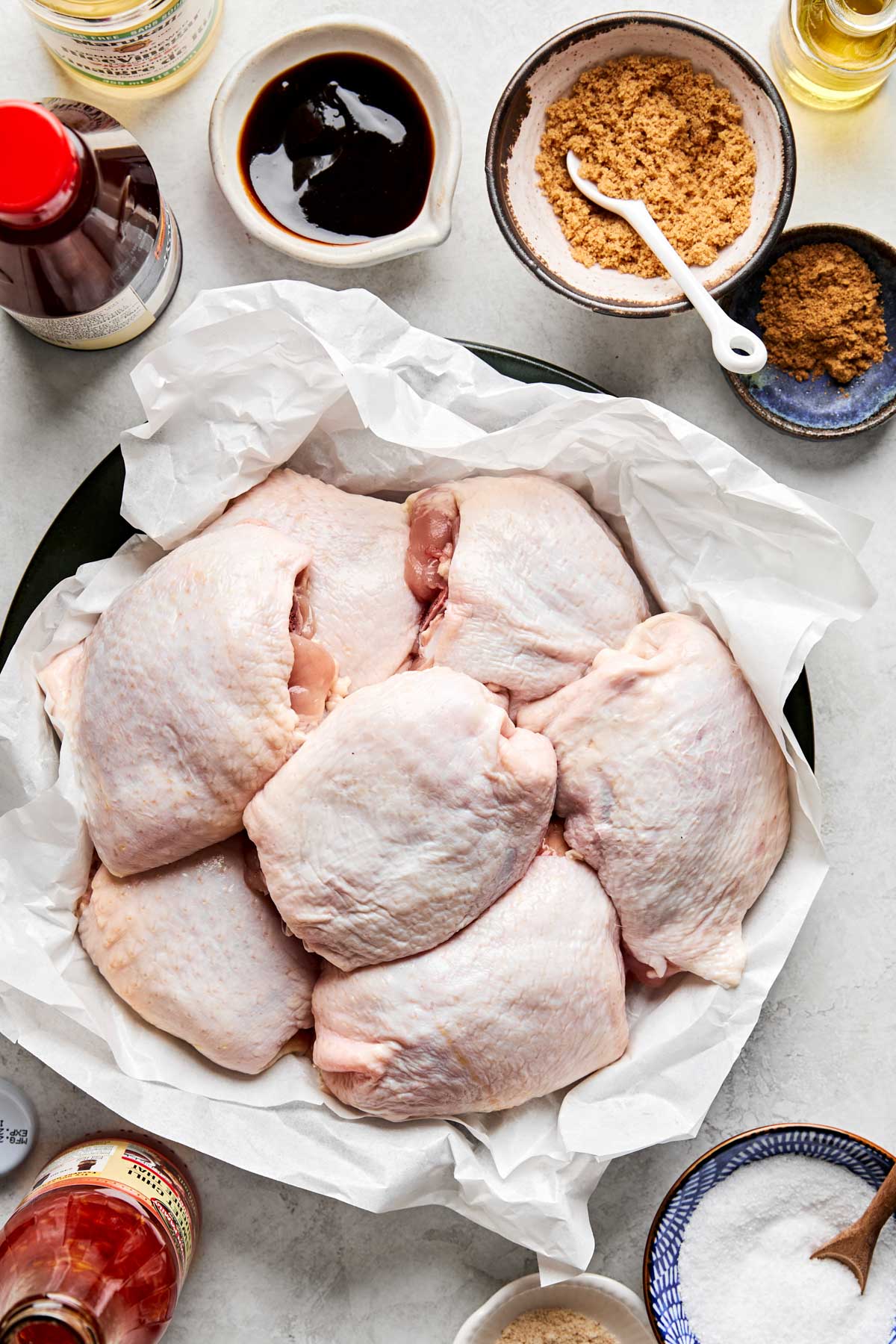
- Through testing, we found that bone-in, skin-on chicken thighs are best for mimicking the richness of whole duck. Duck is wonderfully fatty, and chicken thighs – the juiciest part of the bird – stay moist and tender in a hot oven. The bone adds more flavor, and the skin is a MUST – it’s not Peking chicken without it!
- Chinese five spice is the warm spice blend that gives many classic Chinese roasted meats, like Peking duck and char siu pork, their signature flavor. My favorite is Simply Organic‘s version, made with cinnamon, fennel, clove, star anise, and white pepper. Some other blends add ginger or peppercorns to the mix, too!
- Mom’s homemade Peking chicken sauce delivers deep flavor, glossy caramelization, and that signature sticky finish – all with pantry-friendly ingredients. Traditional Peking duck is glazed with maltose syrup for sweetness and shine, but Mom swaps in sweet chili sauce for a little heat and tang. It’s mixed with hoisin (a Peking duck essential), a splash of rice vinegar for balance, and chicken bouillon powder to double down on the dark meat’s savoriness.
Start Prepping the Peking Chicken One Day Ahead
For juicy meat and crackly, caramelized skin, you’ll start prepping this Peking chicken the day before you roast. After lots of research and testing, Mom and I found that the best results come from staying close to tradition: blanching the skin with hot water and dry-brining the meat overnight. The key is getting the skin as dry and taut as possible so the fat renders cleanly.
This quick prep work is what helps create that signature crispiness – it’s 100% worth planning ahead for!
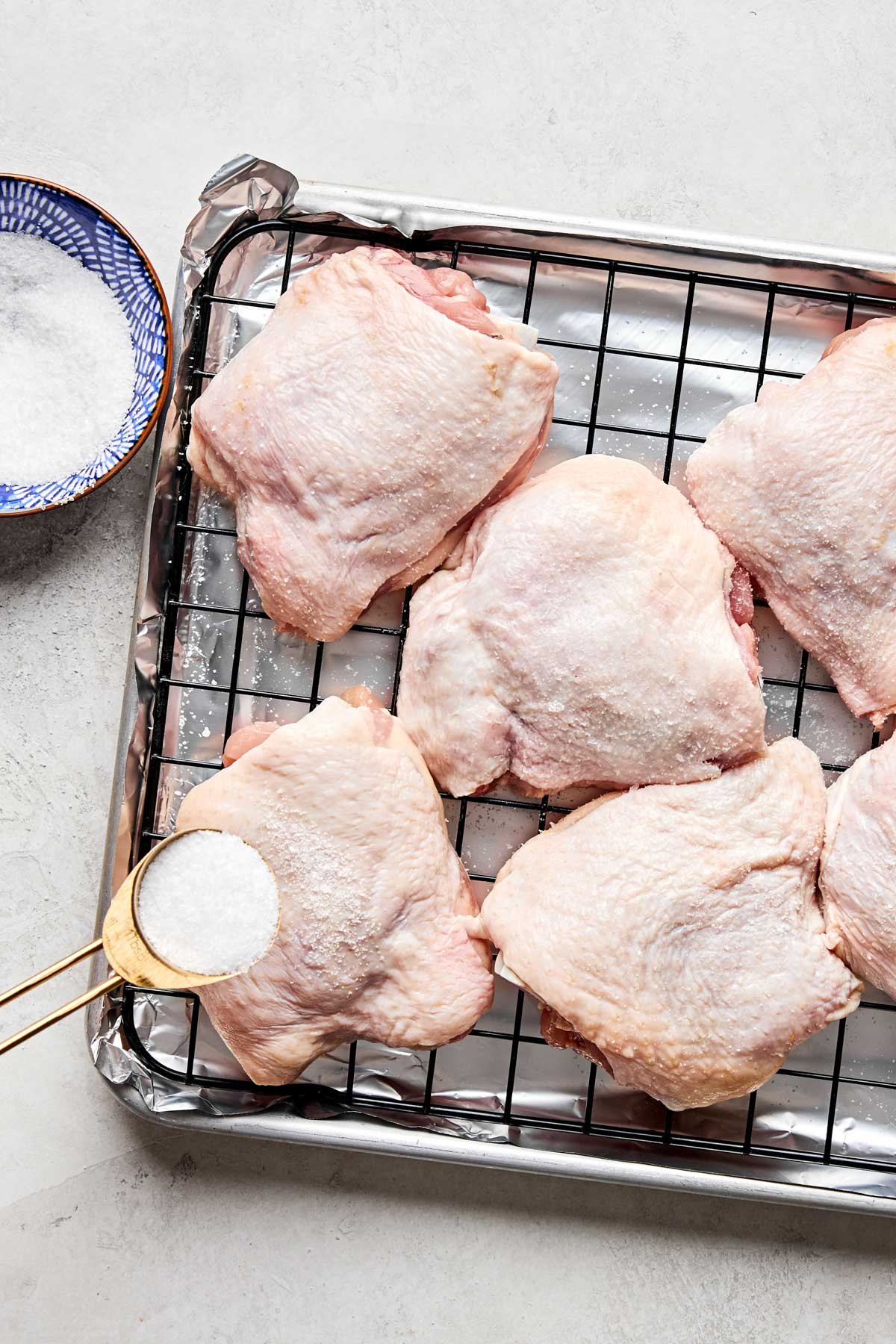
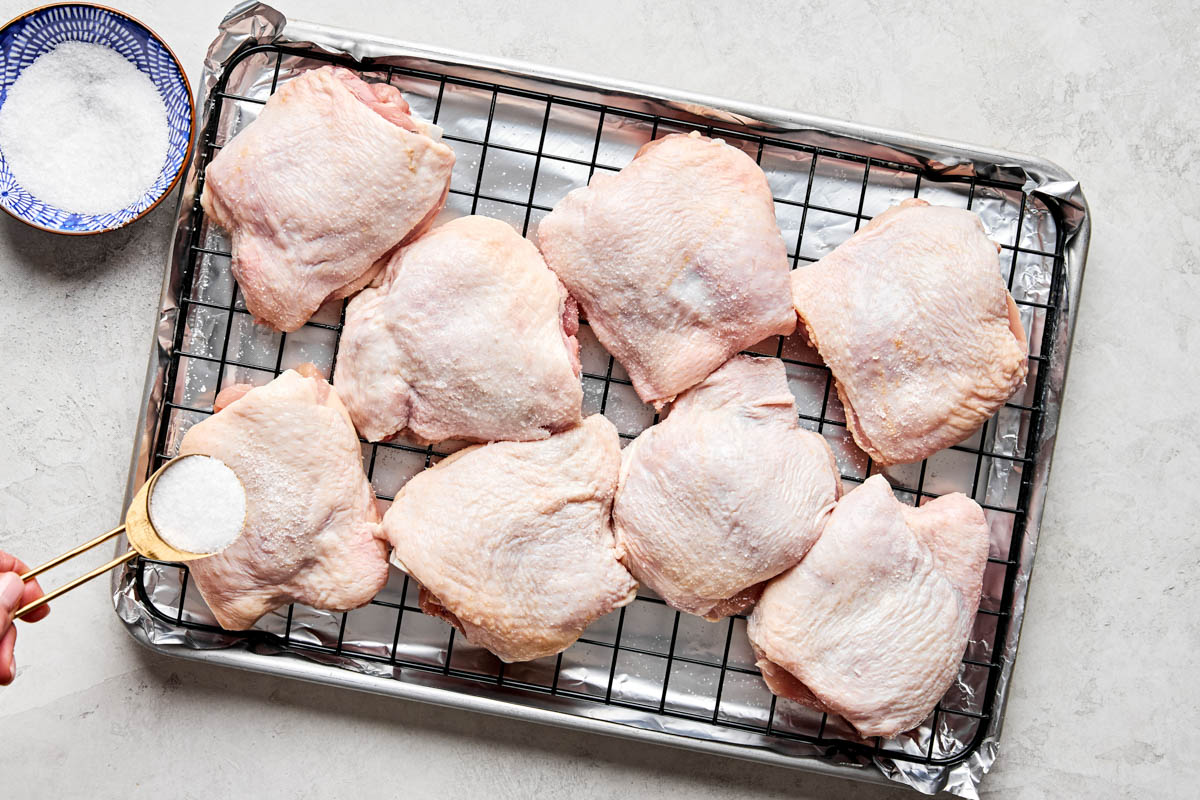
Using your fingers, gently pull the skin apart from the thigh meat, leaving the edges attached. Pat the thighs dry, season with salt, and rest on a wire rack for 1 hour to draw out as much moisture as possible.
Why? ⇢ Separating the skin from the meat helps it brown as it roasts, rather than steaming. Traditional Peking duck recipes do this by pumping air under the skin, but it’s easy to use your hands with thinner chicken skin. As a bonus, this “pocket” also gives you room to season every nook and cranny!
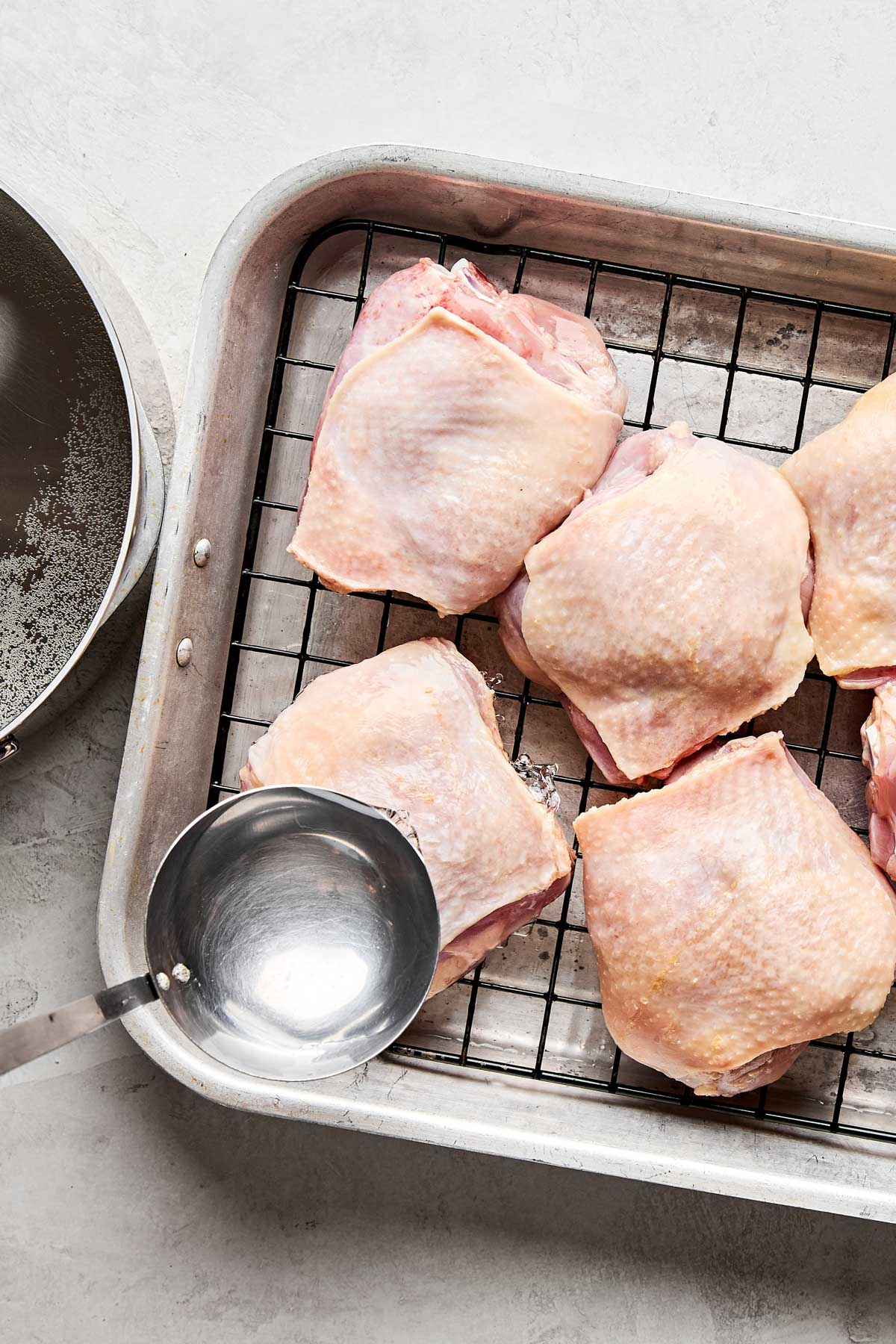
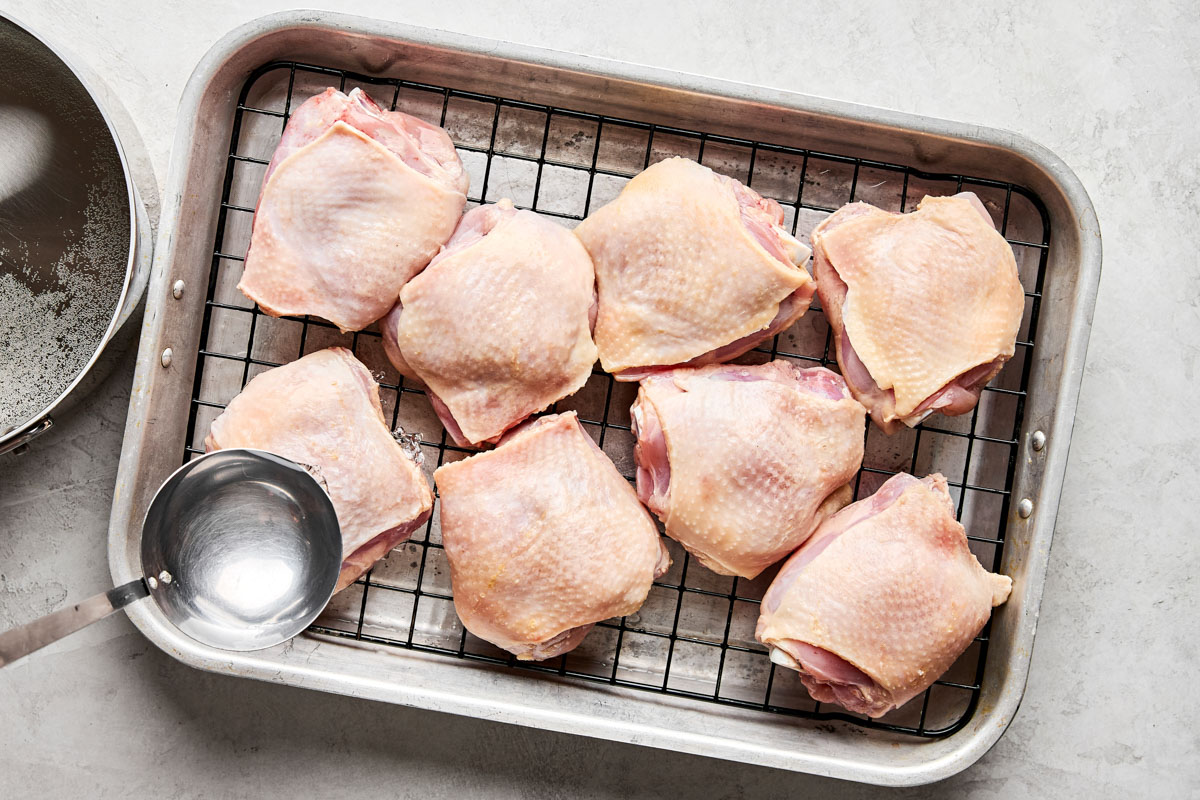
Place the rack of chicken in your sink and slowly pour boiling water over each thigh. An electric kettle is especially handy here, but if you don’t have one, a ladle works great too. You’ll see the skin contract immediately as the hot water rolls off – it’s pretty cool!
Why? ⇢ Taut skin is the key to crisp results! The hot water cleans and smooths the skin so it browns evenly in the oven. Traditional Chinese restaurants scald Peking duck with several rounds of hot water, but since we’re using smaller chicken thighs, the skin tightens quickly – one cup of water per thigh is plenty.
📸 Note: This step is photographed in a deep roasting pan to show the process clearly. But when you’re making it at home, blanching the chicken directly in the sink is fastest and easiest – the rack lets the water drain away quickly and cleanly.
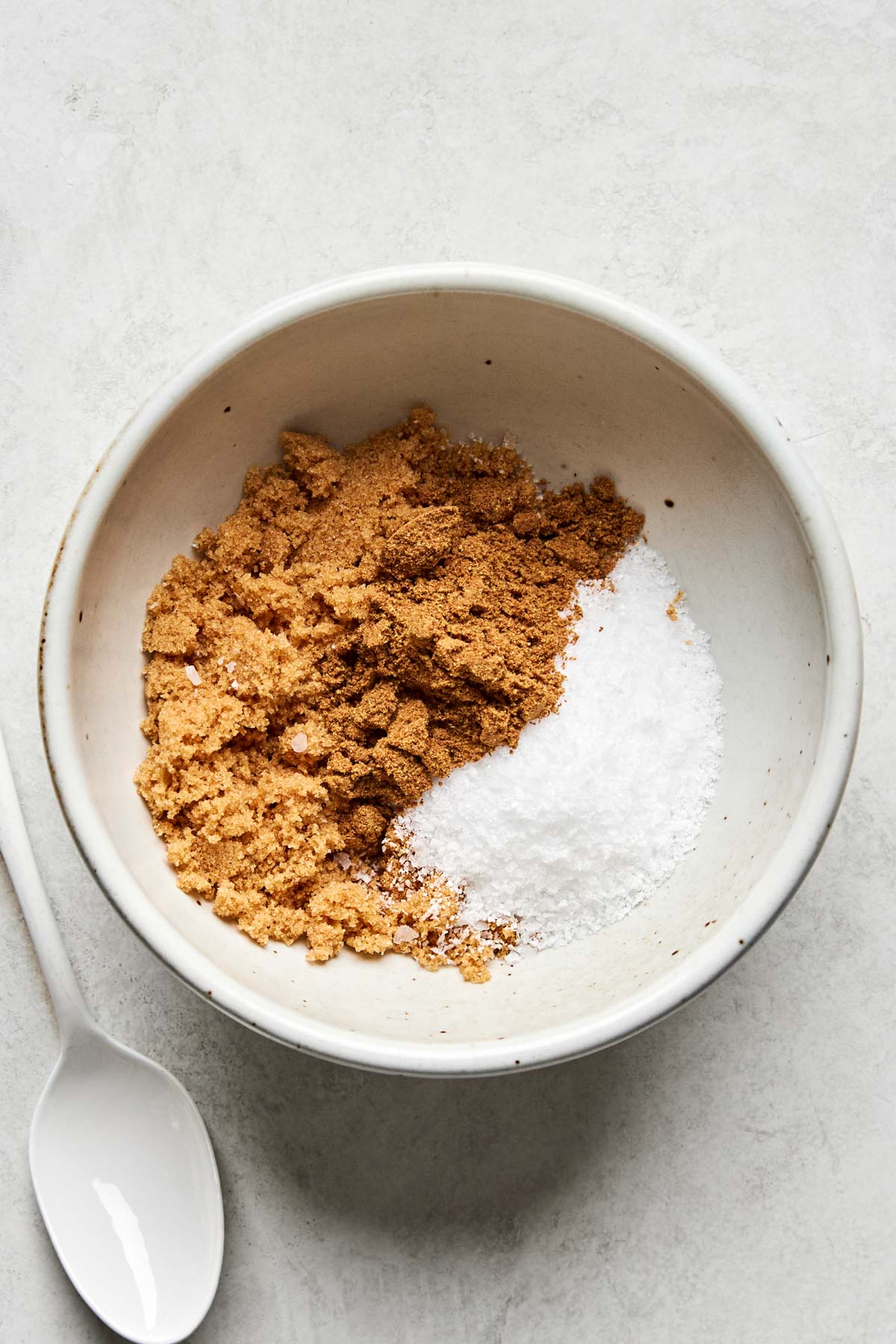
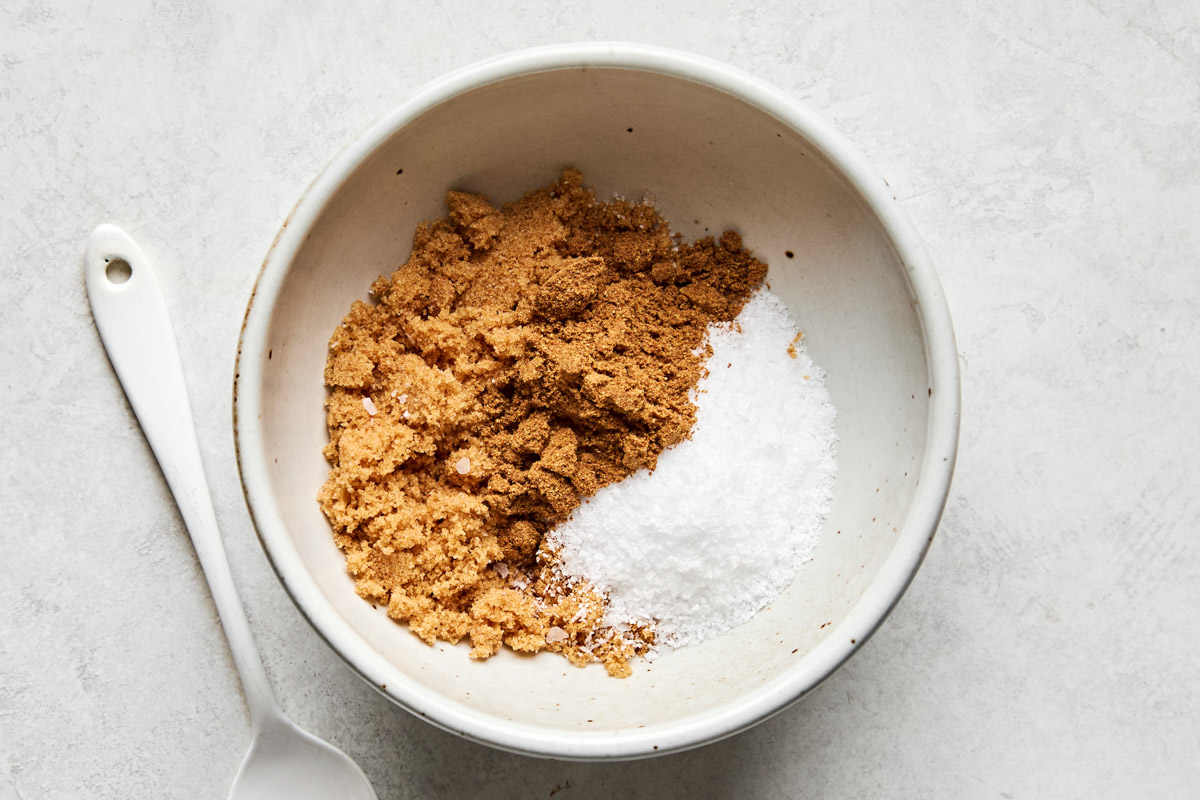
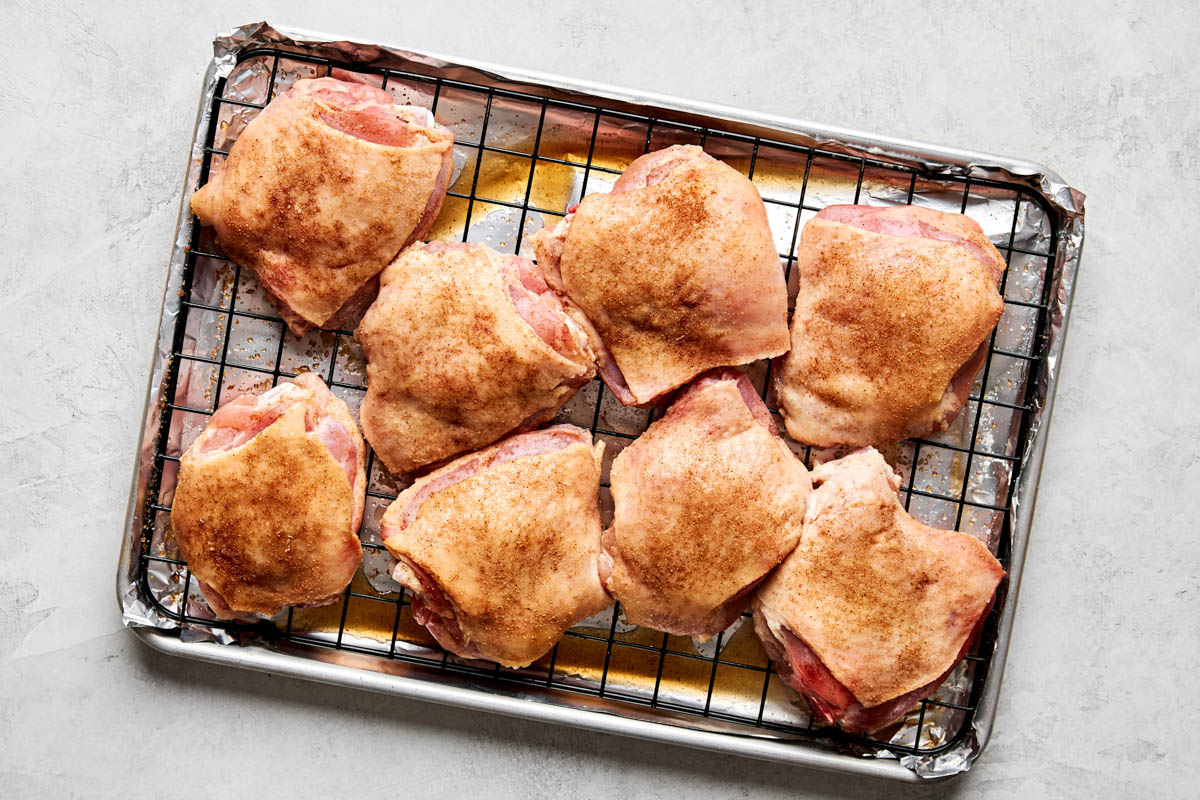
Combine the brown sugar, salt, and Chinese five spice to form a sweetly spiced dry rub. The salt seasons the meat, the brown sugar helps the chicken caramelize, and the Chinese five spice adds that classic Peking flavor.
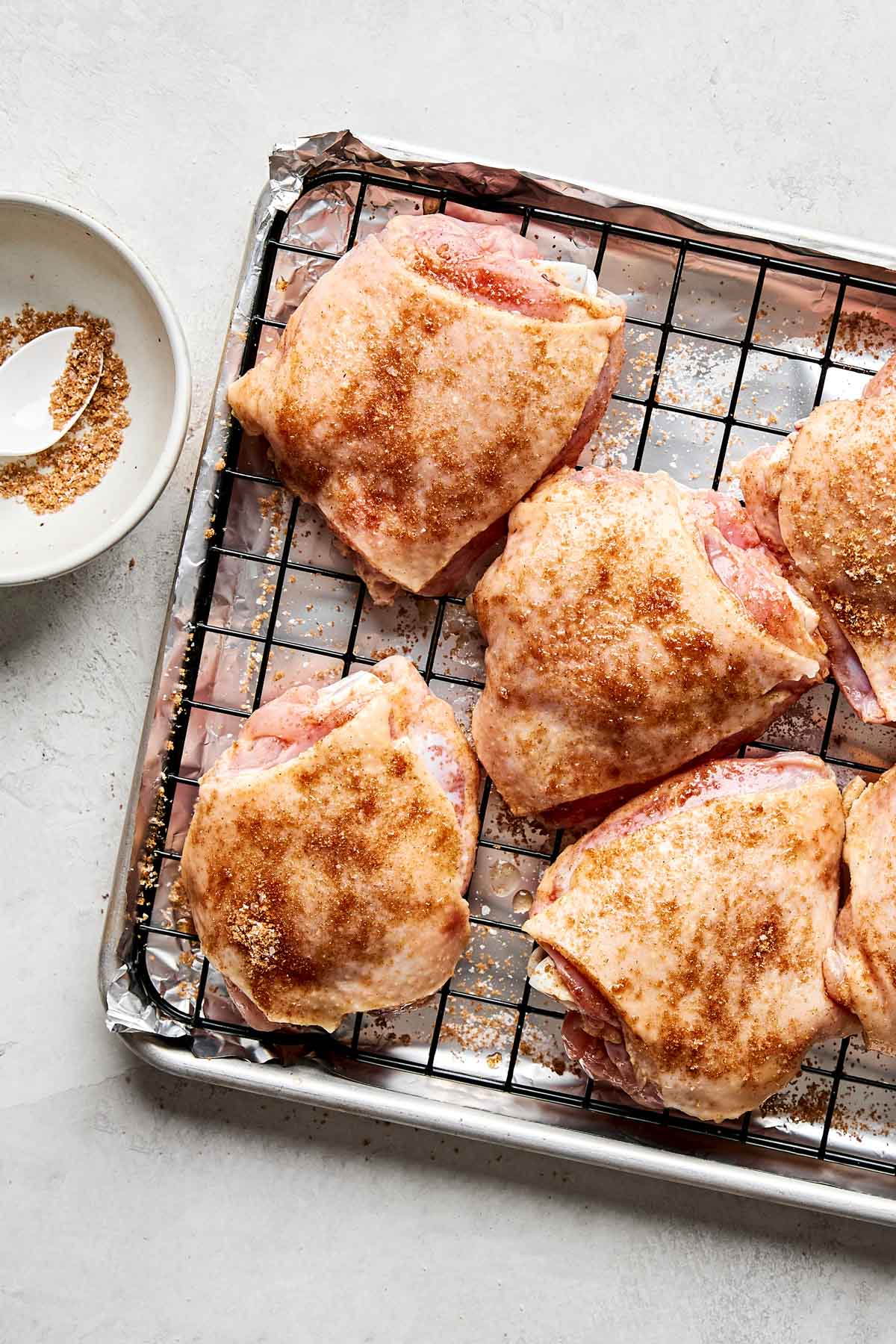
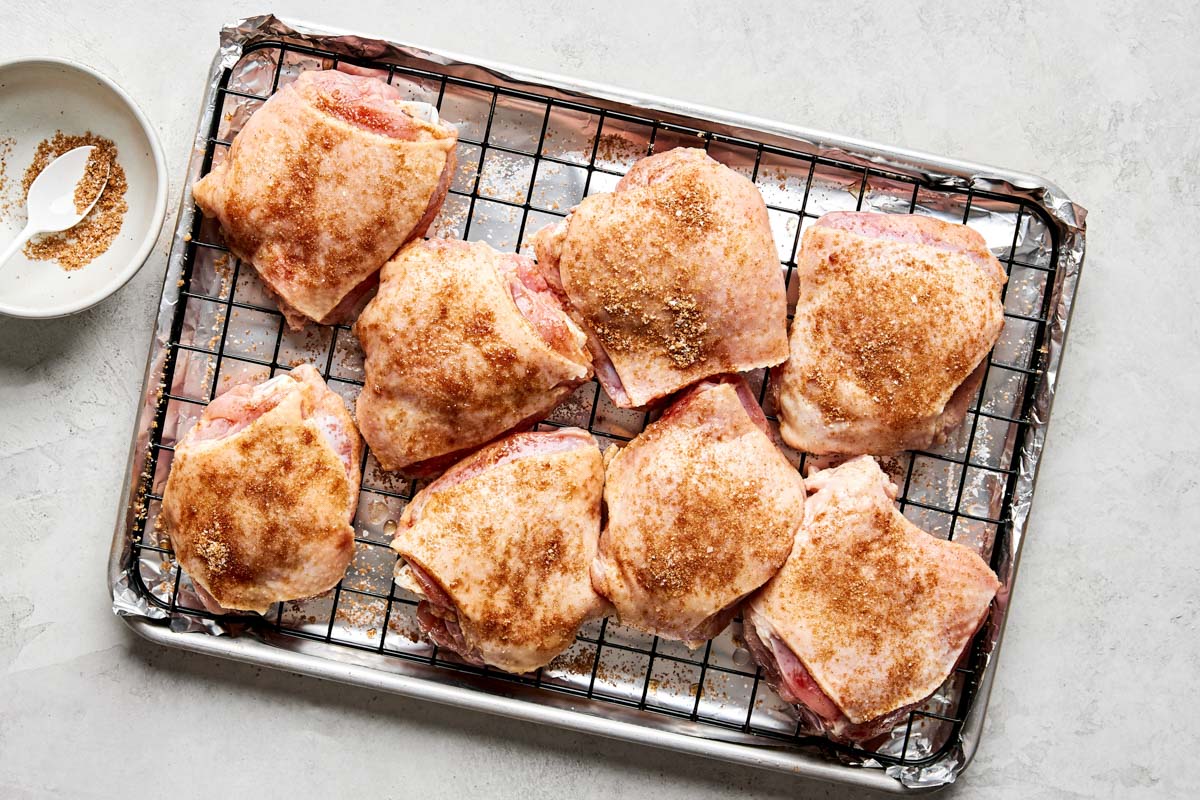
Pat the chicken thighs dry, then use your fingers to rub the seasoning all over the meat and skin (don’t forget to season under the skin, too!). Place the wire rack of chicken over a baking sheet, then set it uncovered in the fridge overnight.
Why? ⇢ This dry brine draws out any excess moisture and deeply seasons the meat and dries the skin for extra crispiness.
How to Roast Peking Chicken Thighs for Crispy Skin and Juicy Meat
Chinese-style roasted duck is traditionally hung by the neck in a specialty hot oven, allowing air to circulate evenly around it. Because this Peking chicken recipe uses thighs instead of a whole bird, it’s much easier (and faster!) to bake in a home oven.
During our recipe testing, Mom and I found the key to roasting Peking chicken thighs at home is to use a high oven temperature and place the chicken near the top, where most of the heat circulates. For even more airflow, roast the chicken directly on a wire rack set over a baking sheet to catch the drippings.
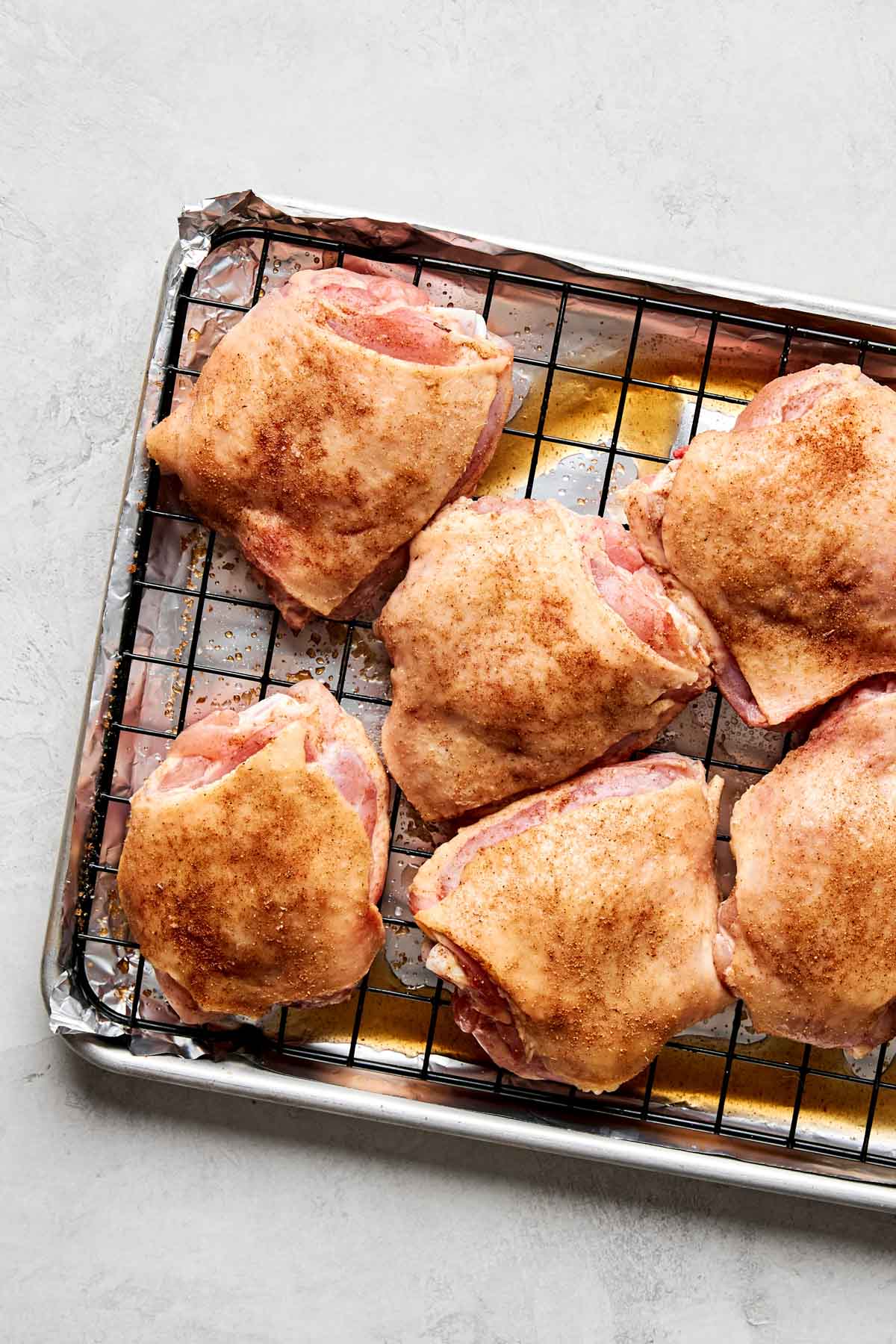
Pull the chicken thighs from the fridge and use a paper towel to pat the meat dry one more time. Removing as much moisture as possible is essential for crackly skin. Make sure the baking sheet and wire rack are dry, too! Any water on the pan will turn into steam – the enemy of crispy results!
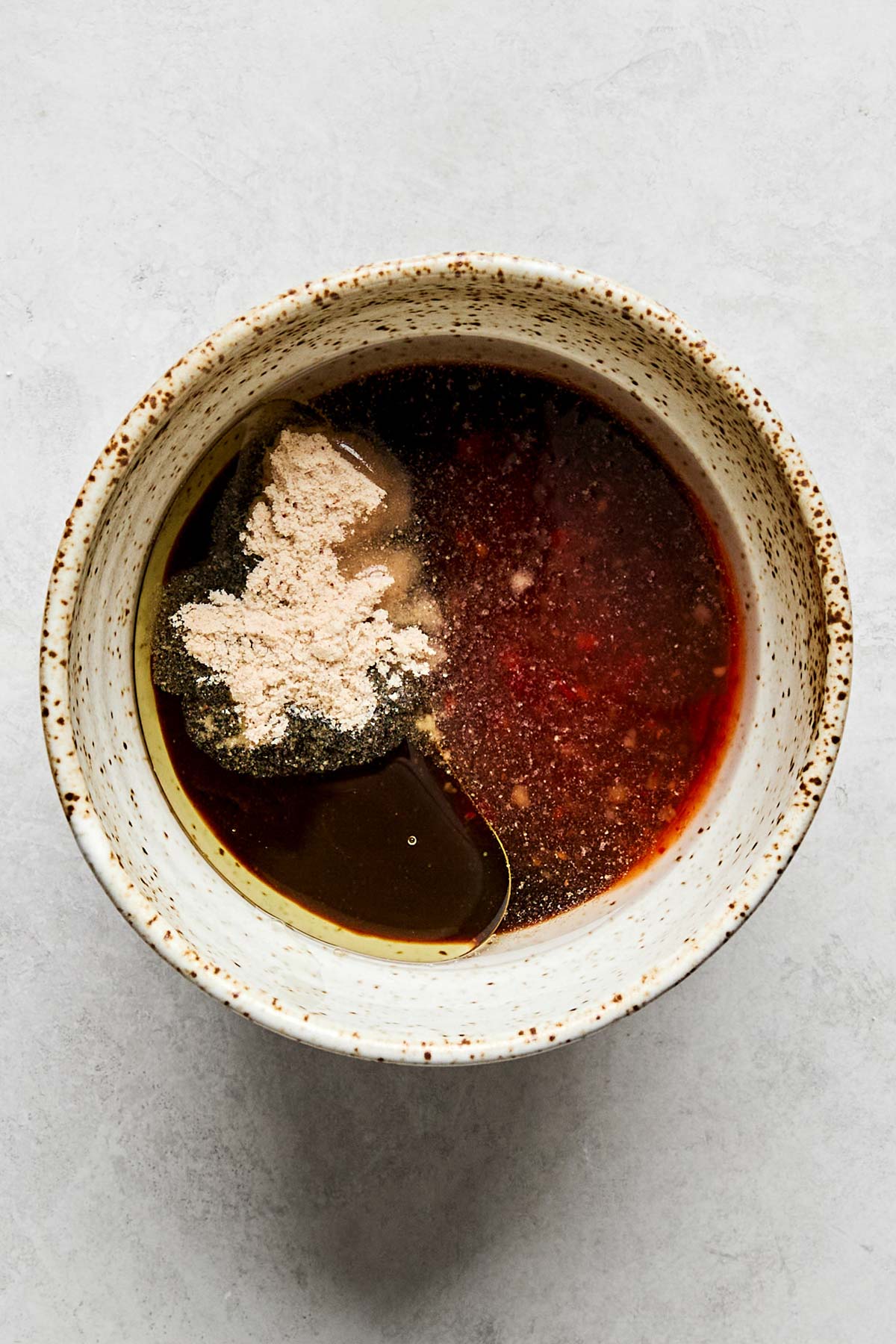
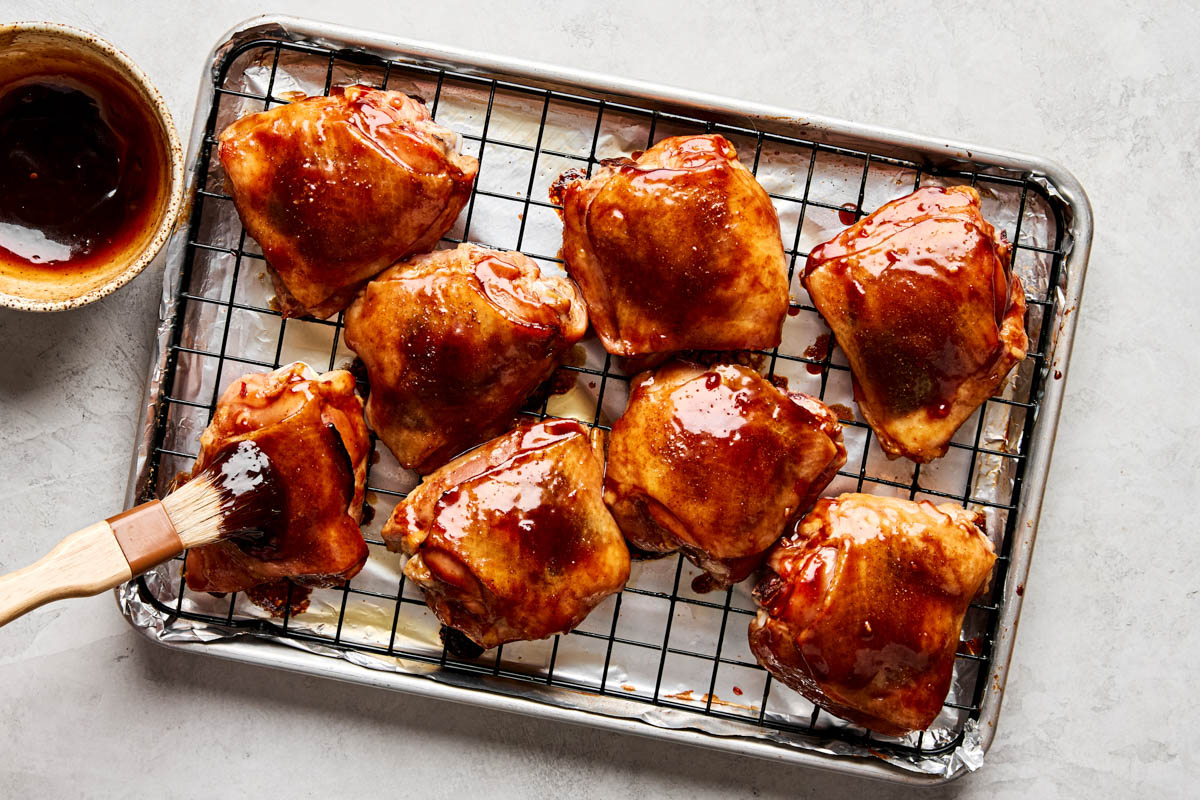
Whisk hoisin sauce, Thai-style sweet chili sauce, rice vinegar, vegetable oil, and chicken bouillon powder in a bowl. The mixture should be sticky and glossy, but still easily brushable – not too thick!
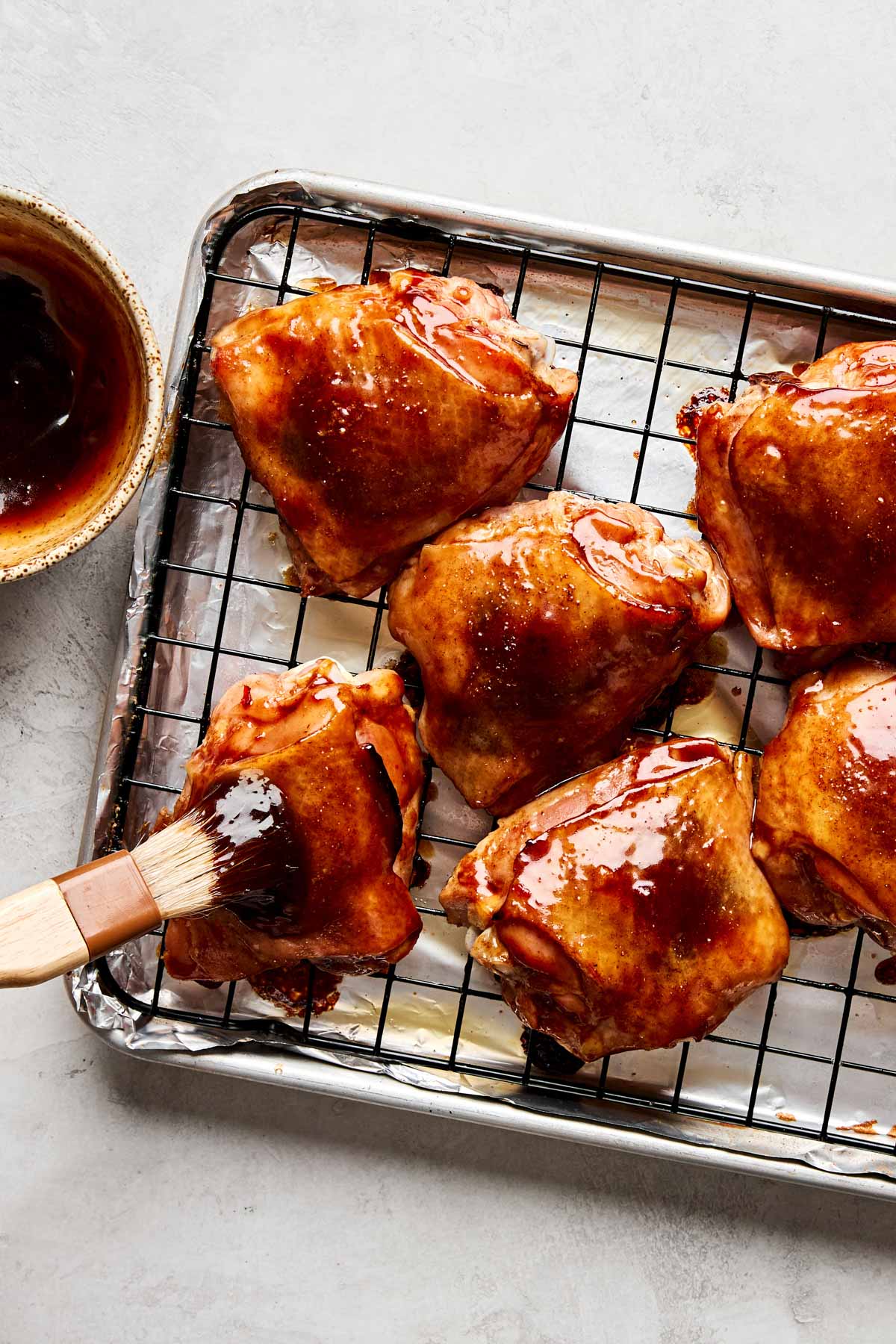
Arrange the chicken thighs skin-side up on the wire rack, then brush the sauce all over the meat and underside of the thighs – leaving the skin bare for now.
Why? ⇢ If you brush the sauce onto the skin too early, the moisture keeps it from crisping up as much as we want – but don’t worry, you’ll glaze it later, once the skin’s had a chance to brown.
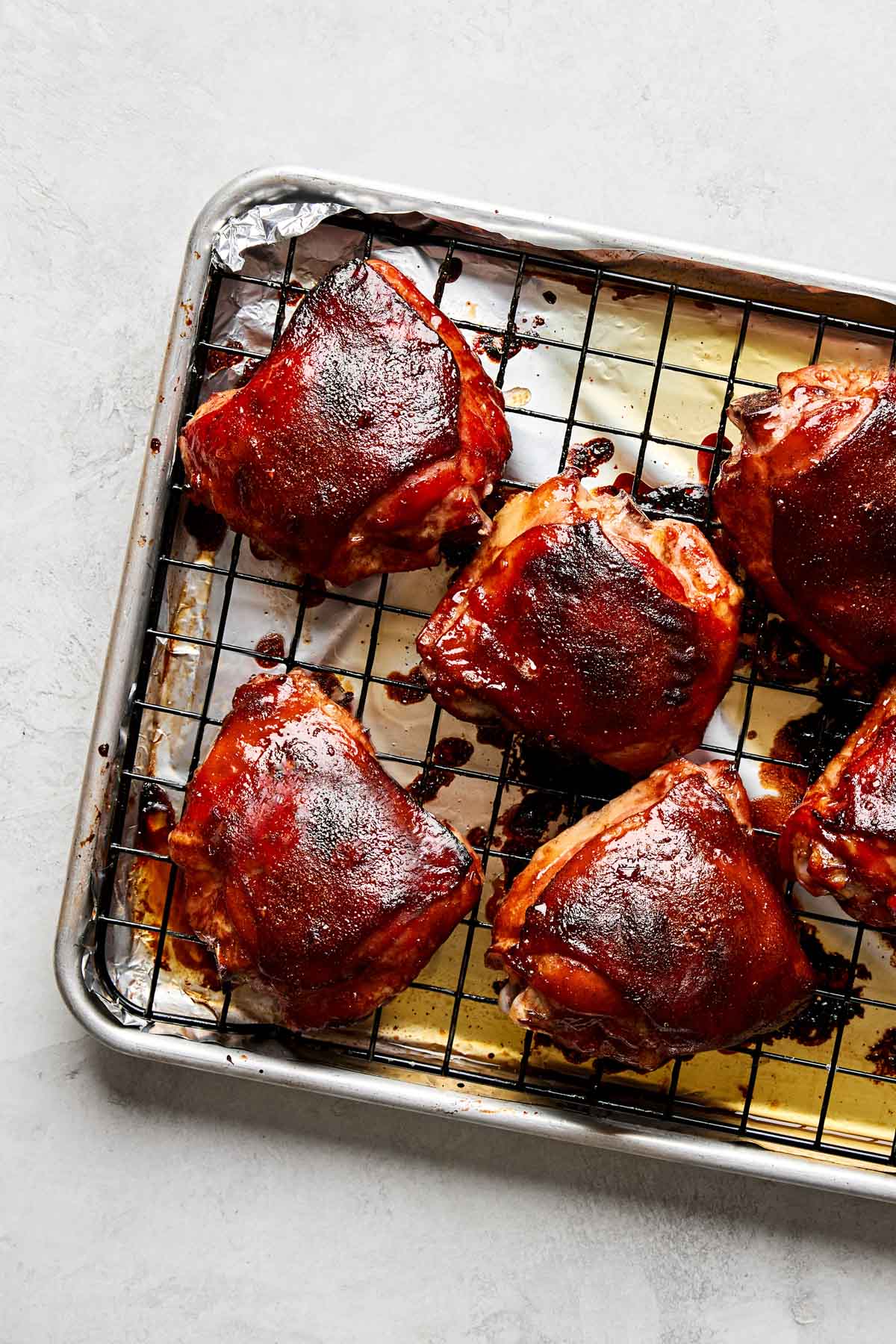
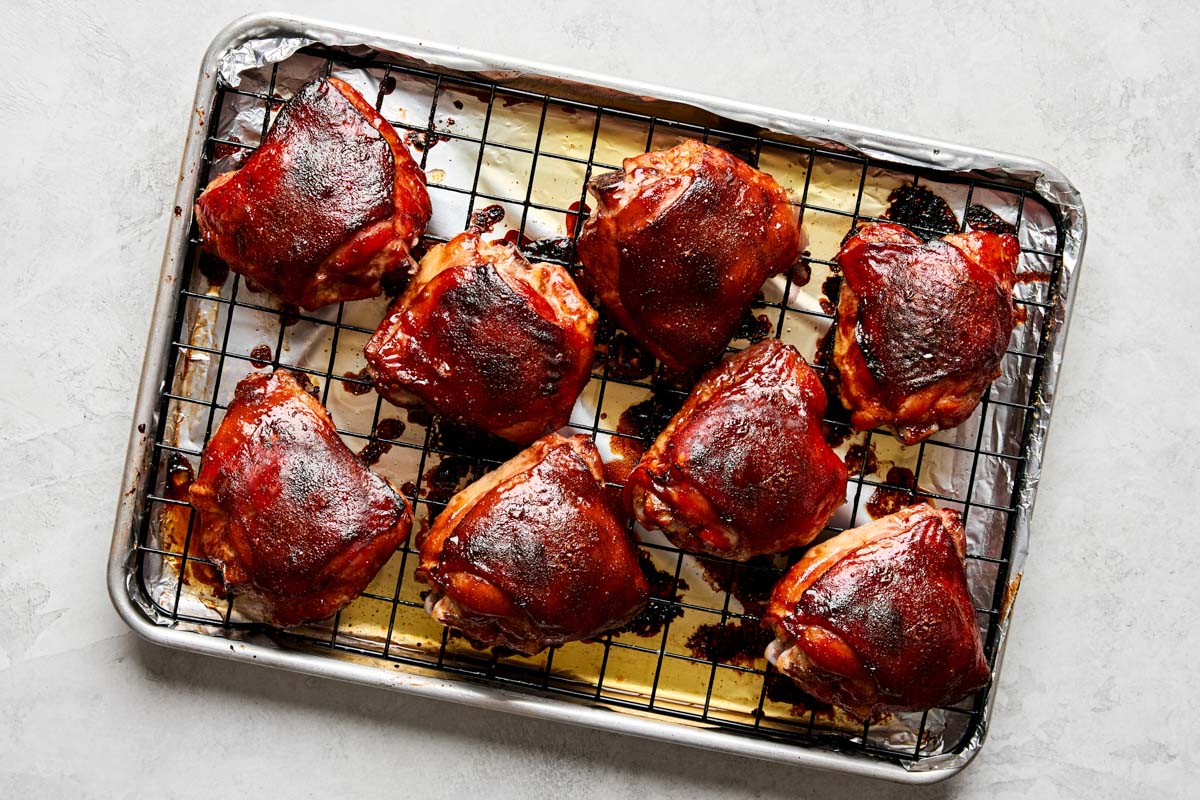
Roast the Peking chicken thighs for 15 minutes at 425 degrees F, until the skin starts to brown. Then slather the remaining glaze over the chicken skin and lower the heat to 400 degrees F, roasting 30-40 minutes more. A gentler heat gives the skin more time to render and brown without drying out the meat.
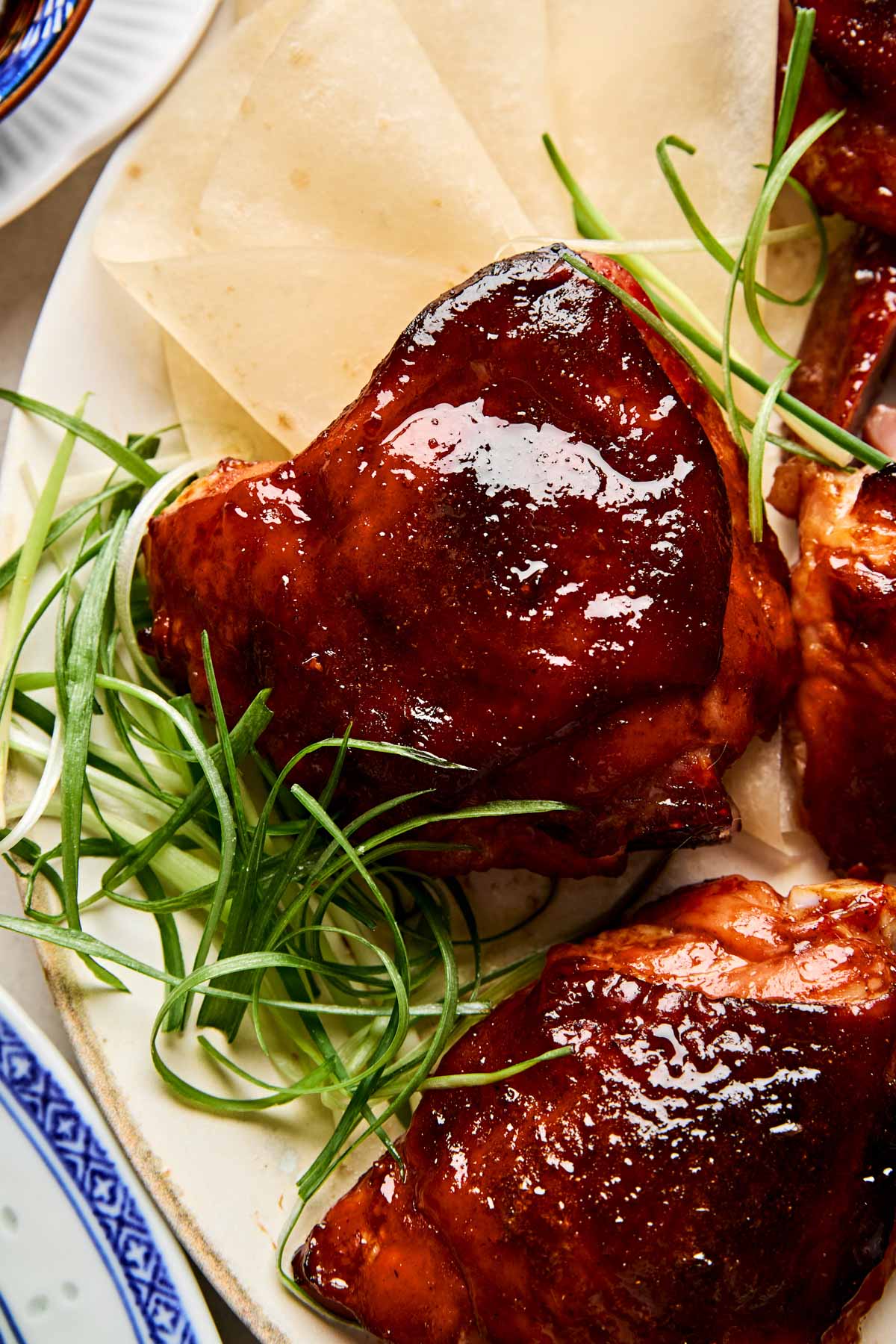
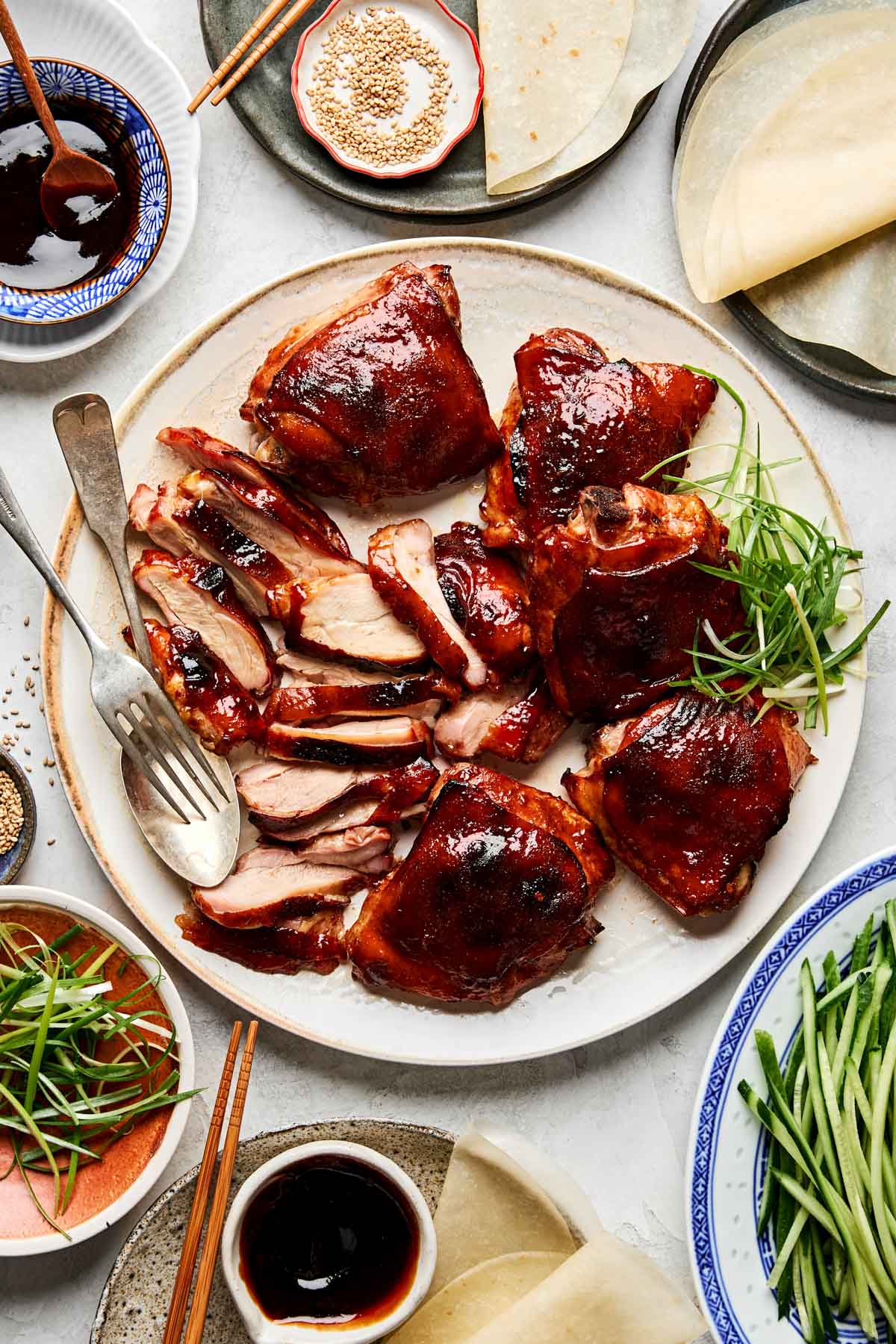
Serving Suggestions
Duck symbolizes prosperity in Chinese culture, which is why Peking duck is often served at special celebrations. This Peking chicken recipe channels that same festive spirit – from the crispy skin to the sticky-sweet glaze, every bite is worth savoring and celebrating. 🥰🎊
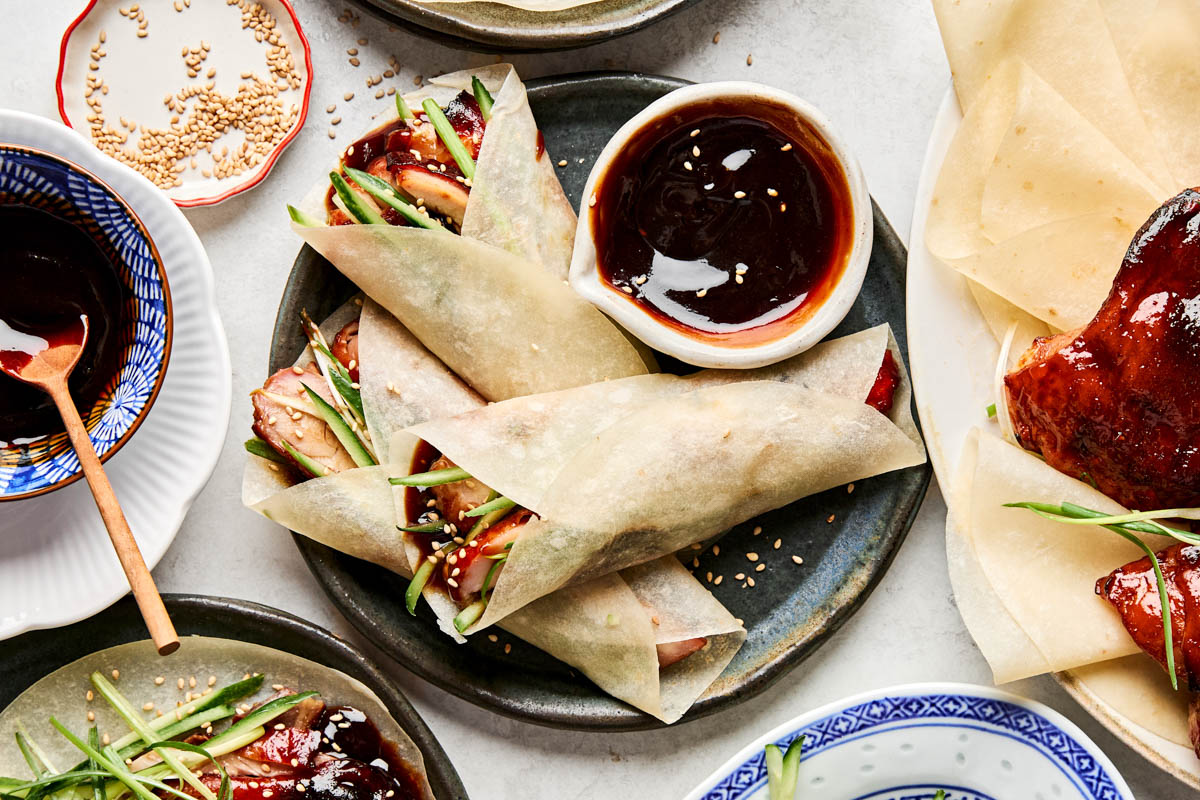
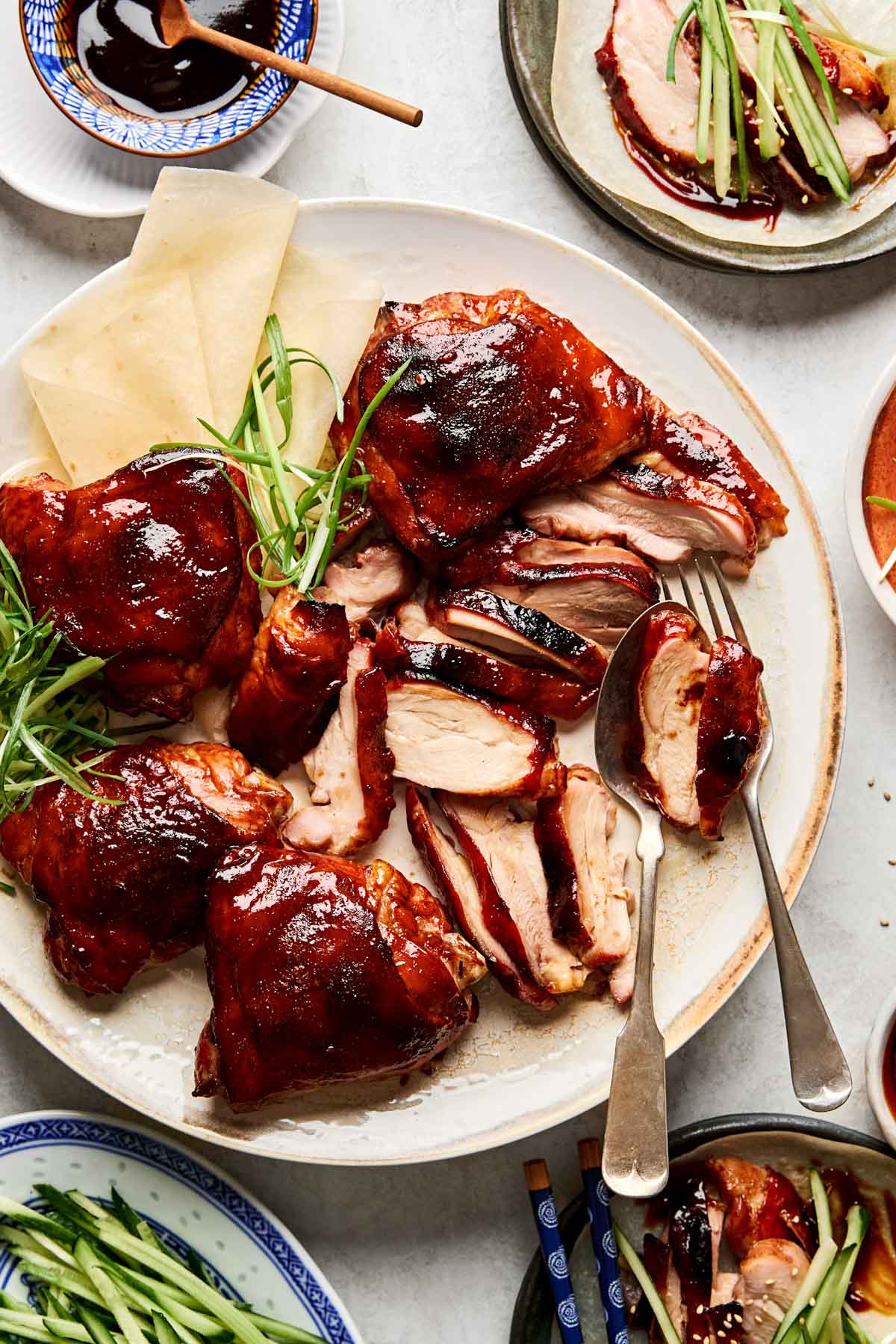
For the full experience, wrap sliced Peking chicken in Mandarin pancakes. These thin Chinese flatbreads (similar to those served with mu shu pork) have a delicate, flour tortilla-like texture. I’ve included shopping tips and my favorite homemade recipe in the Recipe Notes below.
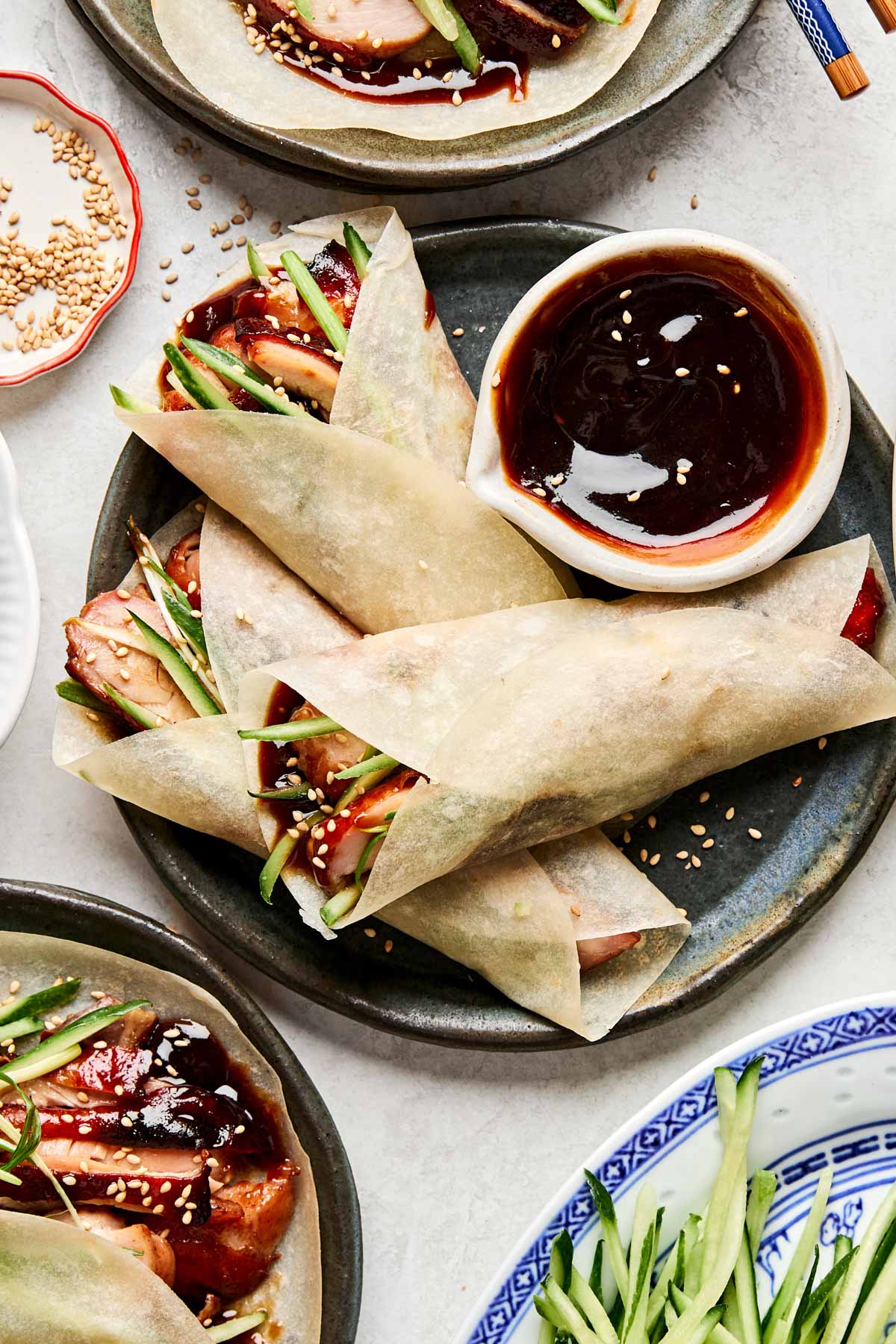
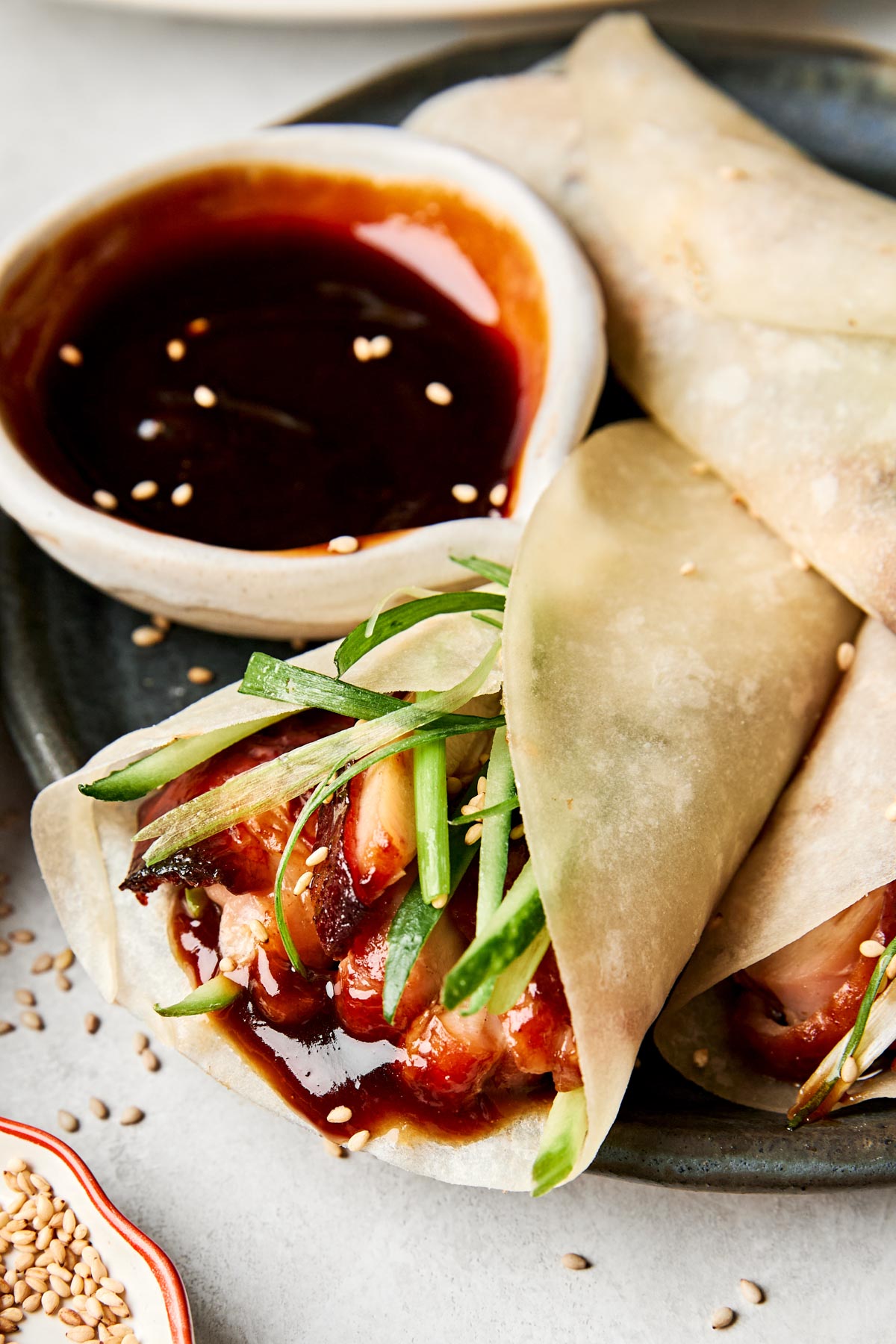
I can’t wait for you to try these Roasted Peking Chicken Thighs! If you do, be sure to let us know! Leave a comment with a star rating below. You can also snap a photo and tag @playswellwithbutter on Instagram. We LOVE seeing your PWWB creations! ♡ Happy cooking!
Print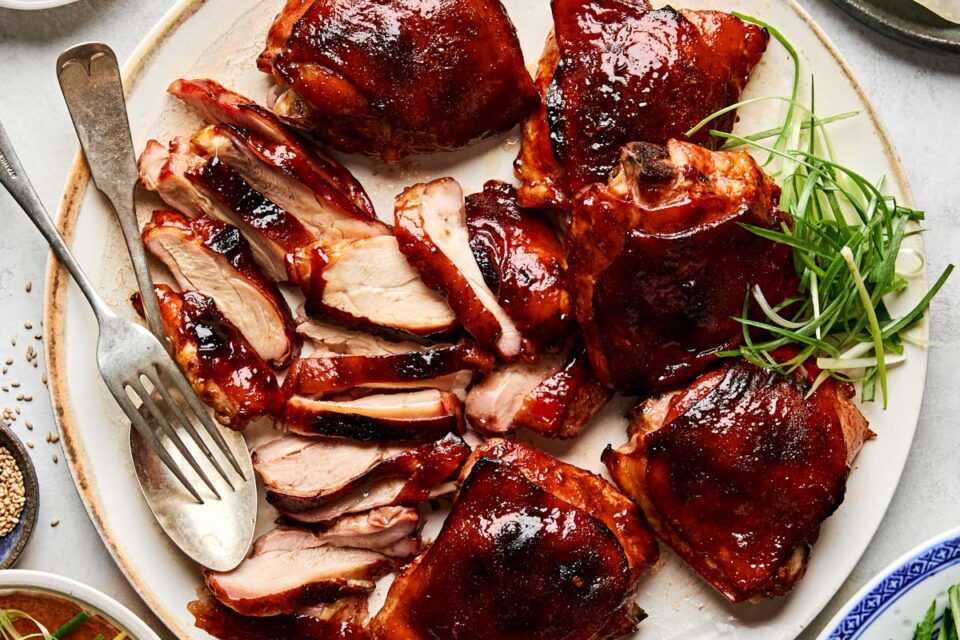
Peking Chicken Thighs with Extra-Crispy Skin
- Prep Time: 30 minutes active
- Overnight Dry Brine: 12-24 hours
- Cook Time: 50 minutes
- Total Time: 1 hour 30 minutes, plus overnight brine
- Yield: serves 4
- Category: Main Dishes, Chicken Recipes
- Method: Oven-Roasted
- Cuisine: Chinese, Asian, Cantonese
- Diet: Gluten Free
Description
Inspired by childhood memories of glossy roasted ducks in Chinatown windows, these Peking Chicken Thighs prove it’s not hard to make Peking flavor at home…just use bone-in, skin-on chicken thighs!
The juicy chicken pieces are dry-brined overnight with Chinese five spice, then baked and glazed in a homemade Peking sauce. You get the same succulent, sticky-sweet meat and crackly, extra-crispy skin as traditional Chinese-style duck – and you don’t need any special equipment, or even a whole bird!
Just serve with Mandarin pancakes or fluffy steamed buns and all the fixings for a celebratory Chinese meal.
Ingredients
for chicken prep and dry brine (Day 1):
- 8 bone-in, skin-on chicken thighs (about 3–3 ½ pounds)
- kosher salt, to season chicken skin
- 2 tablespoons packed light brown sugar
- 1 tablespoon kosher salt (for dry brine)
- 1 teaspoon Chinese five spice powder
- 8 cups water
for the Peking-style glaze and roasting (Day 2)
- ⅓ cup hoisin sauce
- 2 tablespoons Thai-style sweet chili sauce
- 1 tablespoon rice vinegar
- 1 tablespoon neutral vegetable oil of choice
- 1 teaspoon chicken bouillon powder
Instructions
Day 1: Peking Chicken Prep
- Prepare the chicken thighs: Trim and discard any excess fat and skin from the back and sides of the chicken thighs. Work your fingers under the skin on the top of each chicken thigh, gently loosening it from the meat while keeping the edges intact. Pat the trimmed chicken thighs as dry as possible with paper towels, then place on a foil-lined rimmed baking sheet fitted with a rack. Sprinkle 1 tablespoon kosher salt over the skin, covering the surface as evenly and completely as possible. Set aside for 1 hour.

- Meanwhile, mix the dry brine: Add the brown sugar, kosher salt, and Chinese five spice to a small bowl and mix to combine well. Set aside.
- Rinse the chicken thighs with boiling water: When the chicken has sat for 1 hour, bring about 8 cups of water to a boil in a kettle or saucepan. Transfer the rack of chicken thighs to the kitchen sink (leave the baking sheet behind). Very carefully, slowly pour the hot water over the chicken skin (about 1 cup of water per thigh). The skin will contract and tighten immediately, and the rack lets the hot water drain through easily.
- Dry brine the chicken thighs and rest overnight: Carefully transfer the rack of chicken thighs back to the foil-lined baking sheet. Pat them as dry as possible, then season liberally with the dry brine, making sure to add some both under and over the skin. Transfer to the refrigerator and rest overnight, uncovered, to dry out the skin and season the meat throughout.
Day 2: Roasting the Peking Chicken:
- Prep: Preheat the oven to 425 degrees F, ensuring a rack is in the upper third position. Take the chicken thighs out of the refrigerator. Set the rack aside to wipe any excess moisture off of the pan, then return the rack. Pat the dry-brined chicken thighs as dry as possible with paper towels.
- Mix the Peking glaze and glaze the chicken: Add all listed ingredients to a medium bowl and whisk to combine well. Brush the glaze onto the underside and under the skin of each thigh, avoiding brushing directly over the skin. You will have some glaze leftover – reserve it for roasting. Return the chicken to the rack.
- Roast the Peking chicken thighs: Place sheet pan in oven and roast for 15 minutes. After 15 minutes, brush the remaining glaze on top of the chicken skin and around the sides. Reduce the oven to 400 degrees F and continue to roast for 30-40 minutes more, or until the skin is crispy and deeply browned (without burning) and the thickest part of the thighs reaches 165 degrees F. Remove from the oven and rest for 5 minutes before serving.
- Serve the chicken thighs whole or slice as desired. For the full Peking duck experience, serve with Mandarin pancakes (see Notes), julienned cucumber, thinly sliced green onions, and plenty of hoisin sauce for drizzling. These sticky-sweet chicken thighs are also great over light and sticky rice with veggies like roasted broccoli or sautéed bok choy – just don’t skip the extra hoisin sauce. Enjoy!
Notes
- Mandarin pancakes are thin, tender Chinese flatbreads traditionally served with Peking duck. They’re very similar to the wrappers served with mu shu pork, or like very delicate flour tortillas, perfect for rolling up the duck and all the fixings. If you need help sourcing, here are 3 easy options:
- Store-bought: You can find Mandarin pancakes in the freezer section of most Asian grocery stores; just steam, microwave, or warm them in a dry skillet before serving to make them soft and pliable.
- Homemade: If you’re up for a kitchen project, Mandarin pancakes are simple to make from scratch with just flour and hot water, plus a little patience kneading and rolling. I use the recipe from my friend Kristina Cho’s Mooncakes and Milk Bread.
- In a pinch: Scallion pancakes are a delicious, albeit completely untraditional, alternative. They’re thicker, chewier, and much more aromatic than Mandarin pancakes, but also pretty easy to find in the freezer section of many conventional grocery stores. I always keep a few bags from Trader Joe’s on hand.
- Storage and Reheating: Leftover Peking chicken thighs will keep, stored in an airtight container in the fridge, for 3-4 days. Reheat in a 350 degree F oven for 12-15 minutes or air fryer for 5-7 minutes, until warmed through and the skin is crisp again. You can quickly reheat in the microwave, though the chicken will lose its crispiness.
Nutrition
- Serving Size:
- Calories: 509
- Sugar: 10.4 g
- Sodium: 1617 mg
- Fat: 30.8 g
- Saturated Fat: 10.9 g
- Trans Fat: 0.2 g
- Carbohydrates: 14.6 g
- Fiber: 0.8 g
- Protein: 46.1 g
- Cholesterol: 247.7 mg
Follow along with Plays Well With Butter on Instagram, YouTube, Facebook, and Pinterest for more unfussy recipes that pack a big punch of flavor!

Haven’t made it yet but intend to. Our oven can do Convection, would that be helpful to the crisping or not necessary since using top 1/3 of the oven ?
You can use convection, but we haven’t done it personally! As a general rule of thumb, we’d suggest going ~25 degrees cooler than what’s suggested in the recipe (written for a conventional oven) to factor in the fact that the oven is blowing hot air around. If you try it with convection, let us know how it goes!
This was a labor of love but so delicious! Definitely hit the flavors and would make again for a special occasion.
We love to hear this, Grace. Happy to hear it was a hit for you!
Do you think this could work with the split fryer (bone in, skin on) chicken breasts? Obviously, the cooking time would change, but… would it work out? My family hasn’t gotten on the chicken thighs train, yet. 🥴
Hi A, We haven’t tried it with chicken breasts! Because the breasts are a thicker cut and leaner, we imagine you’d need to:
The final result may not be quite as juicy as you’d get with chicken thighs, but the flavor should still be delicious. Please do report back if you try it!
I haven’t made this recipe yet, but I instantly saved it to make! Thank you for sharing
We made this tonight and let me say this, you’ll never want to make any other chicken thigh recipe again. So easy, so flavorful, and even my kids loved it. We used boneless chicken thighs because it’s what I had in the freezer & just omitted the boiling water step. The addition of Chinese five spice makes this taste so good! My husband walked in after work and was like, “what is that amazing smell?” We served them with her Mom’s crazy good garlic noodles- perfect pairing for Lunar New Year’s Eve.