Description
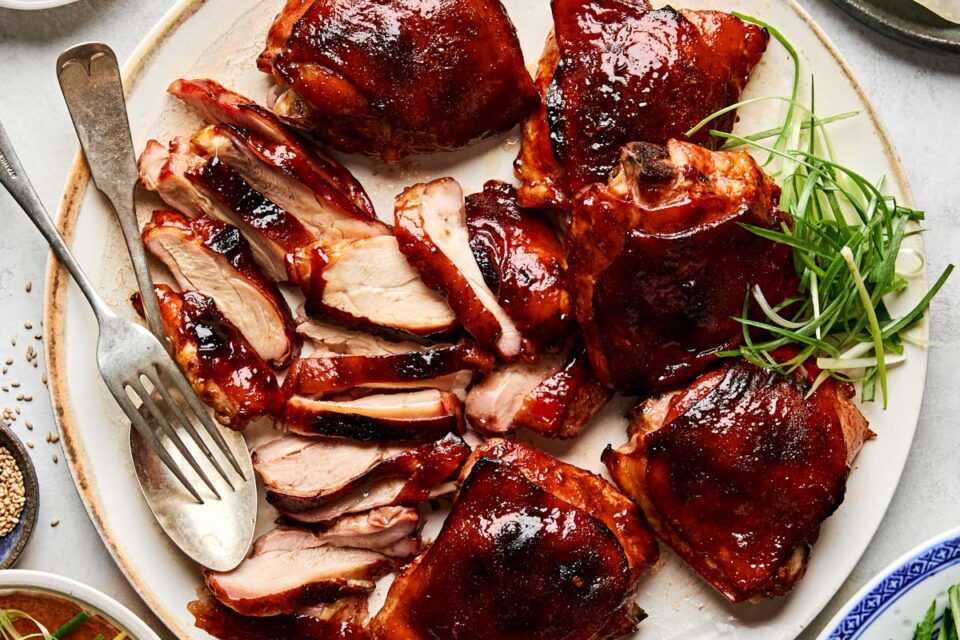
Inspired by childhood memories of glossy roasted ducks in Chinatown windows, these Peking Chicken Thighs prove it’s not hard to make Peking flavor at home…just use bone-in, skin-on chicken thighs!
The juicy chicken pieces are dry-brined overnight with Chinese five spice, then baked and glazed in a homemade Peking sauce. You get the same succulent, sticky-sweet meat and crackly, extra-crispy skin as traditional Chinese-style duck – and you don’t need any special equipment, or even a whole bird!
Just serve with Mandarin pancakes or fluffy steamed buns and all the fixings for a celebratory Chinese meal.
Ingredients
Scale
for chicken prep and dry brine (Day 1):
- 8 bone-in, skin-on chicken thighs (about 3-3 ½ pounds)
- kosher salt, to season chicken skin
- 2 tablespoons packed light brown sugar
- 1 tablespoon kosher salt (for dry brine)
- 1 teaspoon Chinese five spice powder
- 8 cups water
for the Peking-style glaze and roasting (Day 2)
- ⅓ cup hoisin sauce
- 2 tablespoons Thai-style sweet chili sauce
- 1 tablespoon rice vinegar
- 1 tablespoon neutral vegetable oil of choice
- 1 teaspoon chicken bouillon powder
Instructions
Day 1: Peking Chicken Prep
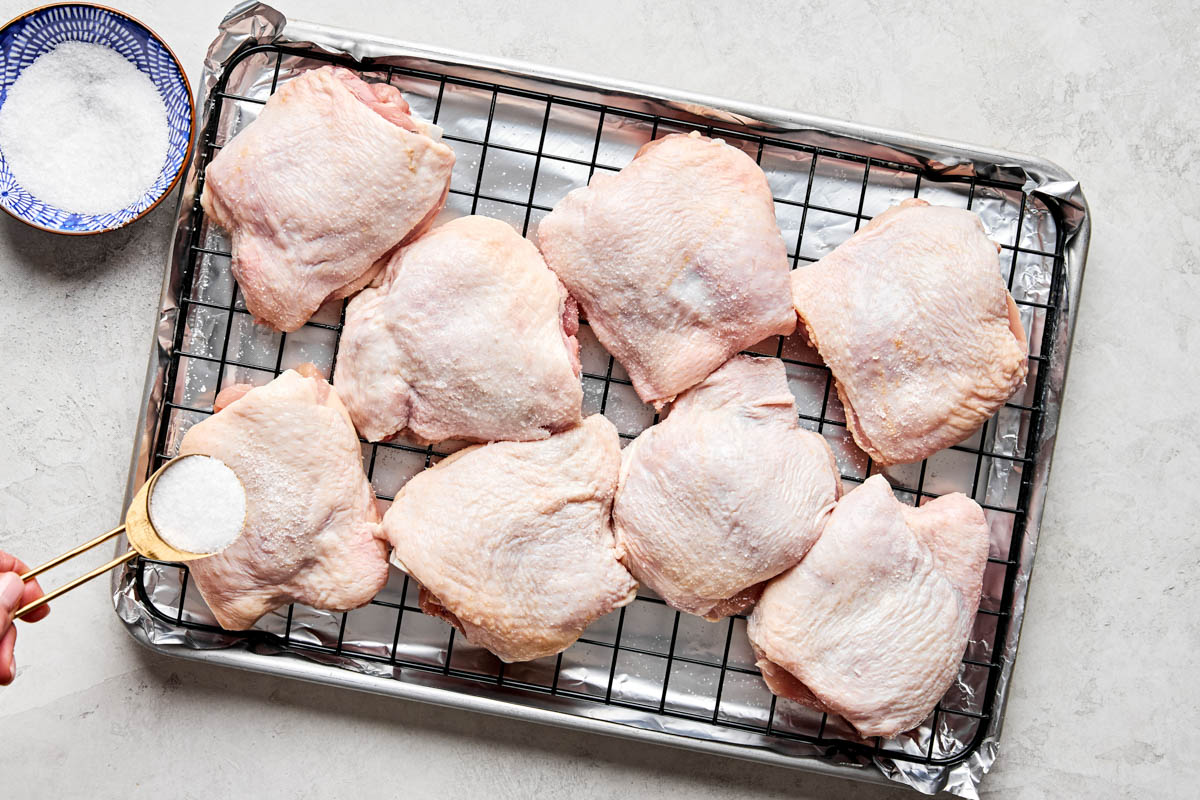
- Prepare the chicken thighs: Trim and discard any excess fat and skin from the back and sides of the chicken thighs. Work your fingers under the skin on the top of each chicken thigh, gently loosening it from the meat while keeping the edges intact. Pat the trimmed chicken thighs as dry as possible with paper towels, then place on a foil-lined rimmed baking sheet fitted with a rack. Sprinkle 1 tablespoon kosher salt over the skin, covering the surface as evenly and completely as possible. Set aside for 1 hour.
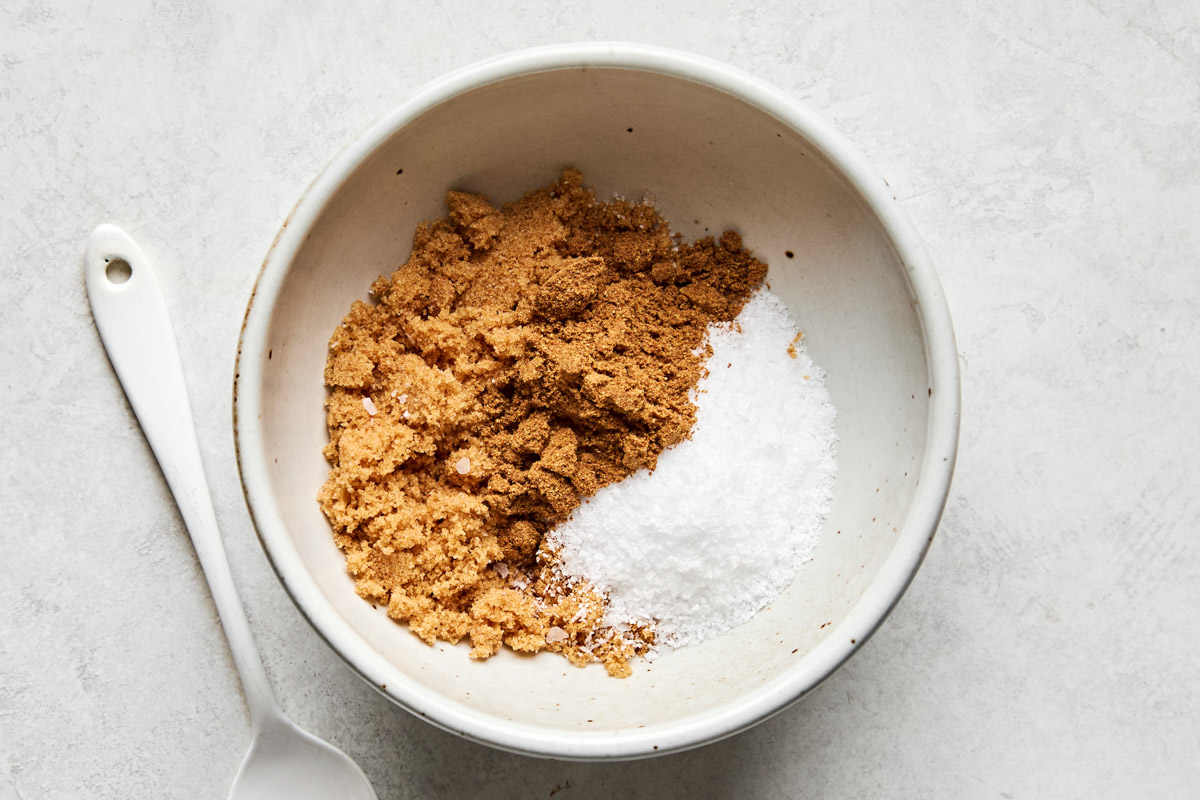
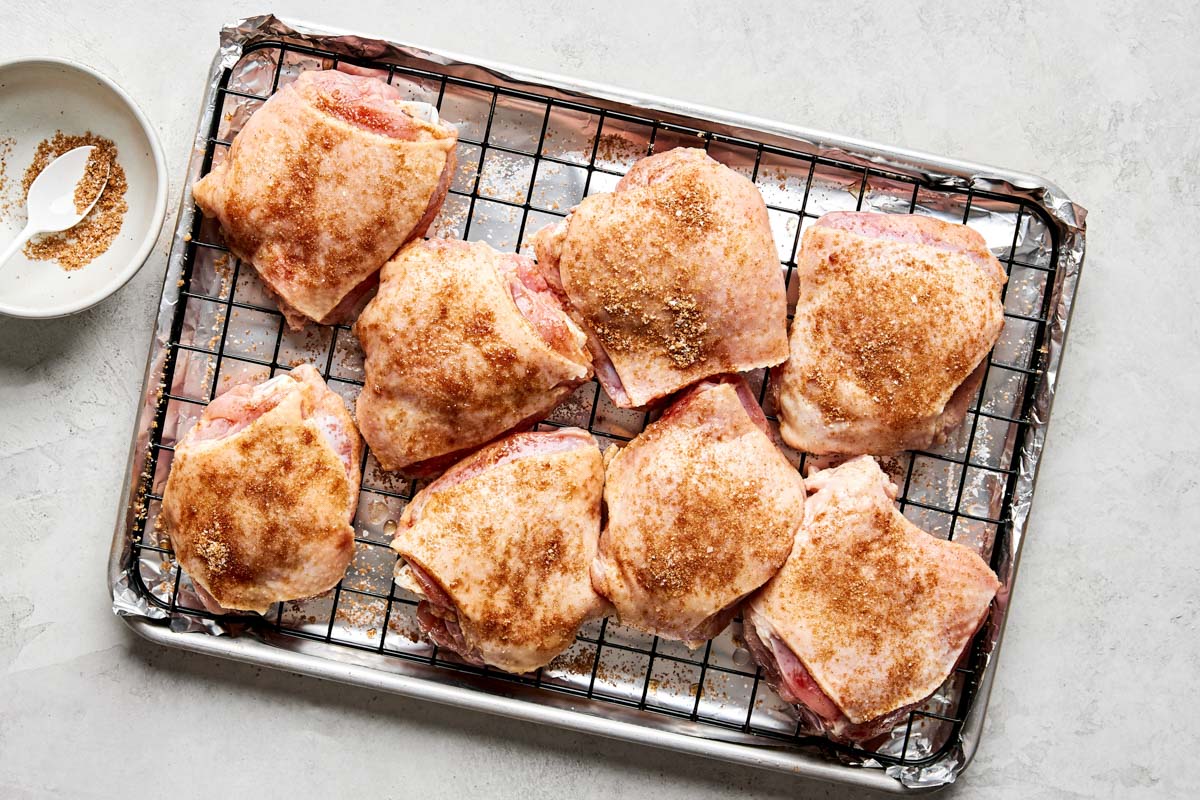
- Meanwhile, mix the dry brine: Add the brown sugar, kosher salt, and Chinese five spice to a small bowl and mix to combine well. Set aside.
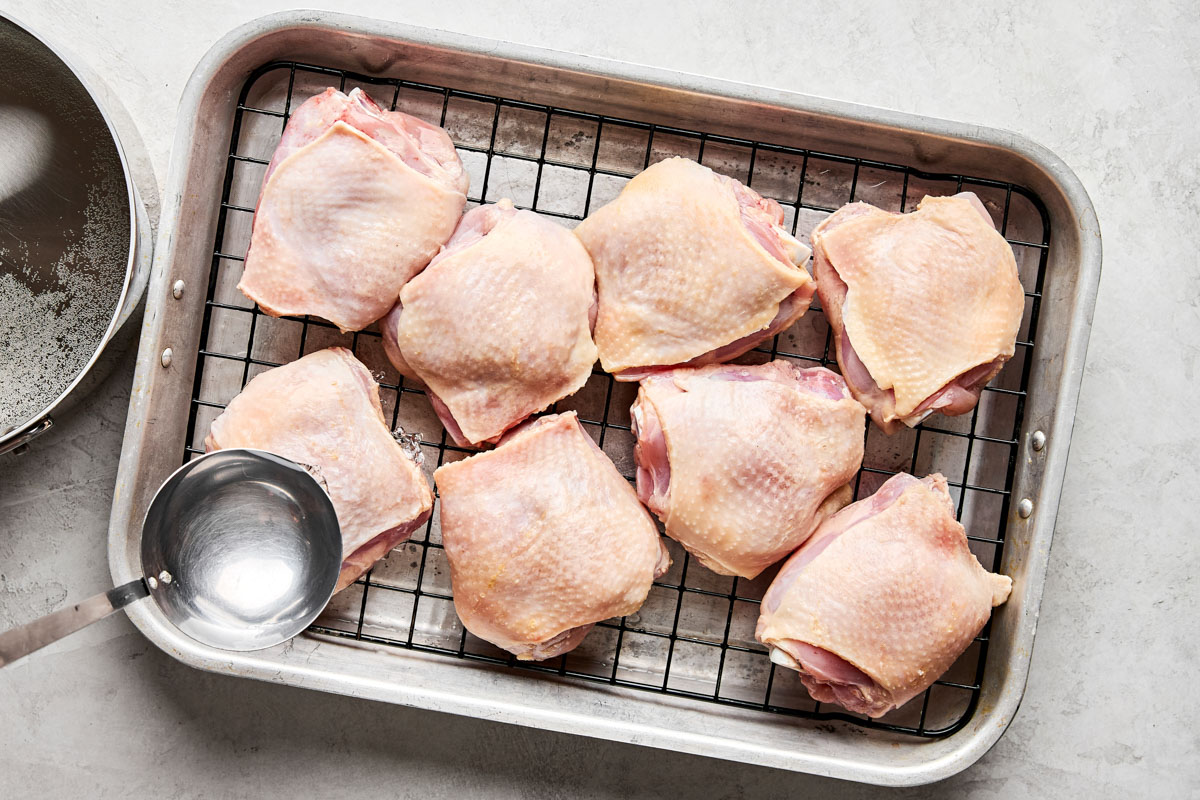
- Rinse the chicken thighs with boiling water: When the chicken has sat for 1 hour, bring about 8 cups of water to a boil in a kettle or saucepan. Transfer the rack of chicken thighs to the kitchen sink (leave the baking sheet behind). Very carefully, slowly pour the hot water over the chicken skin (about 1 cup of water per thigh). The skin will contract and tighten immediately, and the rack lets the hot water drain through easily.
- Dry brine the chicken thighs and rest overnight: Carefully transfer the rack of chicken thighs back to the foil-lined baking sheet. Pat them as dry as possible, then season liberally with the dry brine, making sure to add some both under and over the skin. Transfer to the refrigerator and rest overnight, uncovered, to dry out the skin and season the meat throughout.
Day 2: Roasting the Peking Chicken:
- Prep: Preheat the oven to 425 degrees F, ensuring a rack is in the upper third position. Take the chicken thighs out of the refrigerator. Set the rack aside to wipe any excess moisture off of the pan, then return the rack. Pat the dry-brined chicken thighs as dry as possible with paper towels.
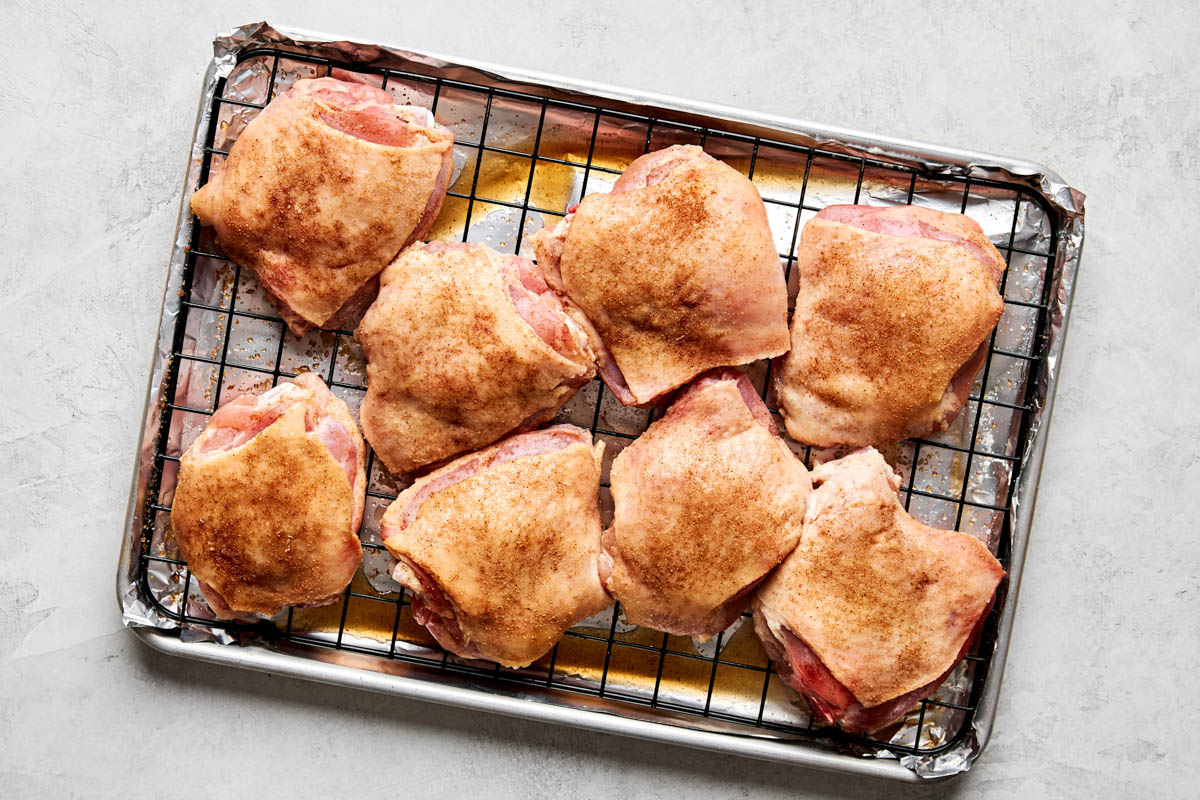
- Mix the Peking glaze and glaze the chicken: Add all listed ingredients to a medium bowl and whisk to combine well. Brush the glaze onto the underside and under the skin of each thigh, avoiding brushing directly over the skin. You will have some glaze leftover – reserve it for roasting. Return the chicken to the rack.
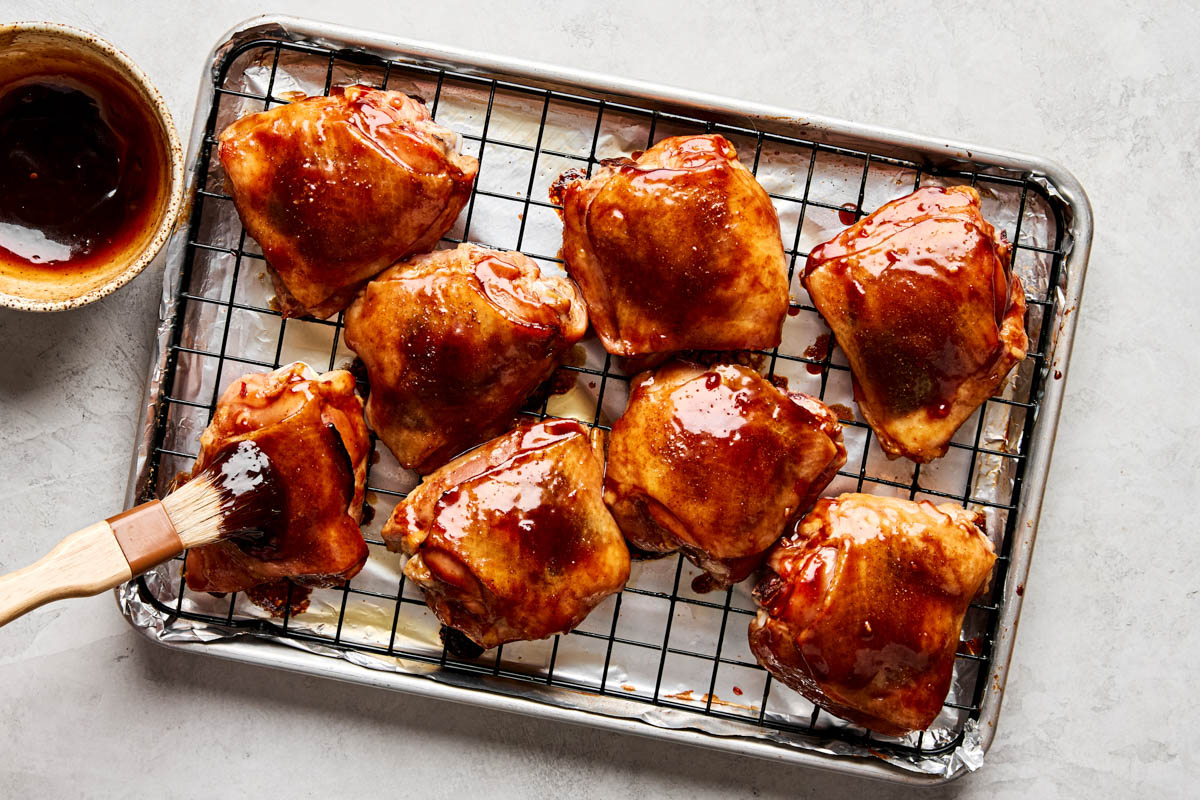
- Roast the Peking chicken thighs: Place sheet pan in oven and roast for 15 minutes. After 15 minutes, brush the remaining glaze on top of the chicken skin and around the sides. Reduce the oven to 400 degrees F and continue to roast for 30-40 minutes more, or until the skin is crispy and deeply browned (without burning) and the thickest part of the thighs reaches 165 degrees F. Remove from the oven and rest for 5 minutes before serving.
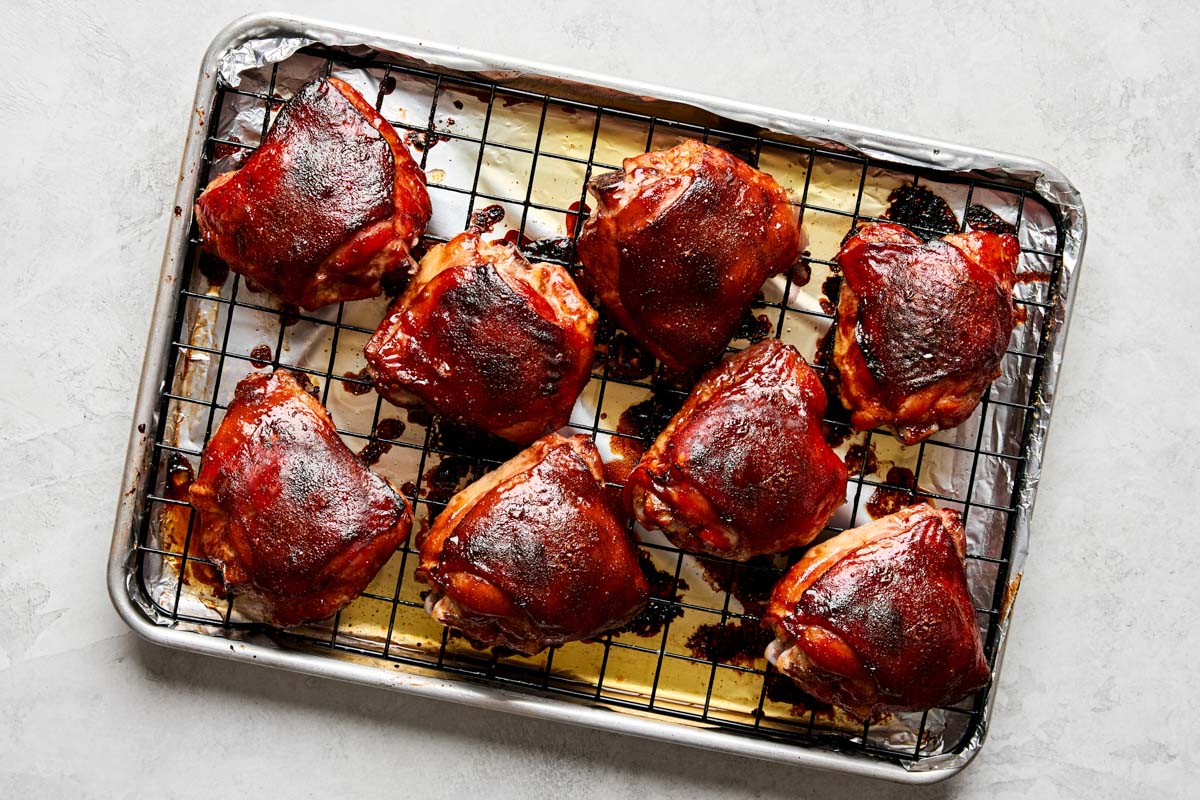
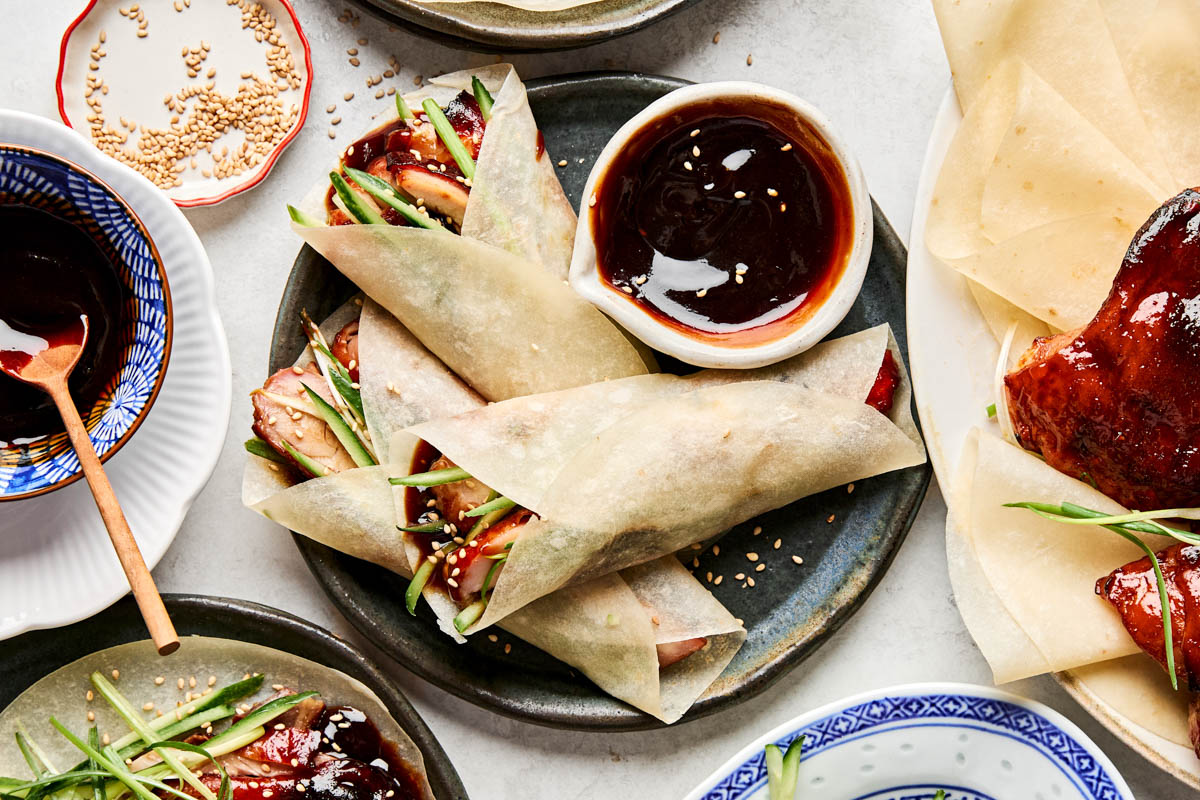
- Serve the chicken thighs whole or slice as desired. For the full Peking duck experience, serve with Mandarin pancakes (see Notes), julienned cucumber, thinly sliced green onions, and plenty of hoisin sauce for drizzling. These sticky-sweet chicken thighs are also great over light and sticky rice with veggies like roasted broccoli or sautéed bok choy – just don’t skip the extra hoisin sauce. Enjoy!


Notes
- Mandarin pancakes are thin, tender Chinese flatbreads traditionally served with Peking duck. They’re very similar to the wrappers served with mu shu pork, or like very delicate flour tortillas, perfect for rolling up the duck and all the fixings. If you need help sourcing, here are 3 easy options:
- Store-bought: You can find Mandarin pancakes in the freezer section of most Asian grocery stores; just steam, microwave, or warm them in a dry skillet before serving to make them soft and pliable.
- Homemade: If you’re up for a kitchen project, Mandarin pancakes are simple to make from scratch with just flour and hot water, plus a little patience kneading and rolling. I use the recipe from my friend Kristina Cho’s Mooncakes and Milk Bread.
- In a pinch: Scallion pancakes are a delicious, albeit completely untraditional, alternative. They’re thicker, chewier, and much more aromatic than Mandarin pancakes, but also pretty easy to find in the freezer section of many conventional grocery stores. I always keep a few bags from Trader Joe’s on hand.
- Storage and Reheating: Leftover Peking chicken thighs will keep, stored in an airtight container in the fridge, for 3-4 days. Reheat in a 350 degree F oven for 12-15 minutes or air fryer for 5-7 minutes, until warmed through and the skin is crisp again. You can quickly reheat in the microwave, though the chicken will lose its crispiness.