

The Absolute Best Bolognese Recipe 10 Years in the Making –Tested, Perfected, and Loved by All!
As a lover of Italian food and wine, pasta bolognese has always been one of my favorites. I first experienced it while working at a fine-dining Northern Italian restaurant in Milwaukee, where our rigatoni bolognese was a signature dish.
With some persistent begging, Chef eventually walked me through the basics so I could recreate it at home.
10+ years later, homemade bolognese is not just my favorite thing to cook, it’s also one of my culinary specialties. I’ve shared many versions here on PWWB, but this Slowly Simmered Bolognese Sauce is my personal favorite.

While many claim to make “the best bolognese,” as a longtime bolognese enthusiast, I can confidently say this recipe is truly the best. The secret? Slooowly cooking a hearty trio of beef, pork, and pancetta with aromatic vegetables, tomatoes, and red wine. A gentle 90-minute simmer develops deep, decadent flavor.
The process is mostly hands-off, but small details – like deeply caramelizing the soffritto, using a generous amount of fresh herbs, and cooking it low and slow – make all the difference. The result is a restaurant-worthy bolognese sauce every time.
Just toss it with pasta, gnocchi, or spoon it over creamy polenta for the ultimate comfort food meal. It’s perfect for everything from a cozy Sunday supper to special occasions like Christmas and Valentine’s Day. The best of the best!
✨Quick Note! ⇢ While this bolognese recipe is a bit of a project (hello, 90-minute simmer! 😍), the results are so worth it – rich, decadent, and totally restaurant-worthy. If you’re looking for something faster or lighter, be sure to try my Weeknight-Friendly Turkey Bolognese.

Easy Ways to Make Your Pasta Dinner Taste As Good As Any Trattoria 🍝
Get 5 days of pasta tips learned from my years in a fine-dining Italian restaurant.

Quick Recipe Background ⇢ What is Bolognese?
To understand bolognese, you first need to understand ragu. Ragu describes a slowly simmered Italian meat sauce, typically made with soffritto, tomatoes, and wine. It’s much richer and heartier than a simple marinara sauce, almost more like a stew that’s served with pasta, gnocchi, or polenta.
You can make all kinds of ragu, but the star is always the meat (or sometimes a meaty vegetable, like wild mushrooms).
Ragu alla Bolognese (pronounced bowl-LUH-nayz) is the classic beef-and-veal sauce from Bologna, a Northern Italian city in Emilia-Romagna. The most well-known authentic bolognese recipe is credited to beloved cook, Marcella Hazan.
My version leans Italian-American, blending Bologna’s iconic sauce with Southern Italy’s tomato-forward ragu. I tested, tweaked, and perfected it over the better part of a decade before sharing it here on PWWB in 2018.
6 years later, I still think it’s one of the best recipes I’ve ever published – I can’t wait for you to try it!

Key Ingredients
What is the best meat for bolognese sauce? ⇢ To create an extra-rich sauce, I suggest using a combination of ground beef, ground pork, and pancetta (cured, pork belly, similar to an unsmoked bacon).
If your grocery store or local Italian deli sells a “meatball mix” or “meatloaf mix” (typically a blend of ground beef, veal, and pork), go for it!
Other key ingredients:
- Red wine – Use your favorite good-quality medium-bodied red. I always opt for Chianti or Barbera. Merlot also works well.
- Heavy cream – While not traditional, I like to finish bolognese sauce with a good splash of heavy cream. In my experience, it brings a luscious quality to the sauce, rounding out the robust flavor. If you prefer not to use heavy cream, no problem.
Restaurant-Worthy Pasta Essentials
 Buy Now →
  Buy Now →
  Buy Now →
  Buy Now →
  Buy Now →
  Buy Now →
 How to Make Bolognese Sauce
The secret to making the absolute best bolognese is building layers of flavor through browning, deglazing, and simmering. Each step adds depth – from browned meat to deglazed fond, and finally, a long, gentle simmer that brings everything together.
While it requires some prep and patience, it’s a simple, one-pot operation that’s mostly hands-off. The stove does most of the work! The result? A restaurant-worthy sauce with incredible richness – well worth the wait, I promise.
First, Prepare Soffritto and Pestata
This bolognese sauce starts with 2 building blocks of flavor that lay the foundation for everything to come: soffritto (an aromatic blend of finely chopped carrots, celery, and onion) and pestata (a mix of pancetta and garlic).


Brown the Pestata, Soffritto, and Beef-Pork Mixture
This is where the magic happens. As you slowly brown the pestata, soffritto, and meat, their flavors deepen through the Maillard reaction, a key process in creating rich, complex bolognese.
These steps take time, but they’re essential for building depth. Patience is key – the longer you let these ingredients brown, the more flavorful your sauce will be.

Add the pancetta-garlic mixture to a heavy-bottomed pot and cook until browned and rendered. Why? ⇢ A flavor-boosting technique I learned from Lidia Bastianch, the fine bits of pancetta and garlic practically melt into the bolognese sauce as it simmers, infusing it with decadent, luscious flavor.

Stir in the veggies and cook until deeply browned, almost caramelized – about 15-20 minutes. Why? ⇢ Browning the vegetables adds depth and leaves fond (flavor-packed browned bits) on the bottom of the pot.

Sear the beef and pork 2-3 minutes per side, then break the meat into small pieces and stir in some tomato paste. Tip! ⇢ Cook the mixture 2-3 minutes longer to bring out the natural sweetness of the tomato paste and cook off its raw, canned taste.
Deglaze the Pan and Build the Bolognese Sauce
Once the base ingredients are browned, deglaze with red wine, which loosens the caramelized bits from the pot and incorporates their intense flavor into the sauce.

Pour red wine into the pot, scraping up the browned bits of fond from the bottom. Why? ⇢ The fond contains tons of flavor, and deglazing ensures it’s fully incorporated into the sauce.

Stir in crushed tomatoes and loosen the mixture with broth or water, then toss in bay leaves, fresh rosemary and thyme, and a parmesan rind if you have one on hand. Tip! ⇢ Tie the herbs with kitchen twine for easy removal once the sauce is done simmering.
Slowly Simmer and Finishing Touches
Once combined, the bolognese is ready to simmer. Simmering the sauce for at least 90 minutes lets it reduce, concentrate, and develop a complex, rich flavor. This is when everything comes together, slowly melding and intensifying. The longer it simmers, the better it gets!

Let the sauce simmer uncovered, stirring occasionally. Then, finish the bolognese with heavy cream and parmesan cheese. Why? ⇢ A splash of cream adds a velvety quality, while the parmesan boosts the savory flavor thickens the sauce.
Alternate Cooking Methods + Storage Tips and Tricks
Alternate Cooking Methods
I love prepping bolognese sauce with a low stovetop simmer, but you can also prepare this recipe in a slow cooker or Crockpot, or an electric pressure cooker like the Instant Pot. Check the Recipe Notes, below, for step-by-step guidance!
Make-Ahead, Storage, and Freezing
Bolognese sauce stores very well – its flavors get even better the longer it sits! Feel free to prep the sauce ahead of time. It will keep in the refrigerator for up to 5 days or in the freezer for up to 3 months. Check the Recipe Notes, below, for step-by-step guidance!
Serving Suggestions: How to Make Pasta Bolognese
Once your bolognese sauce is simmered to perfection, all that’s left to do is toss it with pasta!
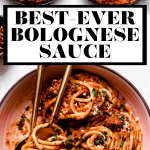
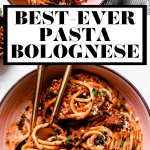
What is the best pasta for bolognese sauce? ⇢ Italian bolognese is traditionally served on a wide and flat noodle, such as pappardelle or tagliatelle. Here in the US, you’ll often see it served as spaghetti bolognese. I love using bucatini (pictured), a tubular spaghetti with the best chewy texture. If you prefer short pasta, go for a ridged, tube-shaped shape like rigatoni or paccheri.
The #1 mistake I see home cooks make when preparing a pasta dish is simply plopping sauce on a plate of cooked pasta. Please don’t do this! For restaurant-worthy results, always simmer your al dente pasta with the bolognese sauce before serving. To learn more, check out my complete guide for How to Cook Pasta Perfectly Every Single Time.


A rich dish like pasta bolognese always pairs beautifully with a light, fresh side dish. Make it a meal with my Mixed Greens Side Salad, some ultra-garlicky Garlic Bread, and a bold red wine – you can never go wrong with Chianti Classico, Montepulciano d’Abruzzo, or Super Tuscan! Don’t forget creamy-dreamy Individual Tiramisu Cups for dessert!

I can’t wait for you to try my Best-Ever Bolognese. If you do, be sure to let us know! Leave a comment with a star rating below. You can also snap a photo and tag @playswellwithbutter on Instagram. We LOVE seeing your PWWB creations! ♡ Happy cooking!
Print
Truly, The Best-Ever Bolognese Sauce (Slowly Simmered)
- Prep Time: 15 minutes
- Cook Time: 2 hours 30 minutes
- Total Time: 2 hours 45 minutes
- Yield: serves 10–12 1x
- Category: Pasta Recipes, Main Dishes
- Method: Stovetop
- Cuisine: American, Italian
Description
Enjoyed by thousands with countless rave reviews, this is truly the Best-Ever Bolognese Sauce recipe!
Inspired by my time working at a fine-dining Italian restaurant, this rich and hearty meat sauce slowly simmers ground beef, ground pork, and pancetta with caramelized vegetables, fresh herbs, tomatoes, and red wine, creating incredible depth of flavor.
Finish with heavy cream and parmesan, then toss with spaghetti, pappardelle, or rigatoni for a restaurant-worthy pasta bolognese at home!
Ingredients
for the Slowly Simmered Bolognese Sauce:
- 2 large carrots, roughly chopped
- 1 stalk celery, roughly chopped
- 1 large yellow onion, roughly chopped
- 4 ounces pancetta, roughly chopped (see Recipe Notes)
- 6 cloves garlic
- 2 tablespoons olive oil
- 1 pound ground beef
- 1 pound ground pork
- one 6-ounce can tomato paste
- 1 cup medium-bodied red wine, such as Chianti
- 3–4 sprigs fresh rosemary
- 10–12 sprigs fresh thyme
- 2 dried bay leaves
- optional: 1 parmesan rind
- one 28-ounce can crushed tomatoes
- up to 2 cups chicken broth or water
- kosher salt and ground black pepper, to season
for Pasta Bolognese:
- 32 ounces pasta of choice, such as spaghetti, bucatini, or rigatoni
- ½ cup heavy cream
- ½ cup grated parmesan
- for serving, as desired: grated parmesan, finely chopped fresh basil or parsley, crushed red pepper flakes, etc.
Instructions
Slowly Simmered Bolognese Sauce:
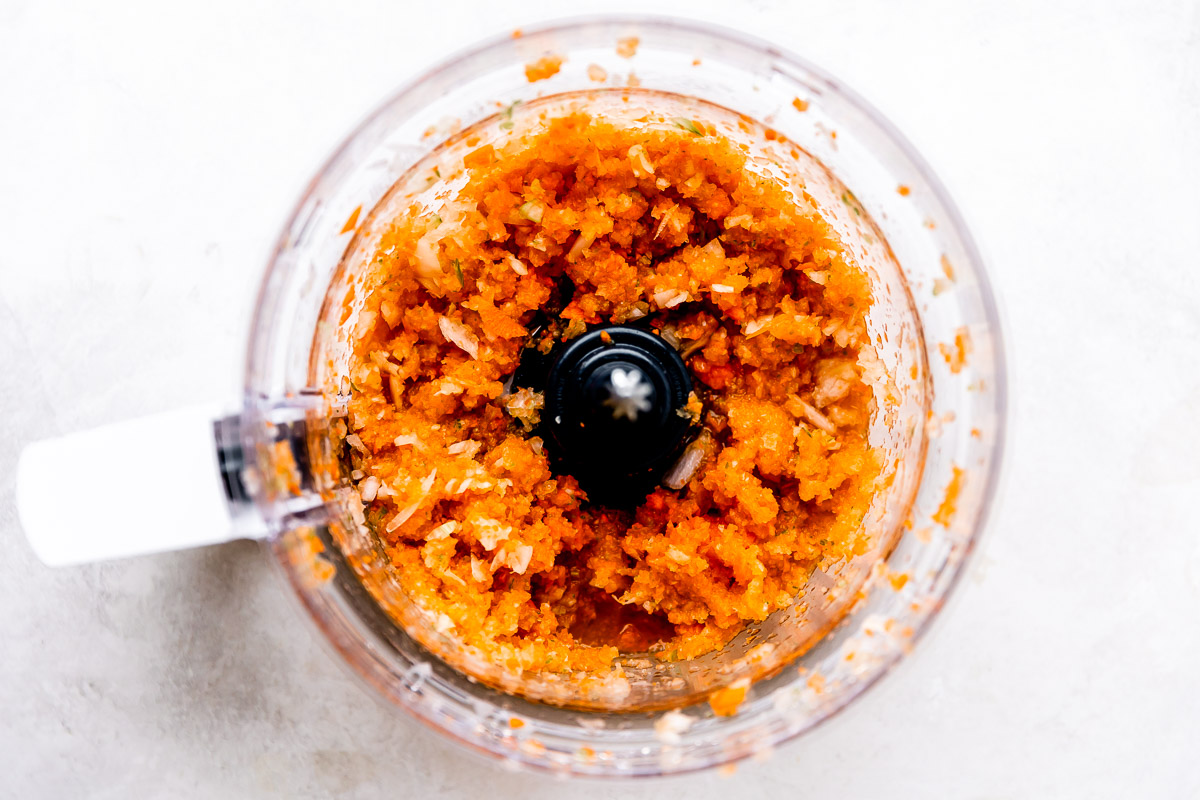
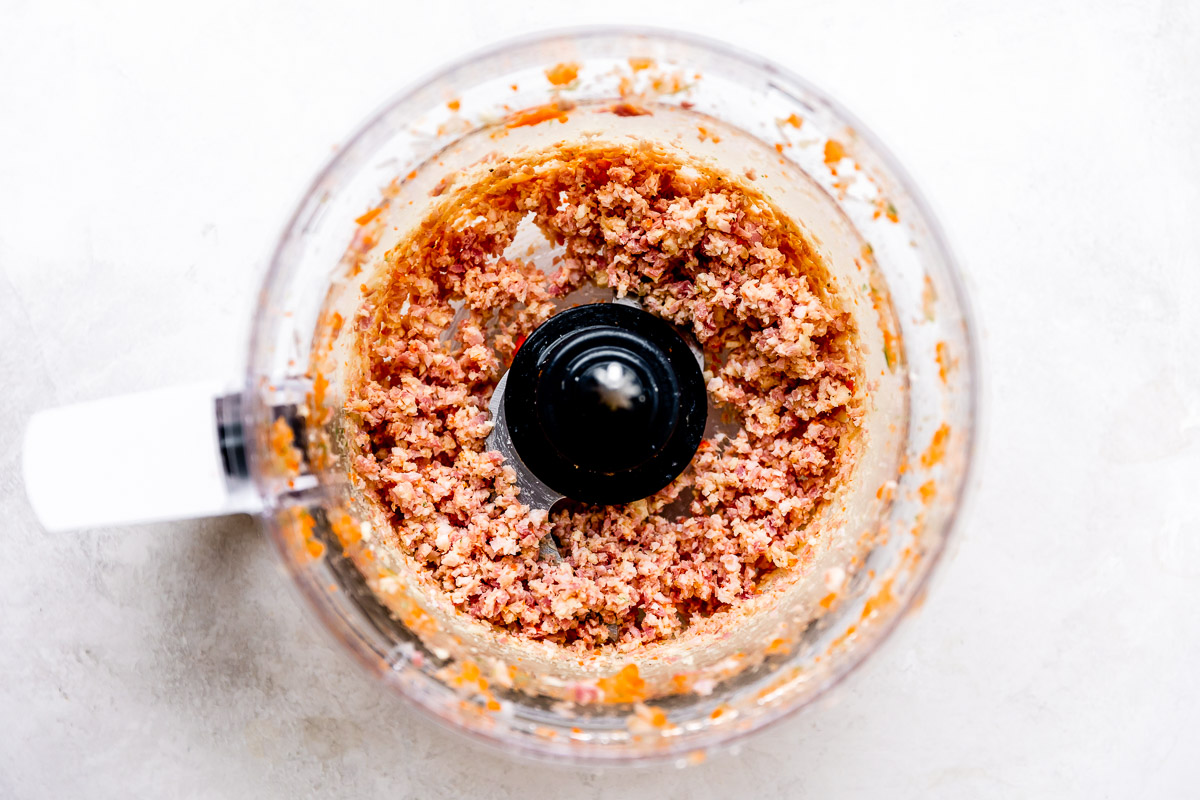
- Prepare the soffritto and pestata. First, the soffritto: to the bowl of a food processor, add the roughly chopped carrot, celery, and onion. Pulse to break the veggies down into fine pieces. Transfer to a large bowl and set aside. For the pastata: add the pancetta and garlic to the same food processor (no need to wash/rinse it!) and pulse to break the mixture down into fine pieces–the garlic should disappear into the pancetta fat. Set aside.

- Render the pestata. Add the olive oil to a large, heavy-bottomed pot (at least 4-quart capacity) over medium heat. Once hot and shimmering, carefully add the pestata mixture from Step 1. Cook, stirring occasionally, until the pestata renders, about 4-5 minutes. The pancetta will be golden and garlic will be fragrant.

- Brown the soffritto. Add the soffritto mixture from Step 1 to the pot with the rendered pestata. Season with 1 teaspoon kosher salt. Stir to combine well. Cook, stirring occasionally, until the soffritto is deeply browned and fragrant, 15-20 minutes. If the vegetables brown too quickly, reduce the heat to medium or medium-low. Once browned, push the soffritto mixture to the outer edges of the pot.
- Brown the meat and tomato paste. Season the ground beef and pork generously with 1 teaspoon kosher salt each. Add to the center of the pot. Cook 2-3 minutes without disturbing so the meat deeply browns. Once browned on both sides, use a wooden spoon to break the meat into fine pieces. Stir to combine with the soffritto. Stir the tomato paste to the pan, coating the meat mixture. Cook 3-4 minutes longer, until deeply browned.
- Deglaze the pan. Slowly pour in the red wine, using a wooden spoon to scrape up any browned bits that may have formed on the bottom of the pan. Simmer until the wine is nearly cooked off, 4-5 minutes.
- Build the bolognese sauce. Use kitchen twine to tie the fresh herbs together (or finely chop if you do not have twine). Add the herbs, bay leaves, and parmesan rind (if using) to the pot. Stir in the crushed tomatoes tomatoes and broth/water – I like starting with about 1 cup broth/water at first, stirring more in as needed while the sauce simmers.
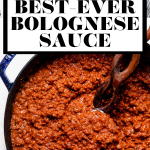
- Slowly simmer the bolognese sauce. Bring the bolognese sauce to a boil, then reduce heat to maintain a gentle simmer. Partially cover the pot (place the lid on the pot such that it’s just partially covered, allowing some steam to escape as the sauce simmers). Simmer, stirring occasionally, for 90 minutes. If the bolognese sauce begins to reduce too much, add in a splash of broth/water and/or turn the heat down further.
- Finish the bolognese sauce. Once simmered, remove the spent herbs, bay leaves, and parmesan rind from the pot and discard. Taste the sauce and adjust seasoning as desired. At this point, you can cool and store for later use or proceed with pasta bolognese assembly (below).


Pasta Bolognese:
- Boil the pasta: Bring a large pot of salted water to a boil. Add the pasta and cook, stirring occasionally, until the pasta is cooked to al dente according to package directions. Carefully dip a liquid measuring cup into the pot, reserving about 1 cup of the starchy pasta water, and set aside. Carefully drain the pasta – do not rinse it! (Learn more! ⇢ How to Cook Pasta Perfectly Every Single Time!)
- Finish the slowly simmered bolognese sauce: Meanwhile, as the pasta boils, bring the bolognese sauce up to a simmer. Stir in the heavy cream and parmesan cheese. Continue to simmer over low heat, stirring occasionally.
- Pasta bolognese: Add the cooked pasta to the pot with the bolognese sauce, tossing to coat. The bolognese sauce should evenly coat the pasta. Add in some of the reserved pasta water if the sauce needs to loosen up a little; add in an extra handful of parmesan if it needs to tighten up a little. Cook over medium heat for 1-2 minutes, allowing the pasta to meld with and absorb some of the bolognese sauce.
- Serve: Portion the pasta bolognese into individual pasta bowls, topping with additional grated parmesan, chopped fresh herbs, and/or crushed red pepper as desired. Serve immediately. Enjoy!


Notes
Jess’ Tips and Tricks:
- Pancetta is cured, unsmoked Italian bacon. Widely available at most conventional grocery stores, you can typically find pancetta already diced up in an individual container near the cured meats and bacon, or cut-to-order at the deli counter. Feel free to swap it out with regular American-style bacon if that’s what you can find easily – thick, center-cut bacon works best for this recipe.
Make-Ahead, Storage and Freezing:
- Pasta Bolognese Storage and Reheating: Once assembled, pasta bolognese will keep, stored in an airtight container in the refrigerator, for up to 4 days. Reheat in the microwave or on the stovetop until warmed through, adding a splash of water/broth as needed to loosen the sauce.
- Make-Ahead Bolognese Sauce Storage and Reheating: Bolognese sauce stores incredibly well – it’s the type of thing that gets even better as it sits and its flavors have the chance to meld together. To store, prep the sauce through Step 8 of Recipe Directions, above. Once cooled, transfer to an airtight container and store in the refrigerator for 4-5 days. Whip up a batch of pasta bolognese during the week by reheating the bolognese sauce in a skillet, and completing the recipe according to “Pasta Bolognese” Steps 1-4, above.
- Bolognese Sauce Freezing Instructions: Bolognese sauce is also incredibly freezer-friendly. To freeze, transfer the cooled bolognese sauce to a freezer container (or divide it up between multiple freezer containers for smaller portions – Souper Cubes are my fave!). Freeze up to 3 months. To thaw, place the frozen bolognese in the refrigerator overnight or submerge the freezer container in room temperature water for a quicker thaw. Reheat the bolognese sauce in a skillet. If the thawed bolognese sauce is a little watery at first, simply allow any residual water simmer out. If the thawed bolognese sauce is too thick, simply add in a splash of water or stock until your desired consistency is reached. Complete the recipe according to “Pasta Bolognese” Steps 1-4, above.
Alternate Cooking Methods:
- Oven Braised Bolognese Sauce: Prep the bolognese sauce according to Steps 1-6, above. Rather than slowly simmering on the stovetop, transfer the covered pot to a 325 degree F oven. Slowly cook in the oven for 90 minutes, until the sauce is thickened and has a deep red color, then finish the bolognese sauce as directed in Step 8 and complete the recipe according to “Pasta Bolognese” Steps 1-4.
- Crock Pot / Slow Cooker Bolognese Sauce: Prep the sauce according to Steps 1-5, above. Transfer the deglazed meat mixture to the slow cooker, along with the aromatics, tomatoes, and broth/stock (or water) as directed in Step 6. Slow cook on high for 3-4 hours or on low for 6-8 hours, stirring occasionally. Finish the bolognese sauce as directed in Step 8 and complete the recipe according to “Pasta Bolognese” Steps 2-4, which you can do right in your slow cooker. If your slow cooker has a searing/browning feature, you can use it to cook the entire bolognese sauce recipe (Steps 1-8) in the slow cooker.
- Electric Pressure Cooker / Instant Pot Bolognese Sauce: Use your Instant Pot’s “Sauté” setting to build the bolognese sauce according to Steps 1-6, above. Cover and seal the pressure cooker and cook on manual high pressure for 35 minutes. Allow the pressure cooker to naturally release pressure for 10 minutes before carefully flicking the valve to its “venting” position to vent out any residual pressure. If the bolognese sauce seems a little too liquidy, feel free to turn on the Sauté setting again, letting the sauce simmer down a little before finishing as directed in Step 8. Complete the recipe according to “Pasta Bolognese” Steps 2-4, which you can do right in pressure cooker pot.
Follow along with Plays Well With Butter on Instagram, YouTube, Facebook, and Pinterest for more unfussy recipes that pack a big punch of flavor!







This is by far the BEST Bolognese I’ve ever had. It tastes like the one I had in England about 7 or so years ago and I felt the memories come flooding back.
I love the step by step explanation of what to do and why you’re doing it. It made so much sense and I think it honestly helps to make the cooking process go much smoother and correctly.
The sauce is beautiful. It’s delicious, rich, and melts in your mouth.
Thank you so much for this!
We’re so glad to hear we could bring back some nostalgia for you, Seri. Thanks for trying our recipe!
I’ve never made bolognese before and this was as good if not better than any we’ve ever had at a restaurant. Your instructions were excellent and the pictures at each stage ensured I didn’t make any rookie mistakes. Appreciate the recipe and I can wait to check out your other ones!
Thanks so much, Angee! We work hard to make our recipes easy to follow, and I’m glad the step-by-step photos helped with that!
Luv luv luv. Made this last night. Soooo good.
We’re so happy to hear you loved it! Thanks for the review!