THIS POST IS SPONSORED BY
DeLallo, my go-to for high-quality pasta and Italian cooking staples! All thoughts and opinions are my own.
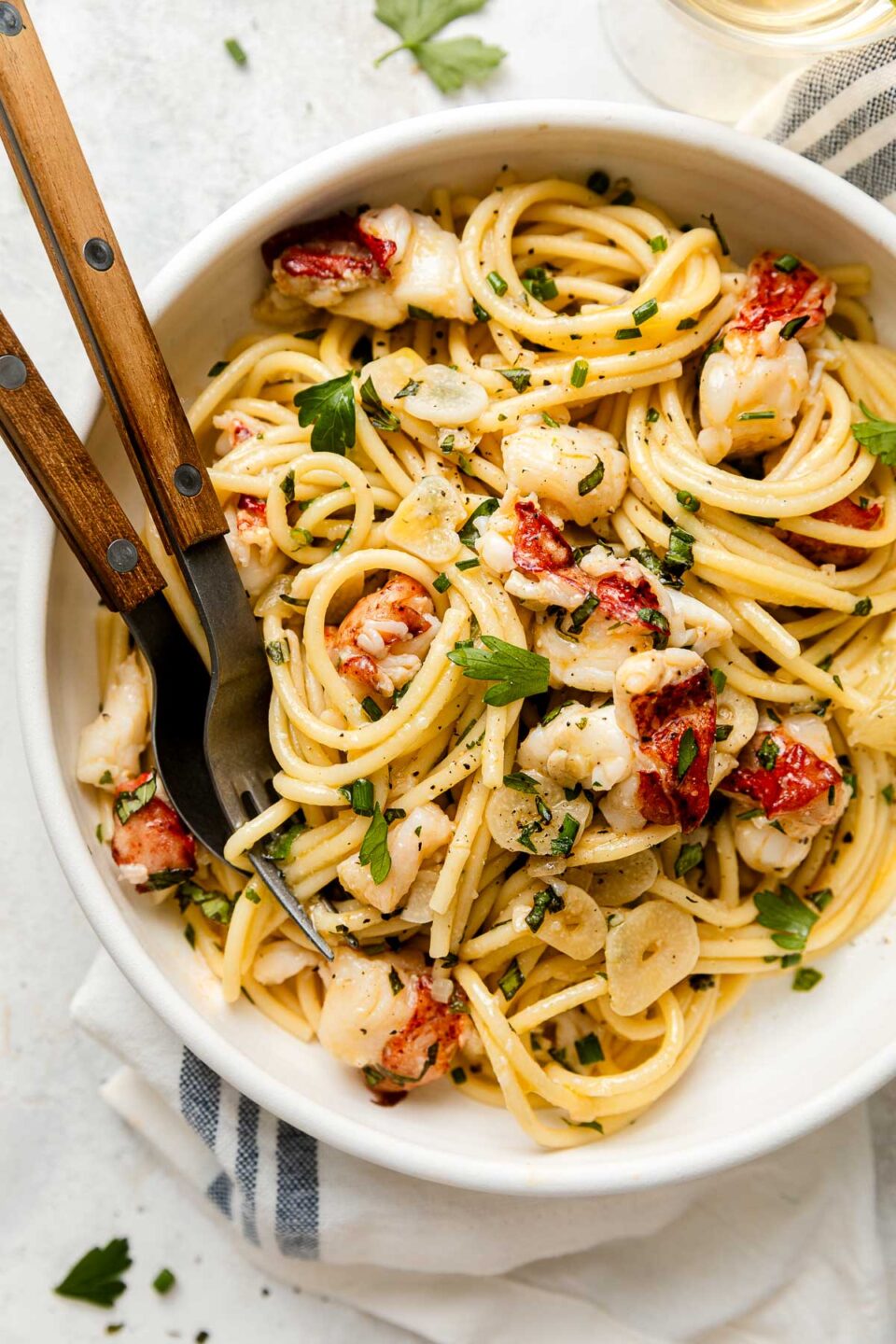
The Ultimate Lobster Pasta, Foolproof and Tested to Perfection
PWWB is well-known for elevated pasta dishes, an obsession I picked up while working at a fine-dining Italian restaurant years ago. But most of my signature pasta recipes are meat-heavy – a 5-Star Best-Ever Beef and Pork Bolognese, or a Meltingly Tender Short Rib Ragu.
There aren’t nearly enough seafood pastas in my repertoire, so I figure it’s about time we change that! And what better place to start than with lobster? 😉💁🏻♀️
When I began researching this dish, I was surprised to see that almost every popular lobster pasta recipe fell into 1 of 2 camps: a spicy tomato sauce (like Fra Diavolo) or a decadent sauce made with heavy cream and cheese. Of course, both are delicious! But I find those rich, bold flavors a bit overpowering for delicate shellfish – and when I’m working with an ingredient as special as lobster, I want it to be the star of the show.
So that became my personal challenge: to create a recipe that truly celebrates beautiful lobster instead of burying it. After lots of trial and error, I found the solution in the most straightforward approach: poaching the lobster right in a quick butter sauce infused with tons of razor-thin garlic.

👩🏻🍳🦞Notes from the Test Kitchen
First came the big challenge: figuring out the lobster itself.
Most lobster recipes start by cooking a whole lobster – a nonstarter for a lot of people, myself included. (Maybe you’re landlocked where fresh lobster has to be special ordered and flown in – quite an investment. Maybe you’re squeamish about handling a live lobster and breaking it down afterward – no judgement!) Pre-cooked meat solves the “how do I even get lobster” problem, but most of us can’t just stroll to the store for a container of freshly picked meat.
Lobster tails ended up being the perfect solution: available in the freezer aisle almost anywhere, easy to prep, and filled with plump meat. ✔️✔️✔️
From there, it was all about finding the easiest, tastiest way to cook lobster tails for pasta. I tested 5 popular methods—baking, broiling, pan-roasting, steaming, and boiling in a court-bouillon (seasoned water)—and none of them felt foolproof enough. The trouble, I realized, is the shell: it holds on to so much heat that the meat goes rubbery by the time it’s cooked through to the center, and at the same time, it blocks any flavor from getting in to the meat.
Thinking back to my Seriously Easy Grilled Lobster Tails recipe, I decided to remove the shell entirely…and that was the winning ticket. Gently cooking the raw meat right in the sauce means it soaks up flavor from the very start. Plus, you can see the moment it turns opaque, so it never overcooks.
As a bonus, it’s the simplest approach I tried – just a few quick steps and no extra dishes to wash! 🙌🏼

Easy Ways to Make Your Pasta Dinner Taste As Good As Any Trattoria 🍝
Get 5 days of pasta tips learned from my years in a fine-dining Italian restaurant.
Lobster Tails: What to Look for, and How to Deshell Them
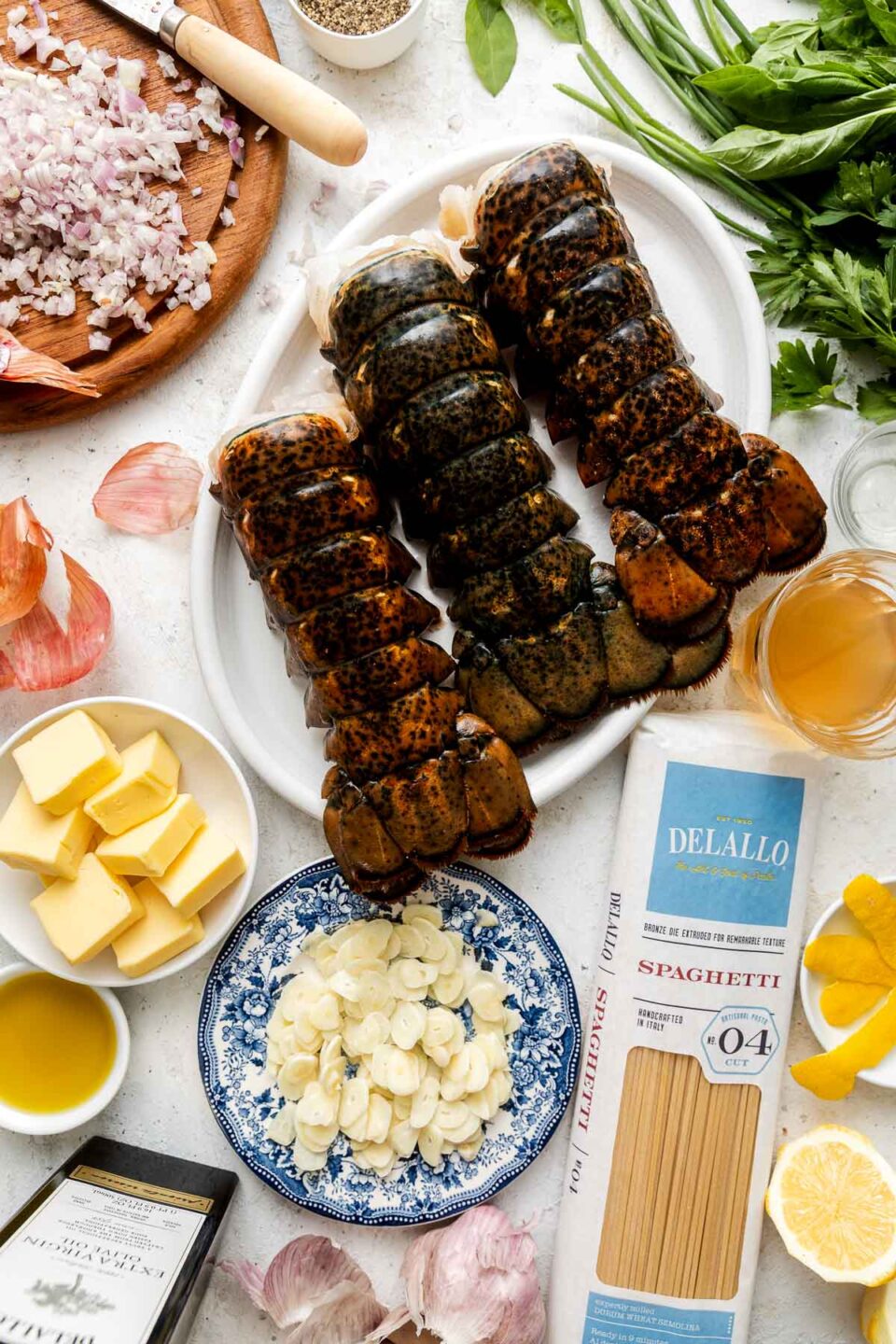
As the star of this dish, it’s important to start with the best-quality lobster tails you can find. For most of us, that means heading to the freezer case – don’t let that deter you. Unless you’re getting it straight off the boat, “fresh” lobster is typically previously frozen anyway!
🦞A few more shopping tips…
- Look for tails that are frozen solid, with no heavy ice crystals or dull, grayish shells – both are signs of freezer burn.
- If you have the option, cold-water lobster (often labeled Maine or North Atlantic) tends to be a bit firmer than warm-water varieties. I found this helpful while recipe testing, since the meat is cooked directly in the sauce.
- Lobster tails are typically sold in two size ranges: 4-6 ounces or 8-10 ounces. I like using larger ones here since they give you more meat than shell. In my testing, three 8- to 10-ounce tails give the 1 pound of raw lobster meat you’ll need for this recipe.
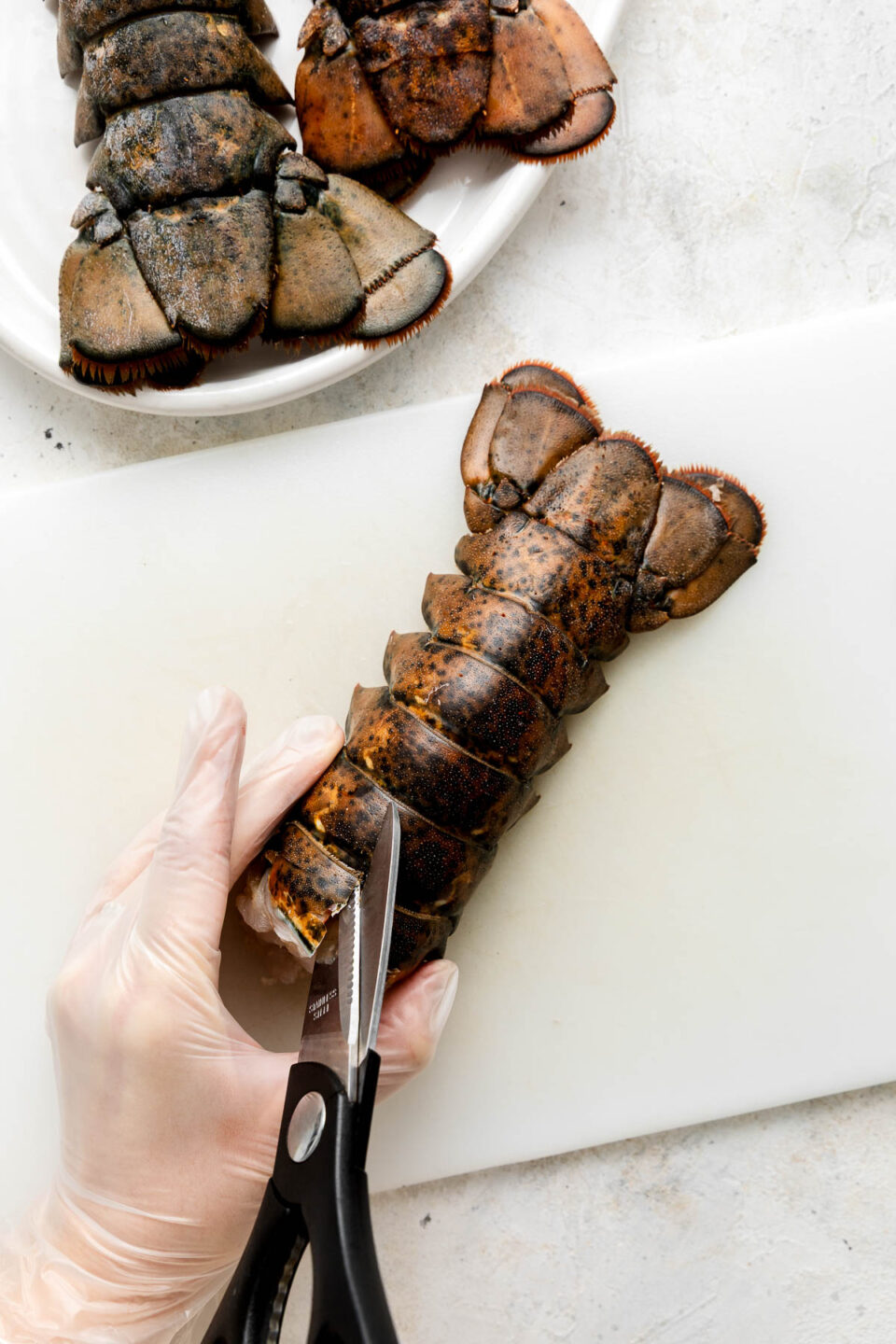
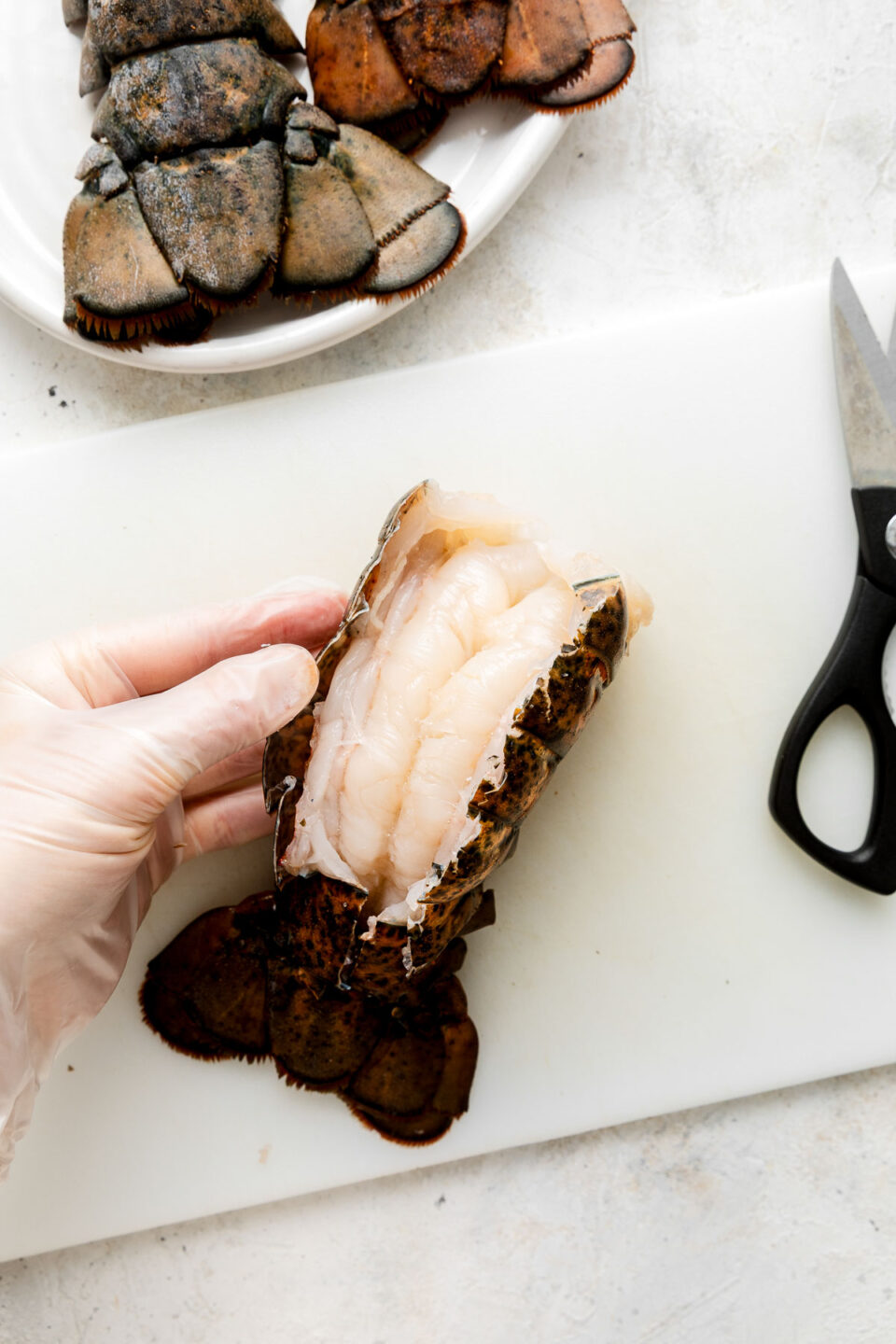
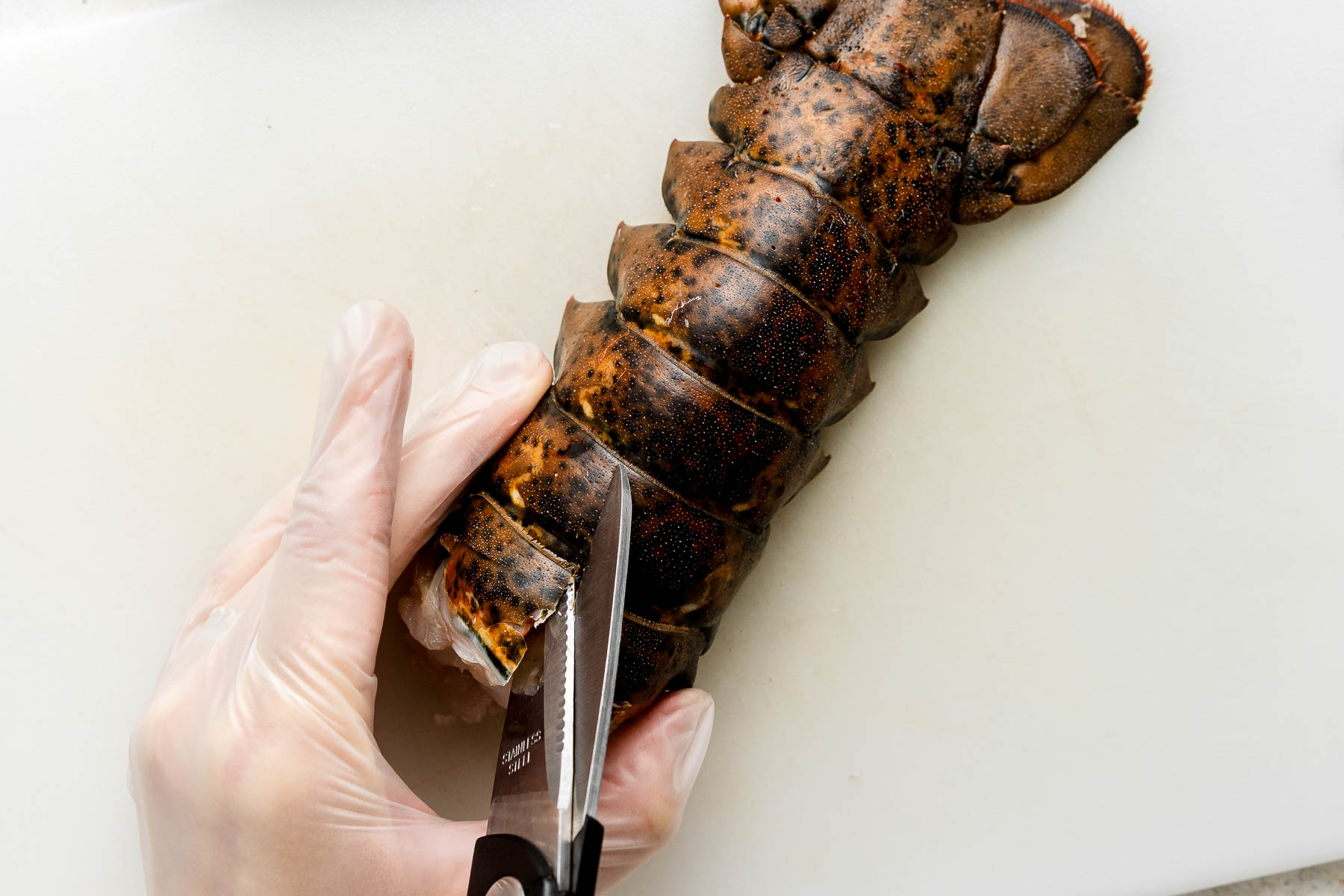
Once thawed, the only prep left is getting the meat out of the shell, which is much easier than it sounds. Unlike working with a whole lobster or claws, you don’t need any special equipment – just a good pair of kitchen shears!
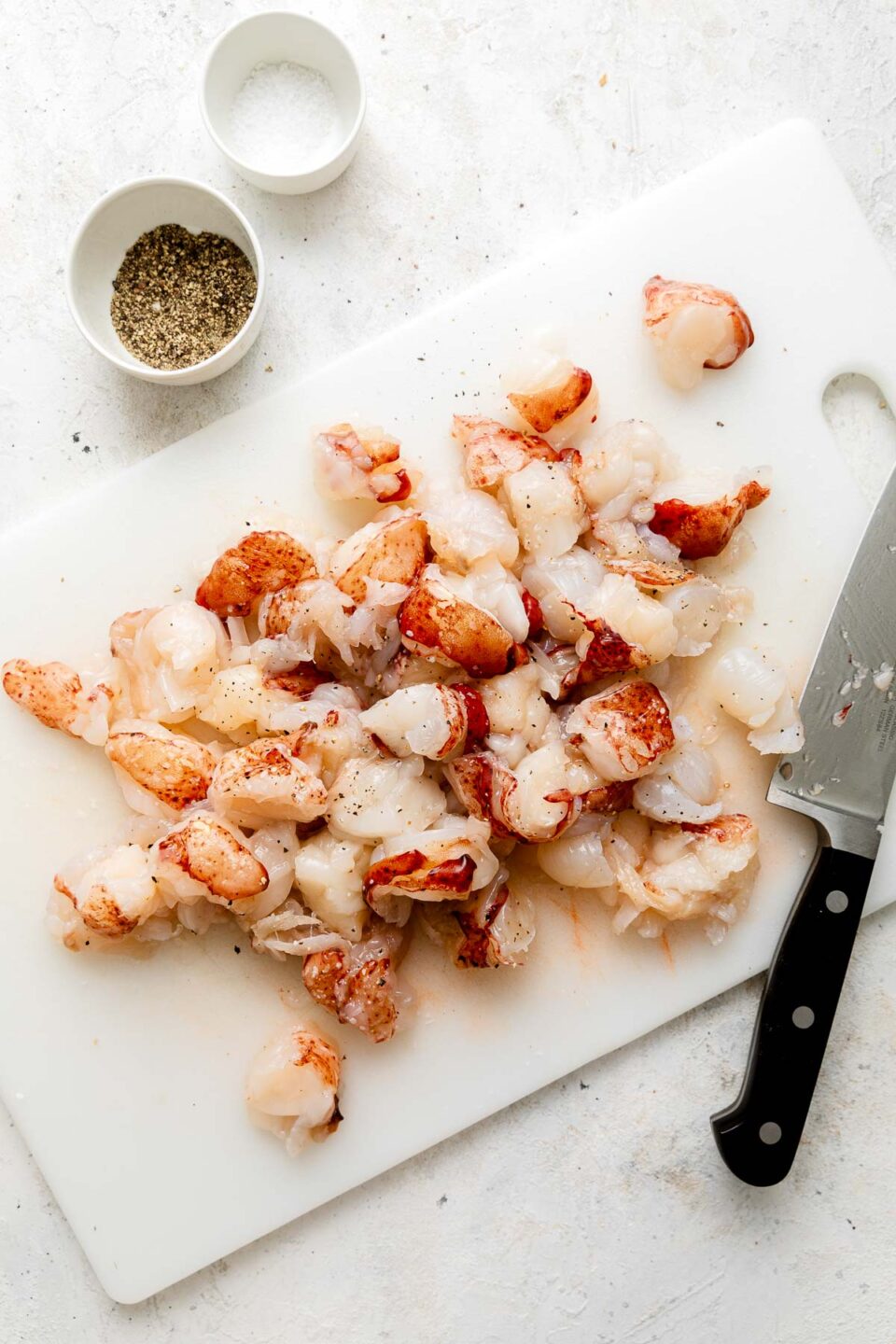
👩🏻🍳Rather skip the shells? ⇢ Feel free to swap in 1 pound of picked lobster meat instead! I tested this swap using previously frozen cooked meat and noticed it released a lot more moisture than the raw tails did. So give it a good rinse and pat it very, very dry before it hits the skillet. Check the Recipe Notes for more guidance!
Essentials for Next-Level Lobster Pasta

DeLallo Extra Virgin Olive Oil
Buy Now → Buy Now →
  Buy Now →
  Buy Now →
 Start by Poaching the Lobster in Garlic Butter Sauce
If you’ve never poached anything before, don’t let the terminology intimidate you. Poaching just means cooking something in liquid – the stove does all the work! Here, the lobster goes right into a garlic-infused butter sauce, where it heats gently until it’s perfectly plump and juicy.
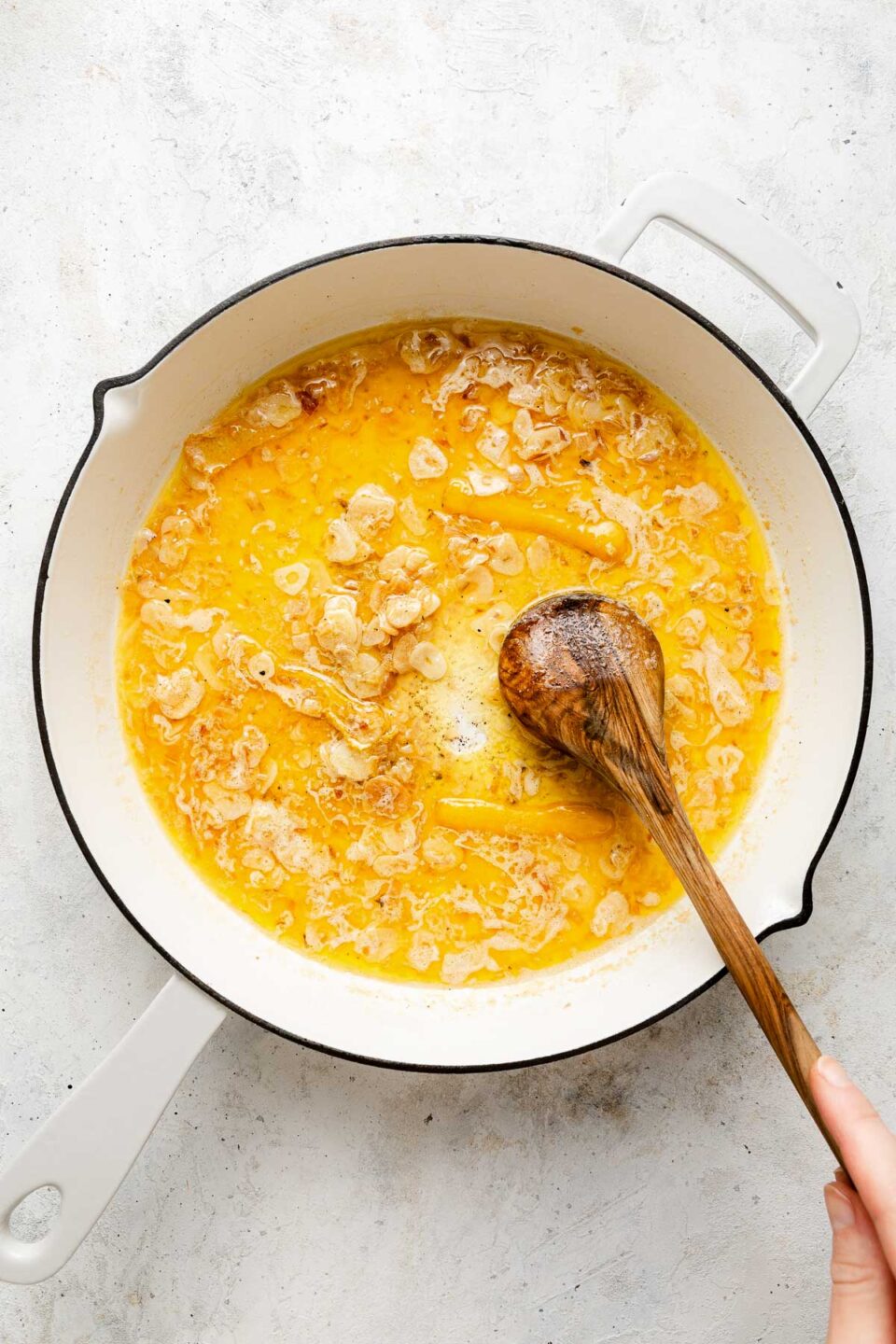
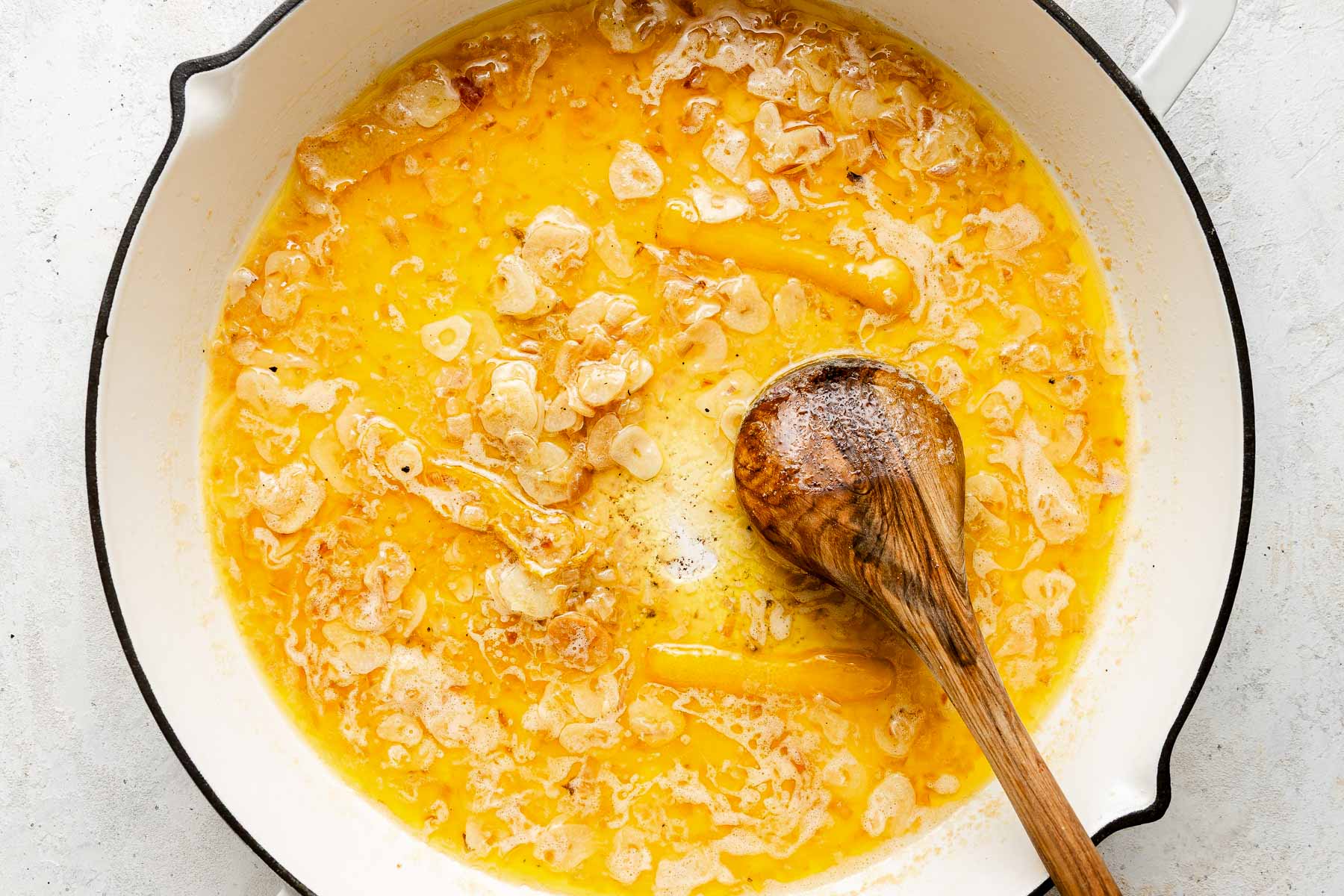
Melt the butter in a large skillet with a splash of olive oil. Add finely diced shallot, thinly sliced garlic, and a few strips of lemon peel. Cook until very fragrant – your kitchen will smell like heaven! Why? ⇢ Oil raises the butter’s smoke point, so it can cook low and slow with the aromatics, taking in all of their flavor without browning or burning.
Stir in stock (seafood or vegetable) and a splash of vinegar. The liquid will sizzle a bit when it hits the pan – let it simmer and continue stirring until everything comes together as a gorgeous garlic butter sauce. Why? ⇢ The vinegar-spiked stock works a lot like wine – it adds just enough brightness to offset the richness, without overpowering the lobster’s delicate flavor. Plus, it keeps this dish completely alcohol-free!
👩🏻🍳Glossy and saucy! ⇢ My vision was to showcase the lobster against a rich, undeniably buttery backdrop – kind of like a warm Connecticut-style lobster roll. 😋 I have zero tolerance for a dry plate of pasta, so I designed this recipe to ensure there’s plenty of sauce to coat every piece of lobster and strand of spaghetti. The golden ratio is 1 stick of butter to ½ cup of stock. Yes, a full stick – you need that much to properly poach the lobster. The stock transforms the butter into a sauce that’s surprisingly light.
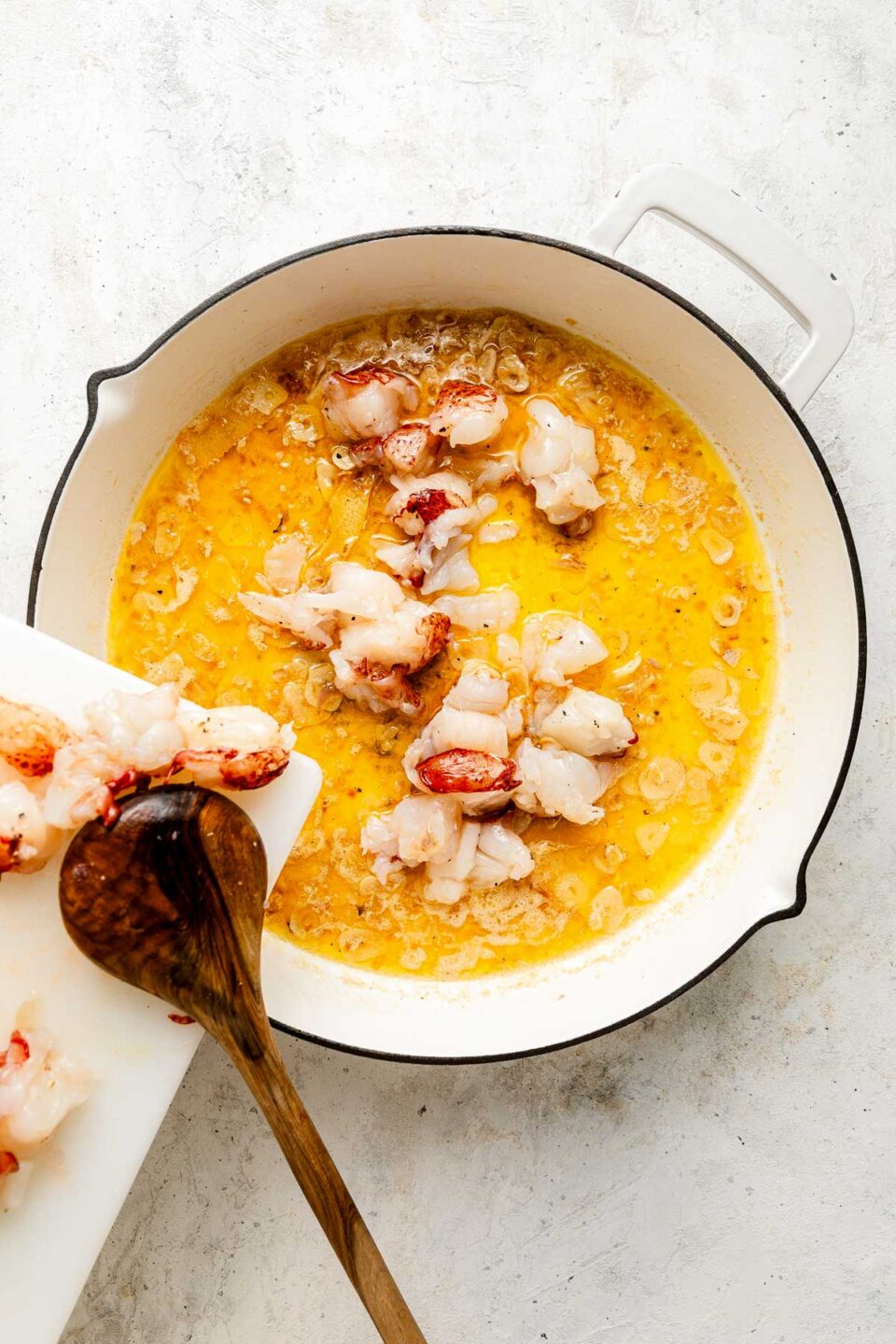
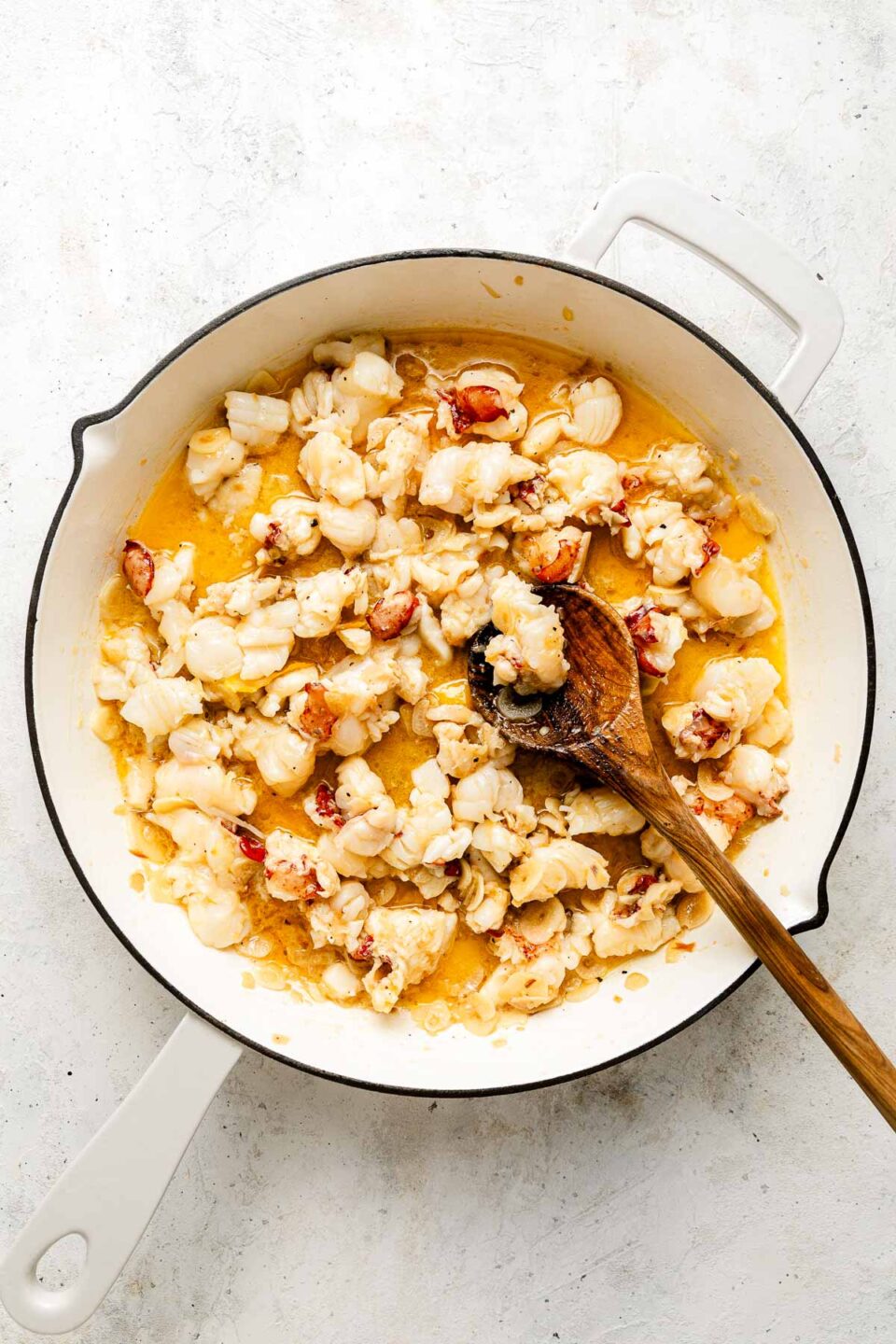
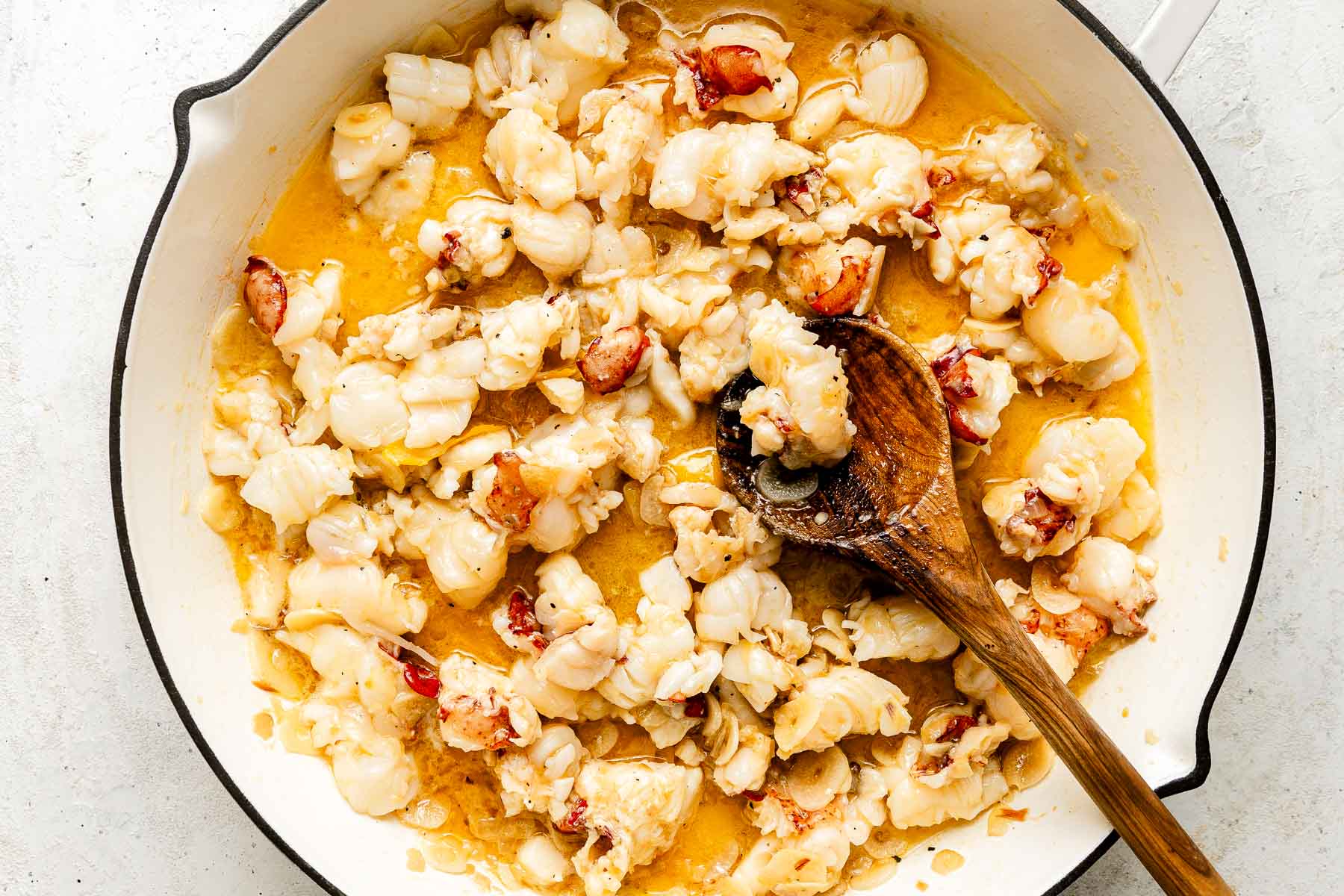
Stir the diced lobster meat into the garlic butter sauce and cook just until it’s opaque. Tip! ⇢ When overcooked, lobster meat becomes rubbery and tough, so keep a close eye on it and stir often to promote even cooking. If the pasta isn’t ready yet, pull the lobster sauce off the heat and set it aside.
Tossing it All Together
Greasy pasta? Not here! 🙅🏻♀️ Choosing the right shape makes all the difference. Short shapes (tubes, spirals, and shells) are designed to trap sauce in their nooks and crannies, which can taste oily with a butter-based sauce. A long, thin pasta gives the sauce plenty of surface area to cling to from end to end, without pooling in one spot.
Texture matters just as much as shape, and that’s why DeLallo is my forever favorite. Their pasta is crafted in Italy using traditional bronze-die extrusion, which creates a rougher, more porous surface that grabs hold of the sauce and absorbs its flavor, instead of letting it slide right off. I reached for spaghetti here, but their linguine and fettuccine work beautifully too!
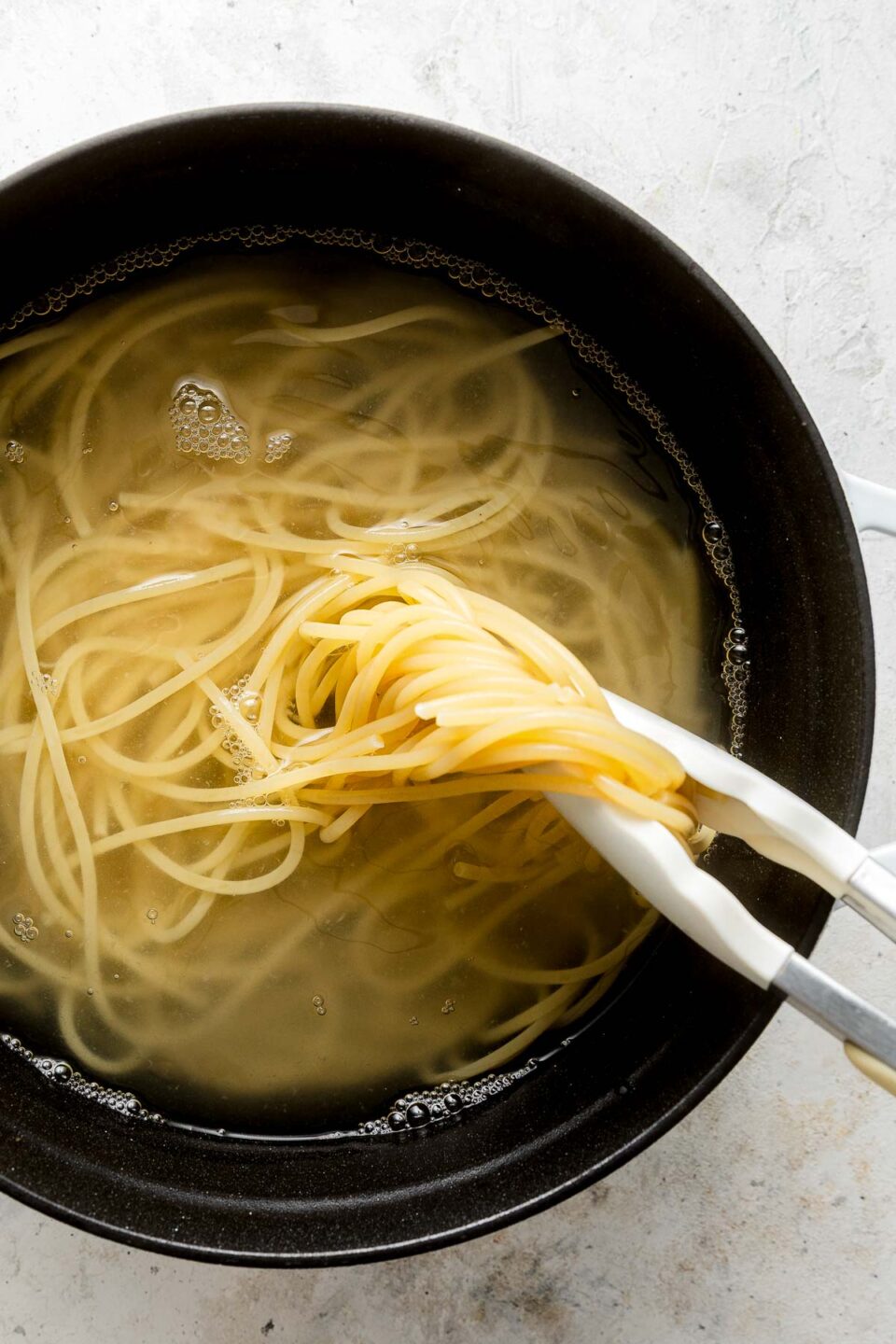
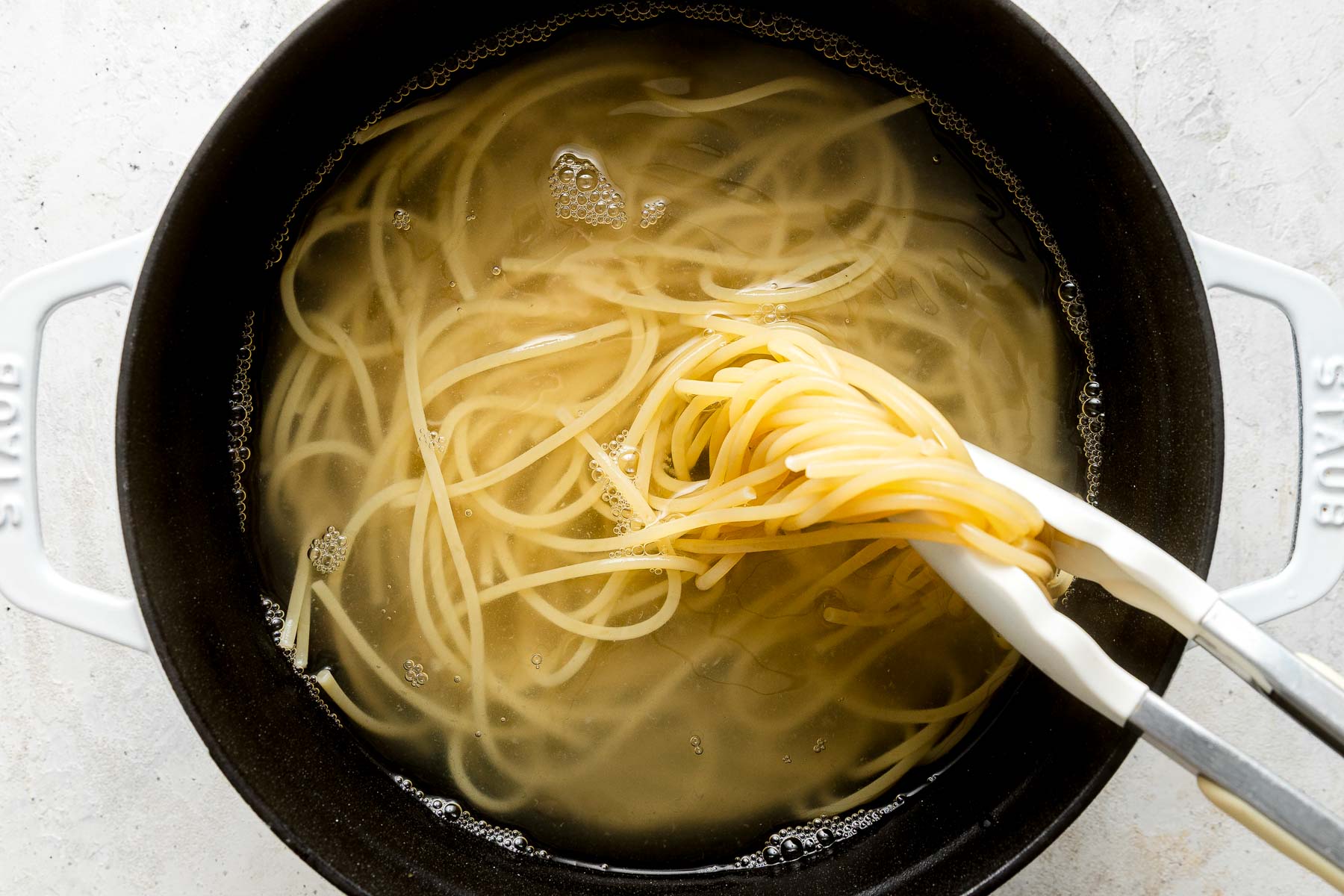
Boil the spaghetti in a pot of generously salted water until al dente, reserving 1 cup of the starchy water for the sauce. Drain, but do not rinse – rinsing washes away the starches that bring the sauce together. Tip! ⇢ Aim to drop the pasta into the water while the aromatics infuse into the butter, so everything’s ready at the same time and the lobster doesn’t overcook while waiting on the pasta.
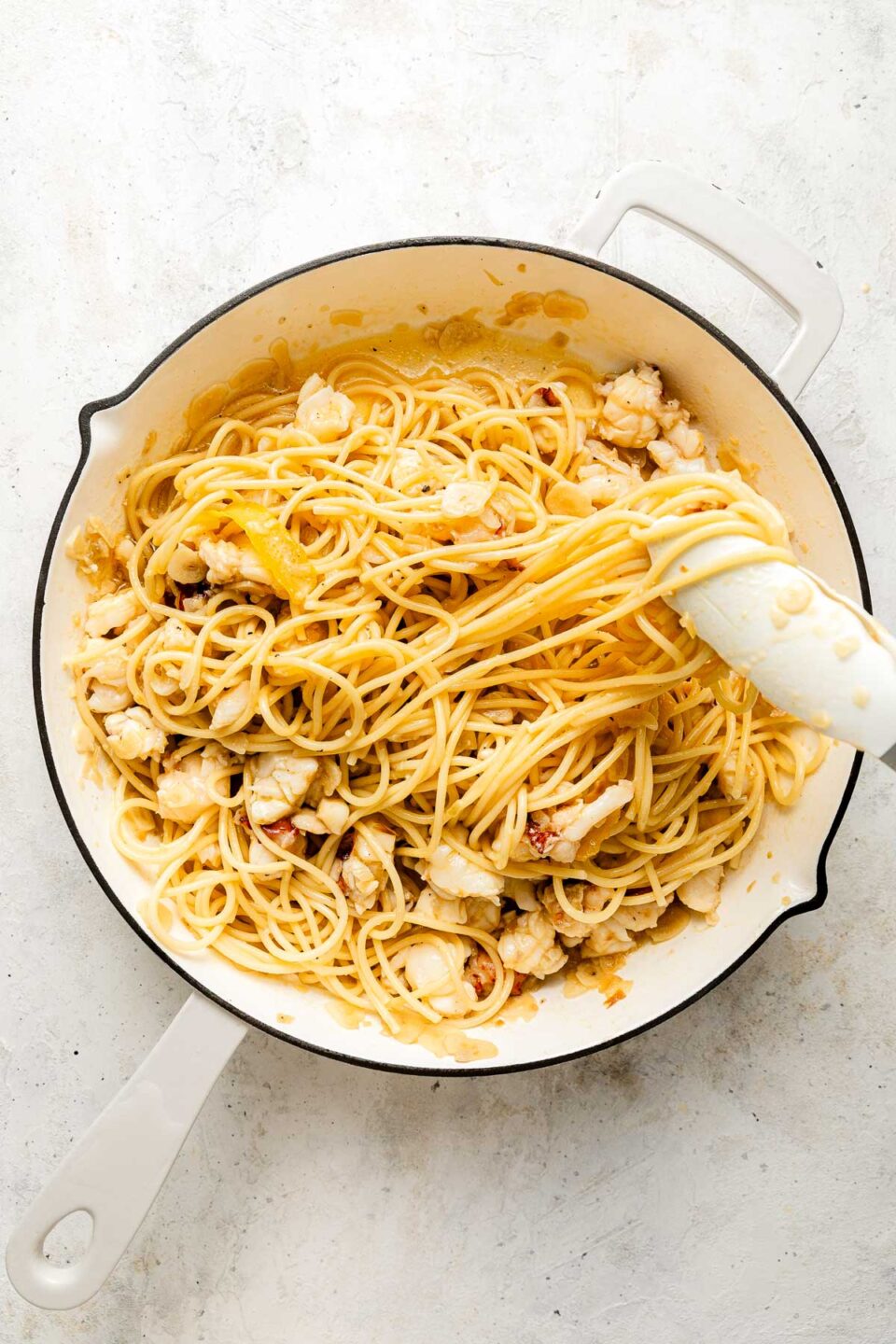
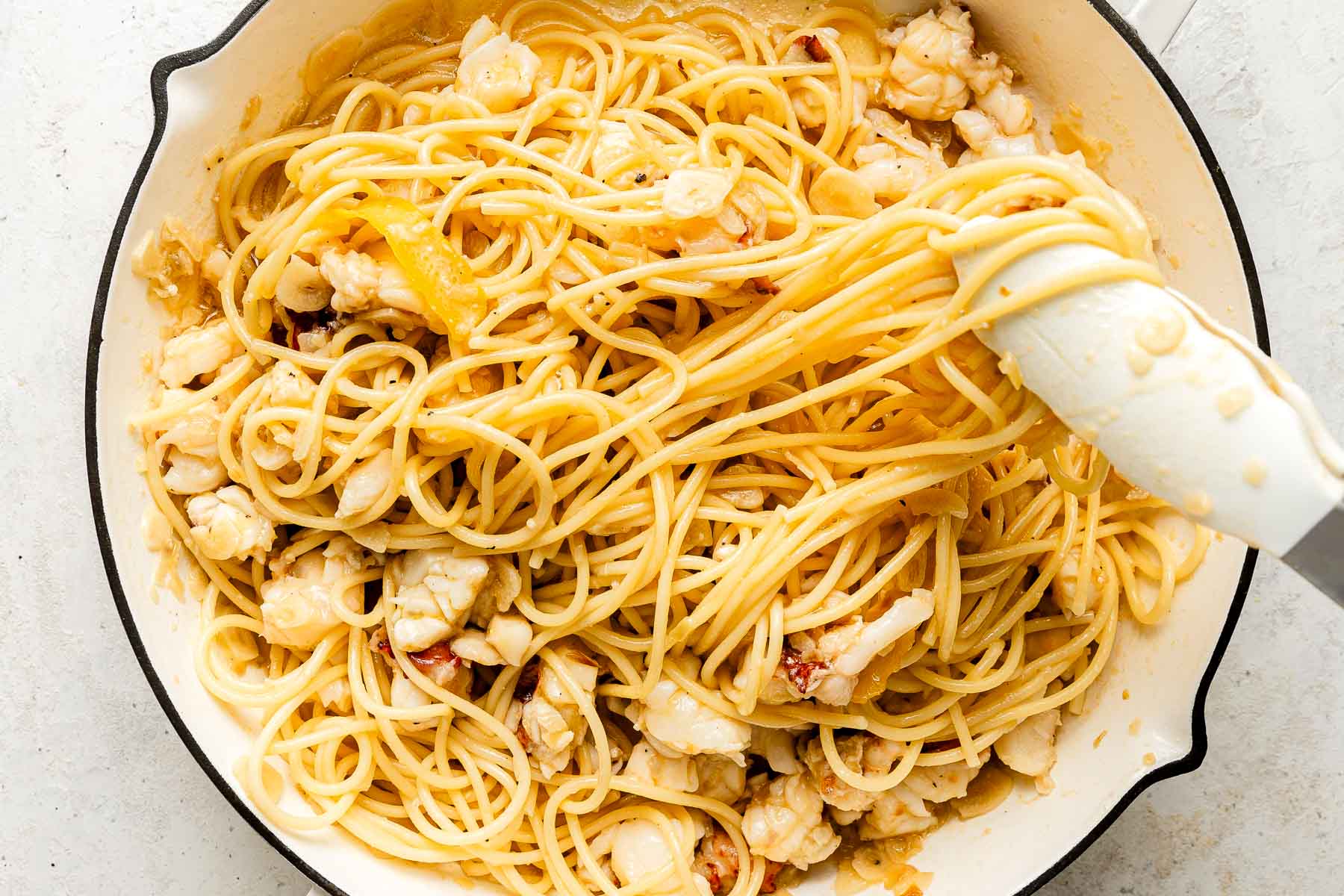
Add the spaghetti to the butter-poached lobster and toss with a generous handful of chopped herbs and a squeeze of lemon. Then adjust as needed: If the sauce looks a little thick, splash in some reserved pasta water. If it’s a little too runny, simmer to thicken. The lobster pasta is ready when the garlic butter sauce coats the spaghetti evenly.
👩🏻🍳 The #1 mistake I see home cooks make is simply plopping sauce onto a plate of pasta – please don’t do this! Taking the time to toss and marry the two allows the flavors to meld and the pasta to soak them all up, forming a cohesive, restaurant-worthy dish.
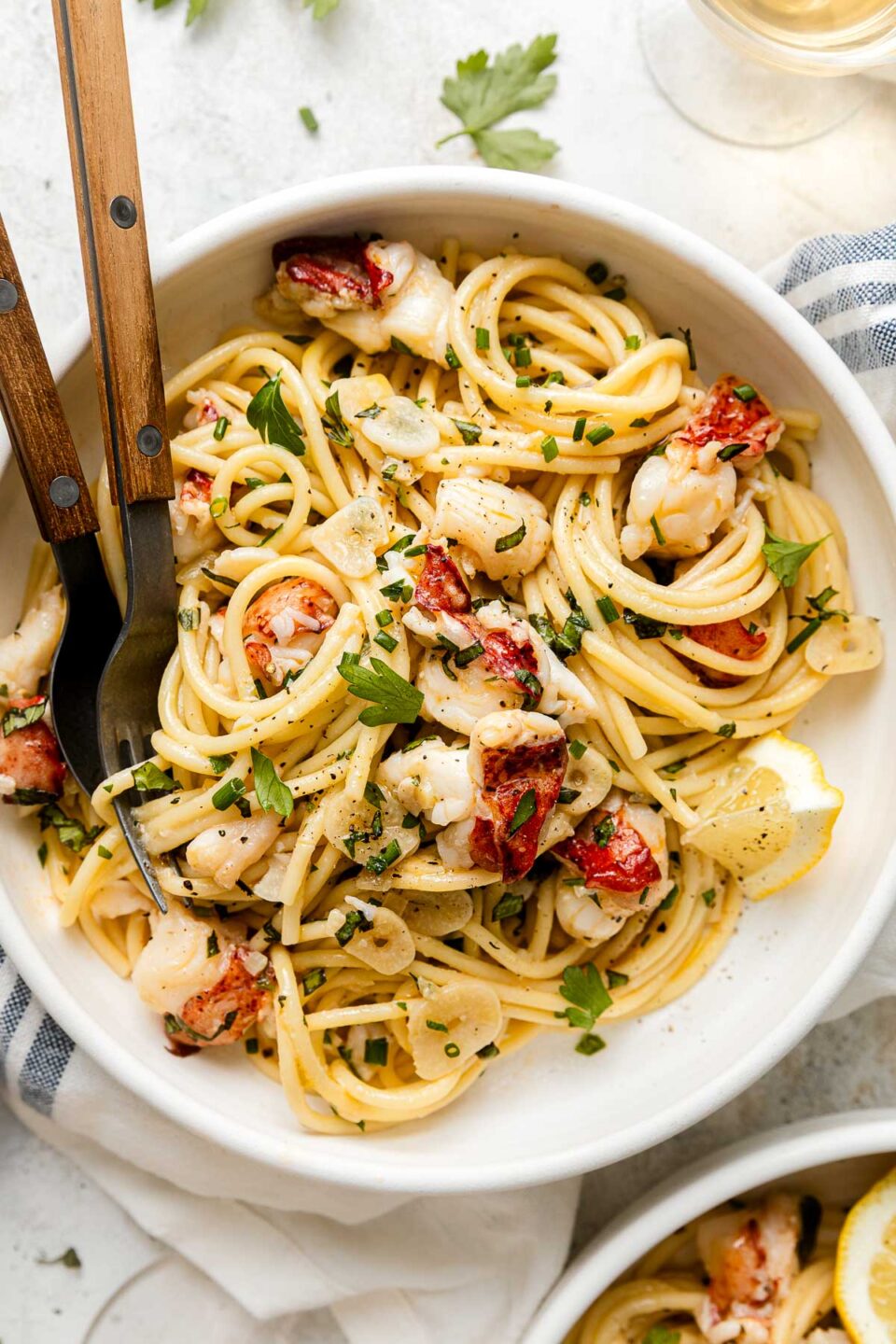
Quick Serving Suggestions
This recipe was built for special occasions: date night in, holiday dinner spreads, or any time the moment calls for something like lobster. For something crisp and green, try my Classic Caesar Side Salad.
And trust me, you’re going to want something to soak up all of that sauce! My Triple Garlic Bread bakes up crusty on the outside, so it practically begs to be dragged through a bowl of pasta (but if you don’t want to fuss with roasting garlic, my weeknight garlic bread is also a great choice!).
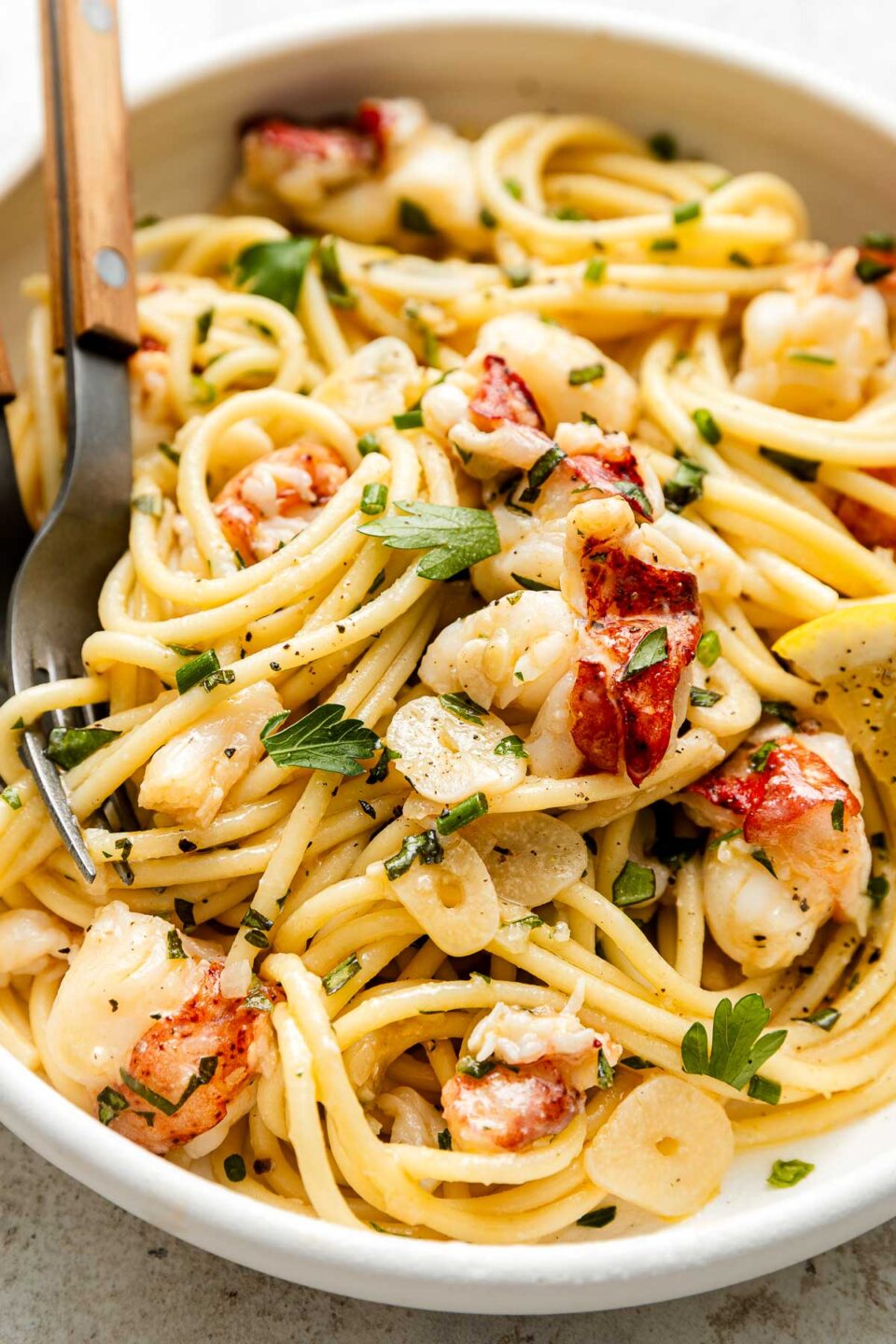
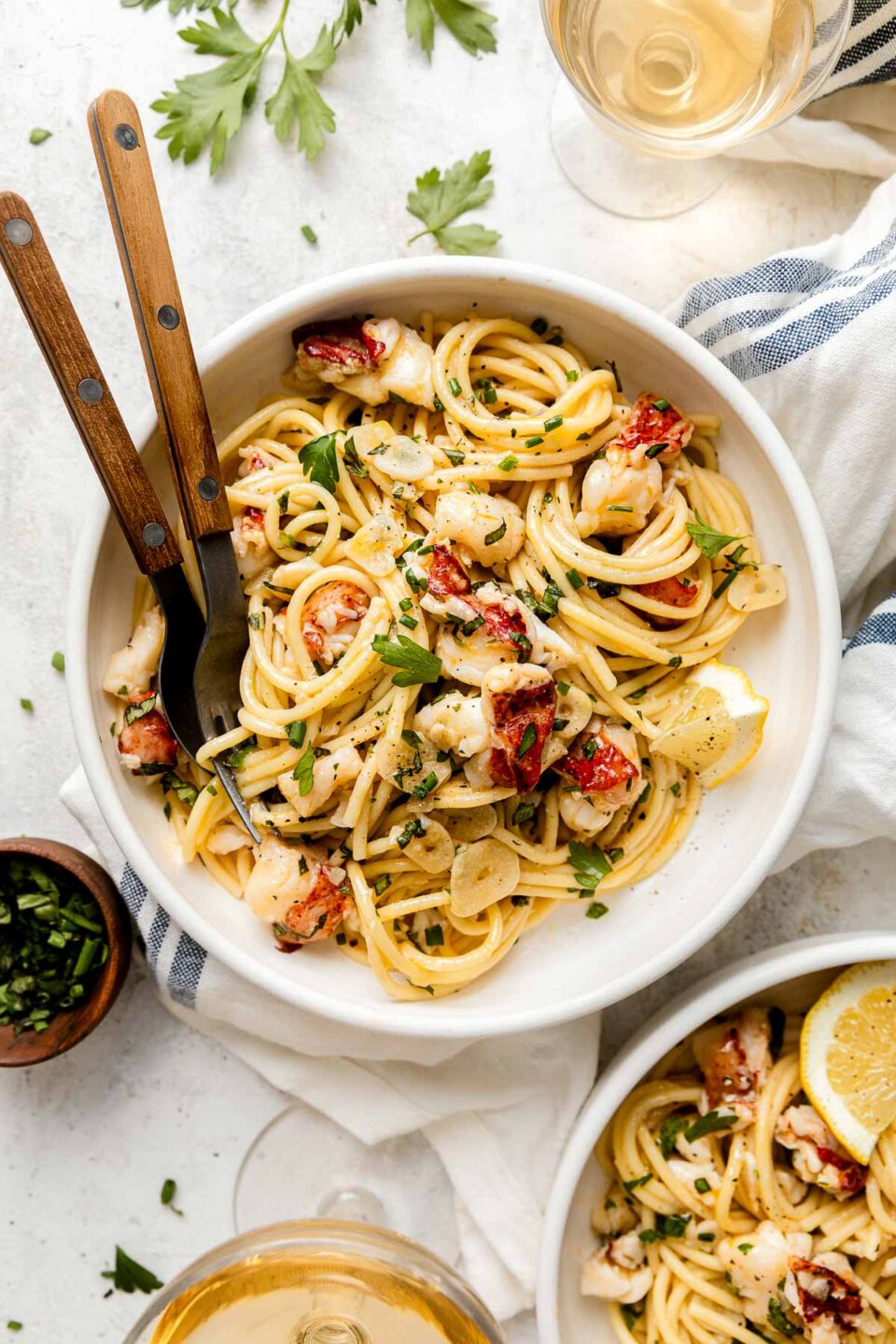
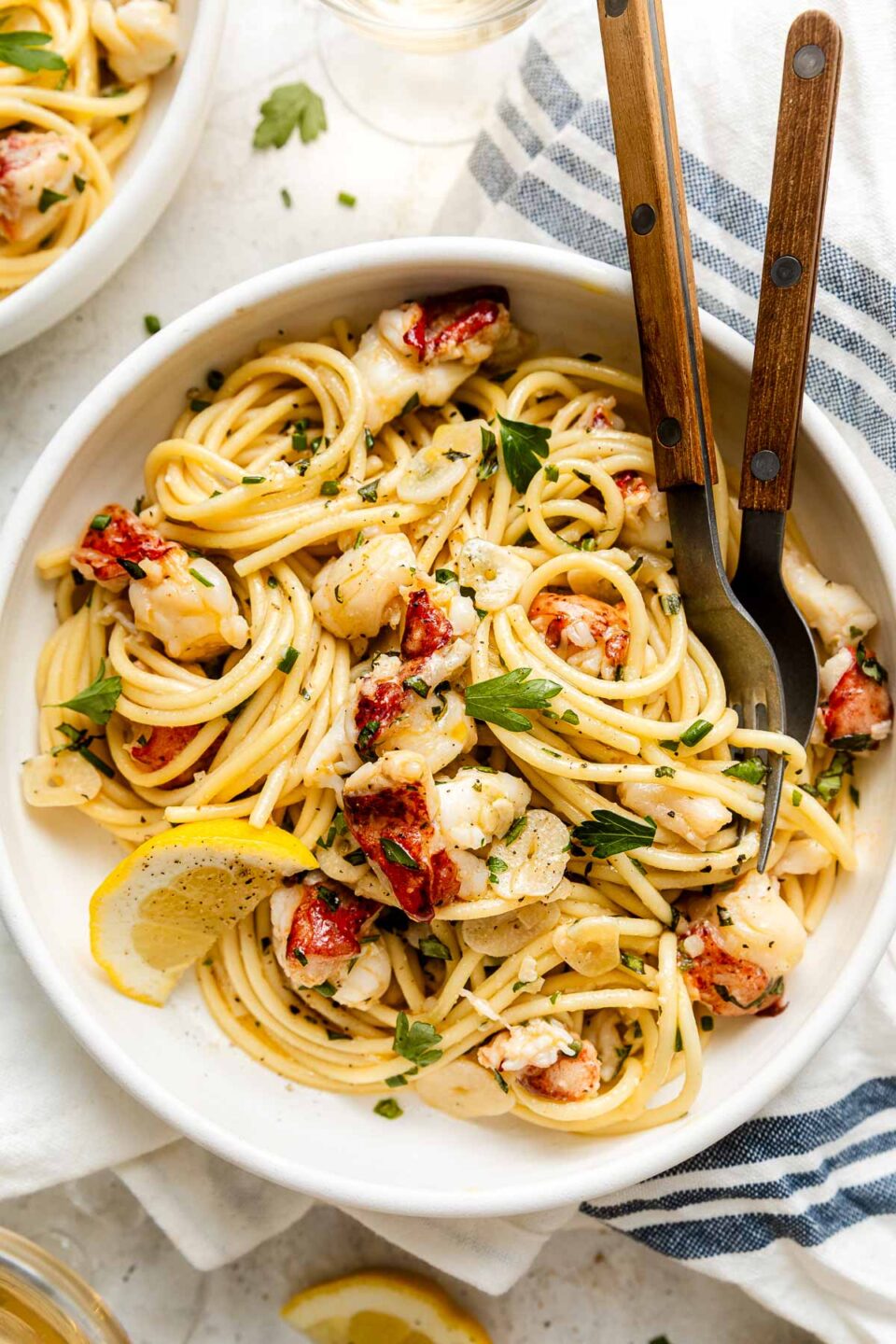
I can’t wait for you to try this Easy Garlic Butter Lobster Spaghetti! If you do, be sure to let us know! Leave a comment with a star rating below. You can also snap a photo and tag @playswellwithbutter on Instagram. We LOVE seeing your PWWB creations! ♡ Happy cooking!
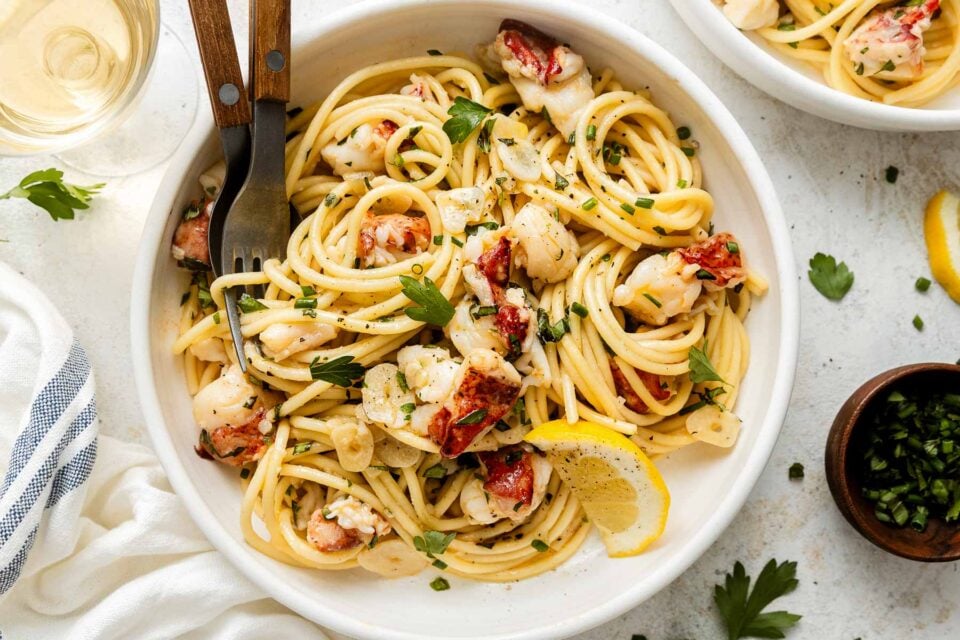
Garlic Butter Lobster Pasta (Tested 5 Ways!)
- Prep Time: 20 minutes
- Cook Time: 20 minutes
- Total Time: 40 minutes
- Yield: serves 5
- Category: Pasta Recipes, Main Dishes
- Method: Stovetop
- Cuisine: Italian-American
Description
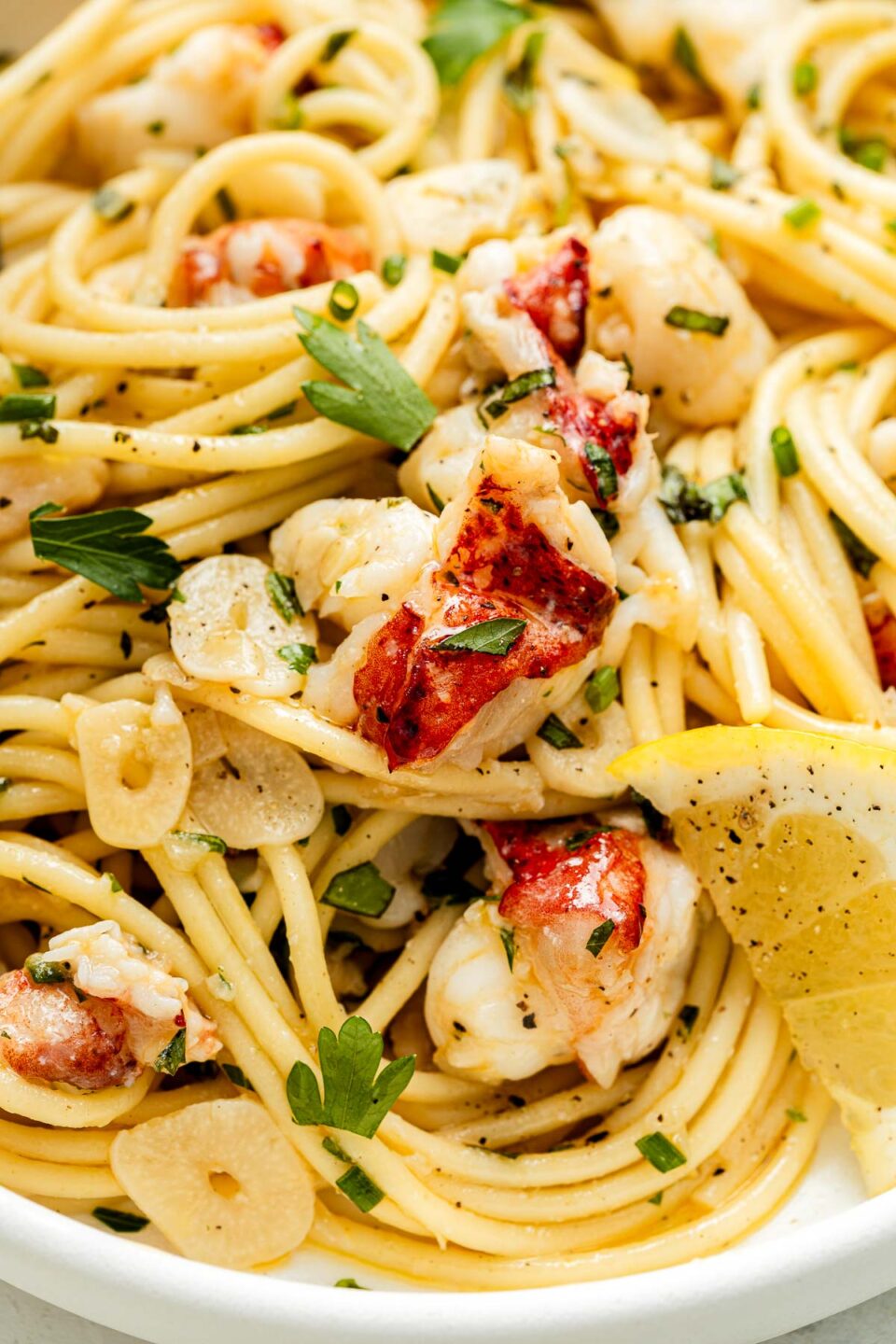
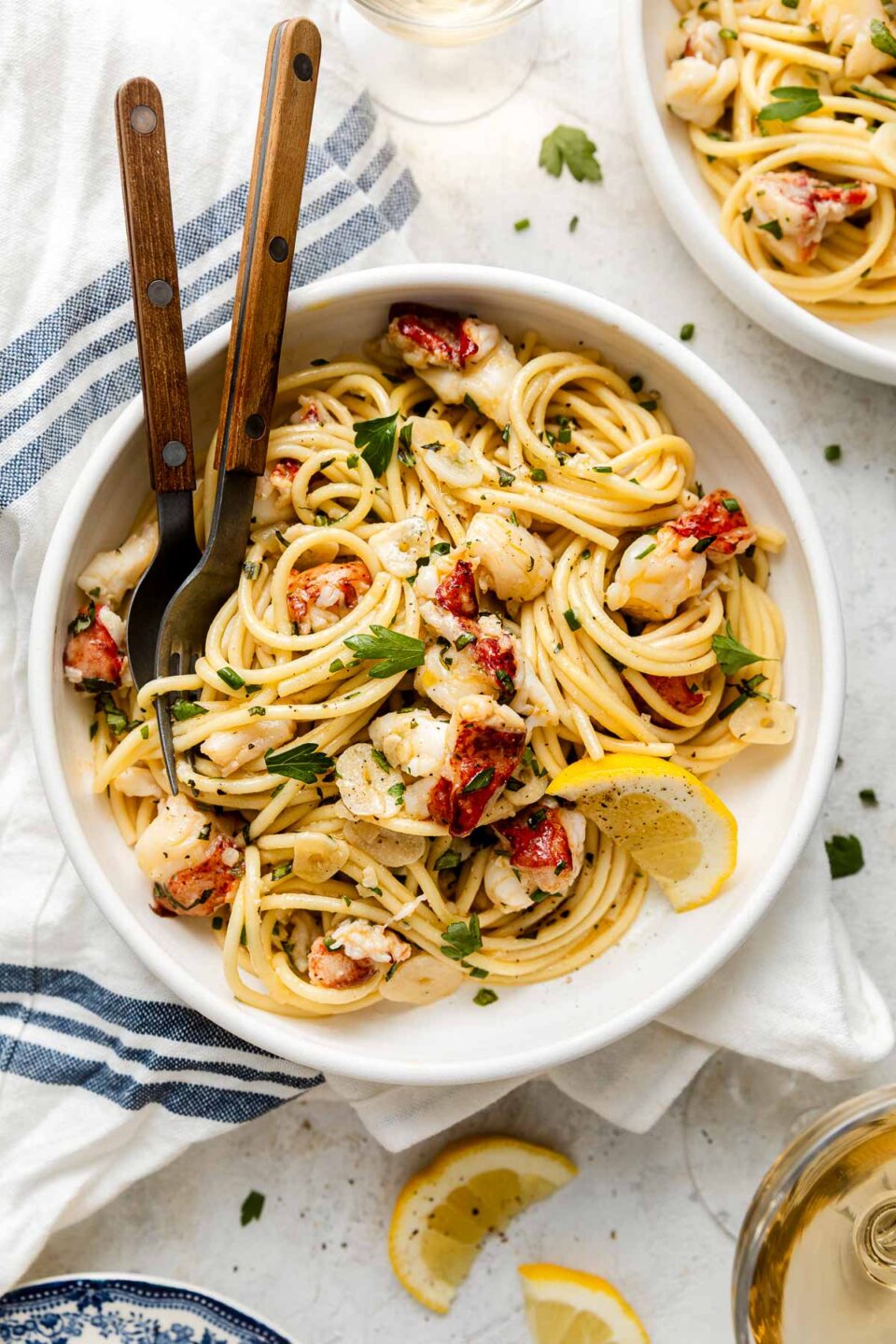
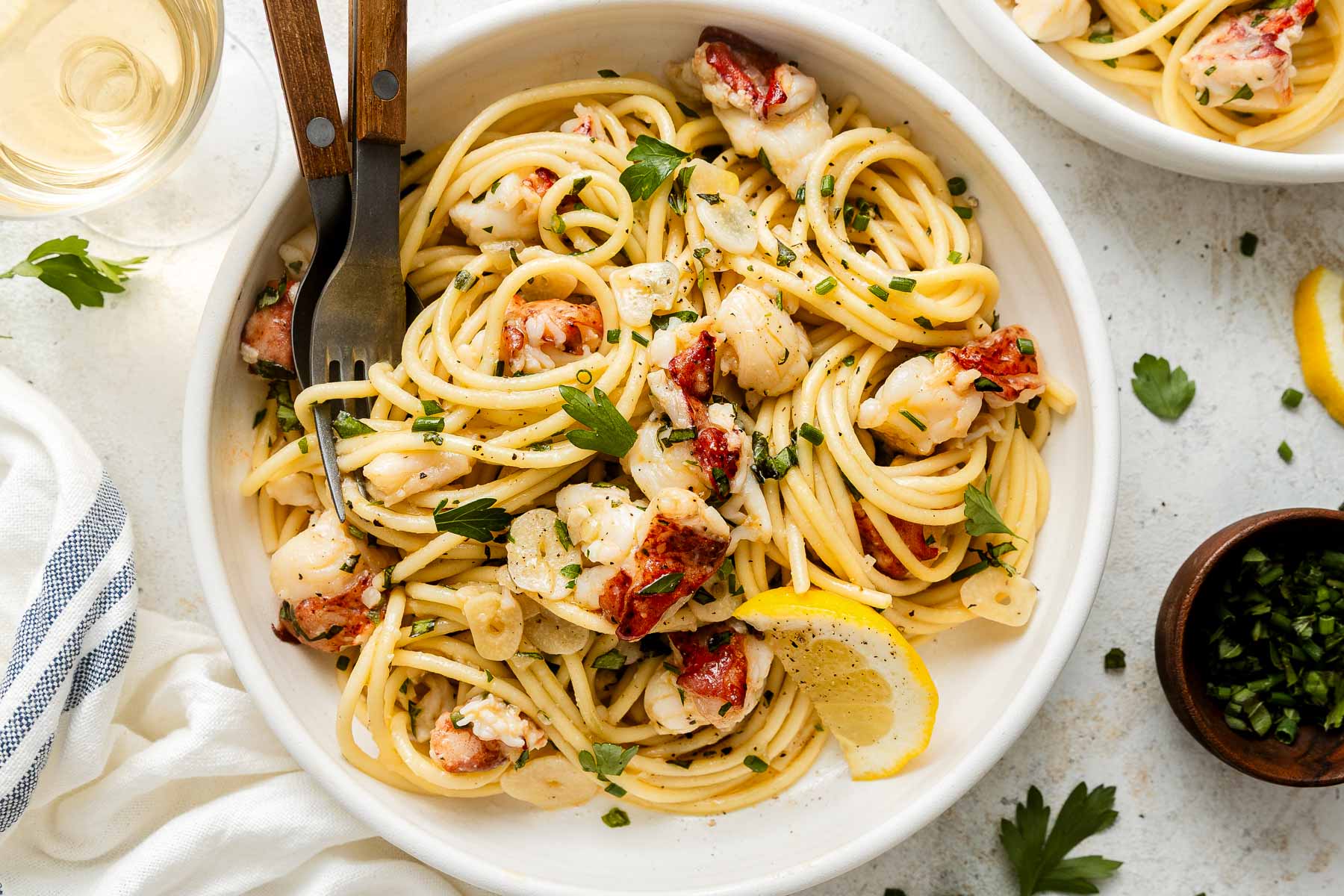
Tender, sweet lobster in a garlicky butter sauce, and not a drop of cream in sight – this Garlic Butter Lobster Pasta lets the lobster be the star of the show.
Instead of wrestling a whole lobster or hunting down pre-cooked meat, my version uses meaty lobster tails, deshelled with a quick snip of kitchen shears and gently poached right in the sauce, so it’s always perfectly cooked—never dry or rubbery.
Tossed with al dente spaghetti, a big handful of fresh herbs, and a squeeze of lemon, this elegant seafood pasta dinner is perfect for date night, holiday entertaining, and any occasion where lobster deserves the spotlight!
Ingredients
- three 8–10-ounce raw lobster tails or 1 pound cooked lobster meat, thawed if frozen (see Recipe Notes)
- 8 ounces DeLallo Spaghetti or long pasta of choice
- 2 tablespoons DeLallo Extra Virgin Olive Oil
- 8 tablespoons unsalted butter
- 1 large shallot or ½ medium yellow onion, finely diced
- 10 cloves garlic, very thinly sliced (I use a mandoline, working carefully)
- ½ lemon, zest peeled into strips (about 4 strips, 2 inches long), then juiced (about 2 tablespoons)
- ½ cup seafood stock (may substitute vegetable stock) + 1 teaspoon white wine or champagne vinegar
- ½ cup finely chopped tender fresh herbs, such as basil, chives, and parsley
- kosher salt and black pepper
Instructions
Method Overview:
- Deshell the lobster meat, dicing it into bite-sized pieces and seasoning well. Cook pasta to al dente in boiling salted water, reserving pasta water before draining. Meanwhile, soften the shallot, garlic, and lemon peel in oil and butter until fragrant. Stir in the stock mixture to create a light sauce. Add the lobster and cook just until opaque and tender. Toss with al dente pasta, fresh herbs, lemon juice, and a splash of reserved pasta water until glossy and well-coated.
Step-by-Step Instructions:
- Prep: Bring a large pot of water to a boil. Once boiling, generously season with salt.
- Meanwhile, deshell the lobster meat: Using sharp kitchen scissors, snip down the center of the top and bottom shells toward the fin – you should only cut through the shell, leaving the meat and fin intact. Pull the shell open to reveal the meat inside, then use your fingers to gently separate and remove the meat from the shell. Rinse the lobster meat with cold water to remove any debris, pat dry, and dice into 1-inch pieces. Season with 1 teaspoon kosher salt and a few twists of black pepper, then toss to coat and set aside.

- Boil the pasta: Once the water reaches a rolling boil (ideally while the aromatics cook, Step 4) add the pasta and cook to al dente, stirring occasionally to prevent sticking. Carefully dip a large liquid measuring cup into the pot to reserve about 1 cup of the starchy pasta water, and set aside. Carefully drain the pasta – but do not rinse. Learn more! ⇢ How to Cook Pasta Perfectly Every Single Time!
- Meanwhile, cook the aromatics: Add the oil and butter to a large skillet over medium heat. Once the butter is melted, add the shallots, garlic, and lemon peel. Season with ½ teaspoon kosher salt and a few twists of black pepper. Cook, stirring occasionally, until softened and very fragrant, about 5-6 minutes. Stir in the stock mixture and simmer 1-2 minutes to combine.
- Cook the lobster: Add the lobster meat to the skillet, stirring to coat in the softened aromatics. Reduce the heat to medium-low and cook, stirring occasionally, until the lobster is just opaque and warmed through, 3-4 minutes. If the pasta isn’t ready yet, remove the skillet from the heat to prevent the lobster from overcooking. Return to medium-low heat just before adding the pasta.
- Toss the seafood pasta: Add the al dente pasta to the garlic butter lobster sauce and toss well to combine. Simmer over medium-low heat for 1-2 minutes longer, allowing the spaghetti to absorb some of the sauce. The sauce should evenly coat the pasta, so adjust as needed: add a splash of reserved pasta water to loosen or simmer a bit longer to thicken. Just before serving, add the lemon juice and herbs, tossing well to combine.
- Serve: Portion the pasta into individual bowls. Squeeze a little fresh lemon juice over top and sprinkle with more finely chopped fresh herbs. Serve immediately with my Garlic Lover’s Garlic Bread and a Classic Caesar Side Salad for the perfect pasta dinner. Enjoy!
Notes
- Lobster tails: Unless you live somewhere fresh lobster is readily available, frozen lobster tails are likely your best bet. Be sure to thaw them completely before cooking. For the best results, thaw overnight in the refrigerator. If you’re short on time, place the frozen lobster tails in a zip-top bag and submerge in cool water, changing the water every 10 minutes or so until thawed, about 25-30 minutes.
- Cooked lobster meat: You can also swap in 1 pound of cooked, picked lobster meat for the raw tails. Thaw if previously frozen and pat it very dry with paper towels before adding to the skillet and cooking as directed in Step 5. Note: previously-frozen lobster may release extra moisture, which can thin out the sauce, so adjust as needed: if the sauce looks thin or watery, let it simmer a minute or two longer to reduce before adding the pasta.
- Storage and Reheating: While best enjoyed fresh, leftover lobster pasta will keep, stored in an airtight container in the refrigerator, for 1-2 days. Reheat on the stovetop or in the microwave, adding an extra splash of water or stock as needed to loosen the sauce, until warmed through.