



Years back, when I asked the PWWB Instagram community what kind of help you needed with when it comes to grilling, I lost count of the number of you who wrote in asking something like…
- “I don’t get the temperatures…like, it’s fire. it’s hot right?! haha…clearly my bf grills for me…”
- “Can you show us how to grill meat? how do you not turn a steak into a car tire?!”
- “How do you grill veggies without burning them to a crisp?!”
- “I can never grill chicken perfectly…it’s either still raw when I cut into it, or super dry!”
If that sounds familiar, you’re in the right place.
The big secret to tackling all of the above?: HEAT ZONES & 2-ZONE GRILLING.

Grill Like a Backyard Pro ⭐
Step-by-step tutorials (like how to light the grill without burning your eyebrows off) & obsessively-tested tips (for juicy, charred results). Designed for meat lovers & vegetarians alike!
The PWWB Guide to 2-Zone Grilling – Let’s Get Started!
Grilling with zones of direct & indirect heat may sound complicated, but it’s actually pretty simple. This post will show you exactly how to grill with indirect heat & direct heat. Being able to grill with temperature zones will dramatically change your grilling game!
Consider this your comprehensive guide to mastering the 2-Zone Grilling Method, including (click for shortcuts!)…
- DIRECT VS. INDIRECT HEAT. What is 2-zone grilling? We’ll explain the difference between using direct & indirect heat & share why it is a grilling game changer!
- GRILL SET-UP. Step-by-step tips on how to set up your grill for successful 2-zone grilling.
- CONTROLLING GRILL TEMPERATURES. Once you’ve got your grill set up for 2-zone grilling, it is important to understand how to maintain & control the grill temperatures to get the results you want. We’ll show you how!
- 2-ZONE GRILLING WITH CHARCOAL. Lastly, we’ll share our best tips on how to control temperature when using a charcoal grill – that’s a whole other beast, & we’re here to help!

2-Zone Grilling: How to Grill with Direct vs. Indirect Heat
What is direct heat grilling? ⇢ Grilling with direct heat is probably what comes to mind whenever you think of grilling. With direct heat grilling, you cook your food directly over the heat, whether a gas burner or hot charcoal. Direct heat grilling is what gives your chicken wings, grilled veggies, or burgers the delicious charred flavor that you can only truly achieve on a grill.
What is indirect heat grilling? ⇢ Grilling with indirect heat is different in that your food isn’t directly over any heat source. Instead, when you are indirect heat grilling, your food will be off to one side of the grill, while the opposite side of the grill is heated (with a gas burner or charcoal). Even though it’s not directly over the flame or charcoal, your food gets cooked by the residual heat & hot air in the grill.
Another way to think of direct vs indirect grilling: Direct heat grilling is a similar to cooking on a stovetop (i.e. food cooks because it’s in a pot or pan, which is in direct contact with the heat source on the stovetop), while indirect heat grilling is similar to baking in an oven (i.e. food cooks/bakes by being surrounded by the hot air in the oven).
How to Set Up Your Grill for 2-Zone Grilling:
2-Zone Grilling on a Gas Grill ⇢ Setting up your gas grill for 2-zone grilling is as easy as turning the burners on one side of your grill & keeping the other side turned off. The direct heat zone is the area of the grill directly over the lit burners & the indirect heat zone is the remaining area of the grill on the unlit side.
2-Zone Grilling on a Charcoal Grill ⇢ If you are grilling with a charcoal grill, all you have to do is set your charcoal on one side of the grill, leaving the other side free of charcoal. The direct heat zone is the area of the grill directly over the charcoal & the indirect heat zone is the remaining area of the grill.
How to Use 2-Zone Grilling ⇢ Use the indirect zone to cook more delicate food or food that needs to cook a little more slowly in order to retain its moisture (hello, chicken, I’m looking at you!). Once it’s almost cooked through, transfer it into the direct heat zone for a hard sear. This giving it the mouth-watering crispy, charred bits that likely come to mind whenever you think of grilled food.

Controlling Grill Temperatures with the 2-Zone Method & Indirect Heat Grilling.
Aside from practicing your direct vs. indirect grilling, the only other thing you’ll want to consider when it comes to temperature zones is how hot you want your zones to be.
If you need your indirect zone to have a higher temperature, you can do so by simply making your direct zone hotter – dial up the flame or adding more charcoal until the desired temperature is reached in each zone.
If you are grilling with two direct heat zones (i.e. 2 zones of direct heat with different temperatures, like for making beer brats), simply adjust the flame or charcoal in one zone to control the temperature for that zone.
This is exactly why we suggest keeping a couple of oven thermometers on your grill’s grates at all times to measure the temperatures in each of the heat zones since they’ll differ from the overall temperature of the grill (the direct heat side will be hotter, the indirect heat side lower). Read more about other must-have grilling equipment here!

One Final Note: Controlling Grilling Temperatures on a Charcoal Grill.
If you are grilling on a charcoal grill, you control the temperature of the charcoal by adjusting the airflow dampers. A charcoal grill usually has 2 dampers, one on its lid & one under the bucket.
Opening the dampers up wider will create more airflow to your charcoal, allowing it to reach higher temperatures. Likewise, closing the dampers causes less airflow to the charcoal & cools things down.

Ready to try 2-Zone Grilling?
That’s the spirit! I hoped you would be! 🙌🏼 Here are some recipes to get you started with direct vs indirect grilling:
- Perfectly Grilled Buffalo Chicken Wings – One of PWWB’s most loved recipes. 2-zone grilling is the secret to suuuper juicy wings with a perfectly crispy, charred crust!
- Grilled Wisconsin Beer Brats – One of my favorite summer meals! By creating 2 zones of heat, you can boil the brats right on the grill & finish them off for a craveable, charred bite.
- Grilled Pizza – Cook a pizza – from scratch – right on the grill, without worrying about the crust burning!
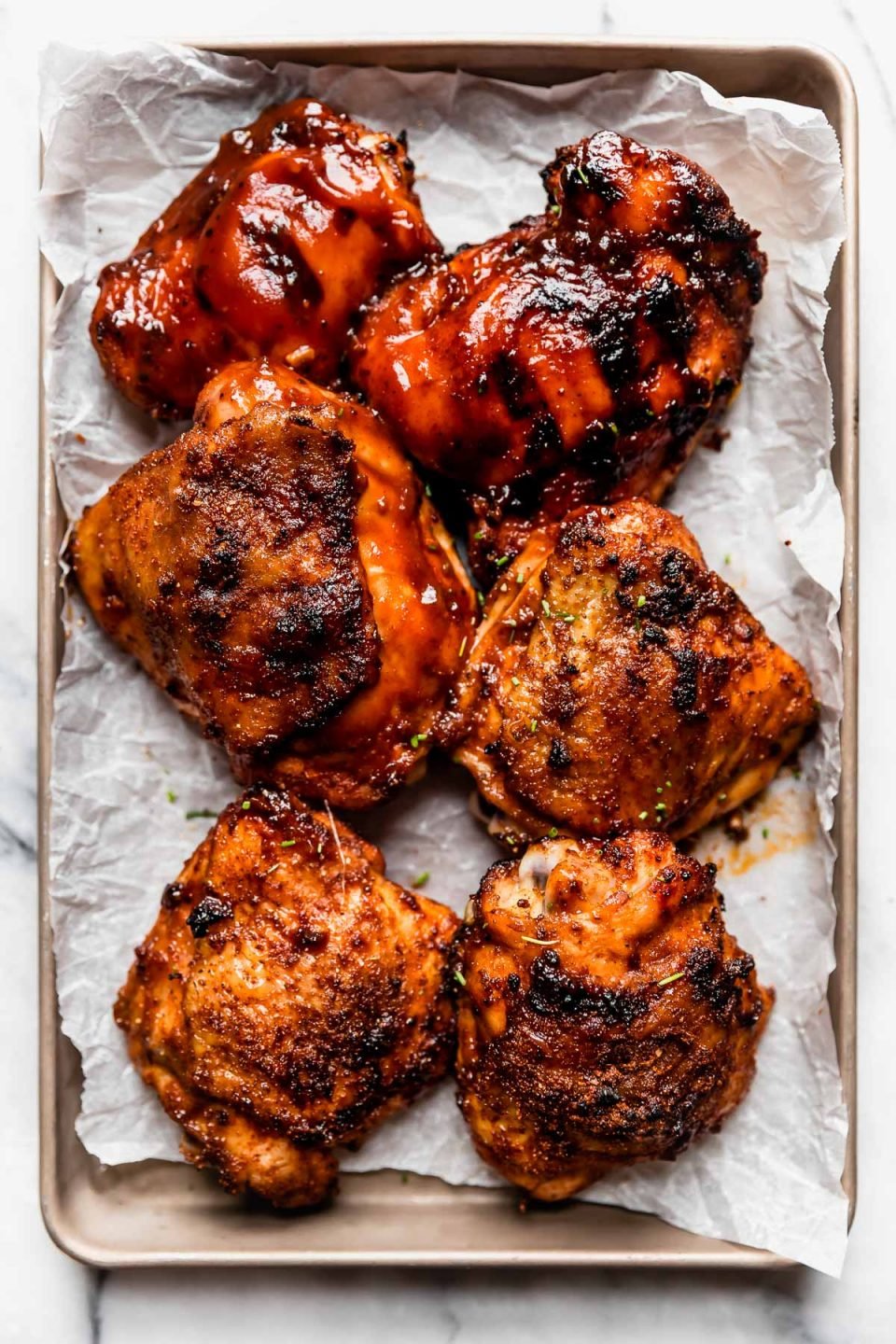
- Best-Ever BBQ Chicken or Grilled Cider Chicken – Grilling season staples for summer & fall!


Follow along with Plays Well With Butter on Instagram, YouTube, Facebook, and Pinterest for more unfussy recipes that pack a big punch of flavor!




How hot should the hot side of my grass grill be for BBQing chicken
Hi Norman! For BBQ Chicken, we recommend preparing your gas grill for 2-zone grilling, by turning 1-2 burners of your grill on to their highest setting (hot side or direct heat) & leaving the remaining 1-2 burners of your grill shut off completely (indirect heat). The direct heat zone will be the one directly over the burner flames & will likely register around 500-600 degrees Fahrenheit while the indirect heat zone (the area of the grill where the burners are shut off) will only be heated by the residual heat from the direct heat side.
For step-by-step tips for grilling BBQ chicken, be sure to check out our Grilled BBQ Chicken recipe, hereGrilled BBQ Chicken (Barbecue Chicken Recipe)!
Pingback: Grilled Sausage + The Perfect One-Bowl Salad - Plays Well With Butter
Pingback: Easy Grilled Wisconsin Beer Brats Recipe - Plays Well With Butter
Pingback: The BEST Grilled Chicken Wings Recipe - Juicy, Flavorful, & 3 Ingredients!
Pingback: The Very Best Grilled BBQ Chicken (Easy Grilled Barbecue Chicken)
Pingback: PWWB Let's Grill, Girls! - {A Series to Help you Own the Grill this Summer}
Pingback: Charcoal Grill vs. Gas Grill - How to Choose the Best Grill for You!
Pingback: Grilling 101: What You Need to Know to Own the Grill this Summer
Pingback: must-have grilling equipment - plays well with butter
Pingback: The Best Gas Grills Under $1000 for 2020 - Buying Guide
This is a very useful and informative article. Good tips for delicious grill 😉 I will try your tips my next barbecue.
thanks, george! i hope you do!
jessica, i’m so glad to hear that! be sure to let me know if you give zone grilling a try! xo
I did this weekend! The chicken I grilled came out so juicy using indirect heat!
Thanks! This explanation was really easy to follow and will be coming in handy soon!
jessica, i’m so glad to hear that! be sure to let me know if you give zone grilling a try! xo