
Description
My Chinese-American Mom’s Pork Shumai Dumplings (Siu Mai) have been a staple at our dim sum parties for as long as I can remember! Made by tucking an all-pork filling (no shrimp!) studded with earthy shiitake mushroom and crunchy water chestnuts into store-bought dumpling wrappers, these are some of the easiest homemade dumplings you can make. A quick stovetop steam turns the rich, umami-packed siu mai perfectly tender and juicy, then serve with a quick Chinese mustard sauce for a tangy finish.
With a lifetime’s worth of tips and tricks (plus step-by-step photos and a video), mom guides you through every step of this treasured family recipe!
Ingredients
Scale
- 1 pound ground pork
- starch slurry (2 tablespoons water + 2 ½ tablespoons cornstarch or potato starch)
- 1 tablespoon sesame oil
- 2-3 green onions, finely sliced (approx. ¼ cup)
- 1 ounce dried shiitake mushrooms, rehydrated in hot water for 10 minutes and finely diced (approx. 6-7 dried mushrooms, see Recipe Notes)
- 4 ounces water chestnuts, finely diced (approx. ½ cup diced, see Recipe Notes)
- 4 tablespoons oyster sauce
- 1 tablespoon light soy sauce
- ½ teaspoon granulated sugar
- ½ teaspoon white pepper
- 1 package 2 ½ – 3-inch round wonton wrappers (see Recipe Notes)
- nonstick cooking spray, for steaming
Instructions
- Shumai prep: For easiest assembly, start by prepping all your ingredients (slice green onions, dice mushrooms, chop water chestnuts, and measure liquids). To make the slurry, whisk together the cornstarch and water in a small bowl or shake in a jar until fully combined. Set aside.
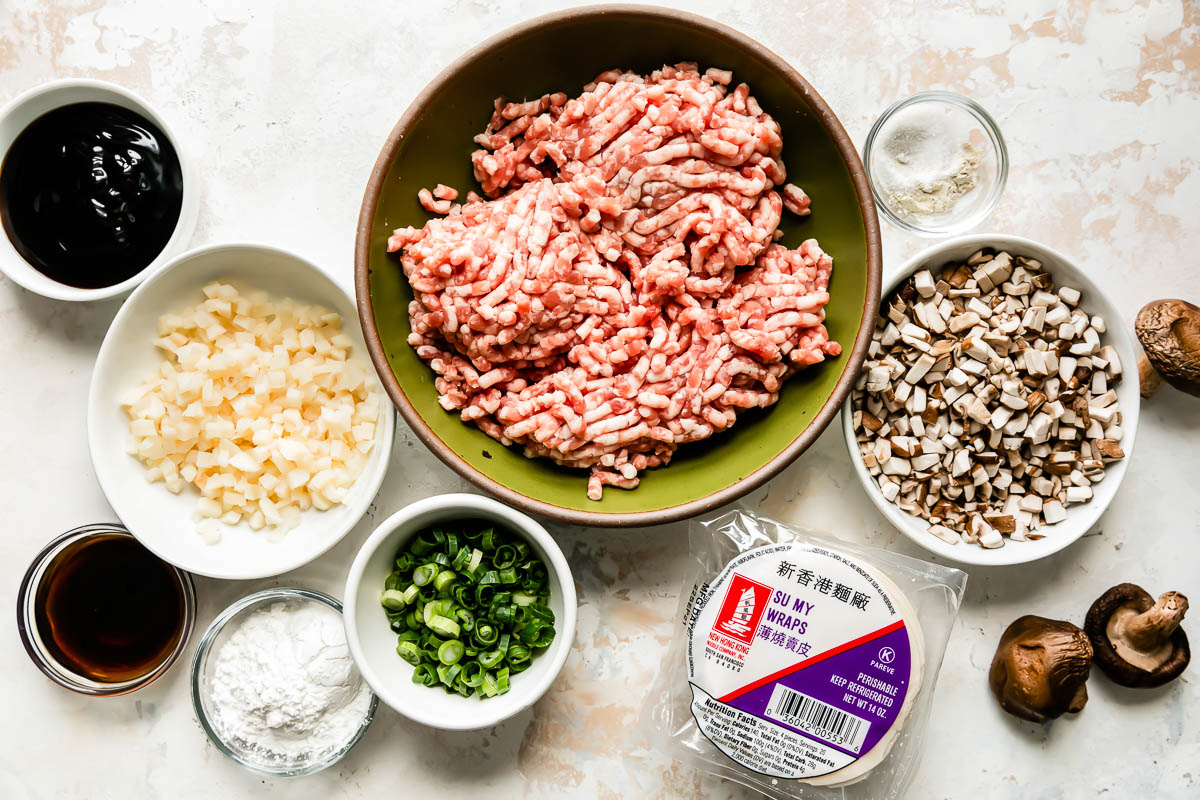
- Prepare the pork filling: Add the ground pork to a large bowl. Pour the cornstarch slurry and sesame oil over the pork and mix thoroughly with your hands until the mixture turns sticky. Add the green onions, mushrooms, water chestnuts, oyster sauce, soy sauce, sugar, and white pepper. Mix again until evenly combined. Set aside for assembly or store in an airtight container in the fridge for up to 2 days. [gallery columns="2" size="full" ids="37348,37350"]
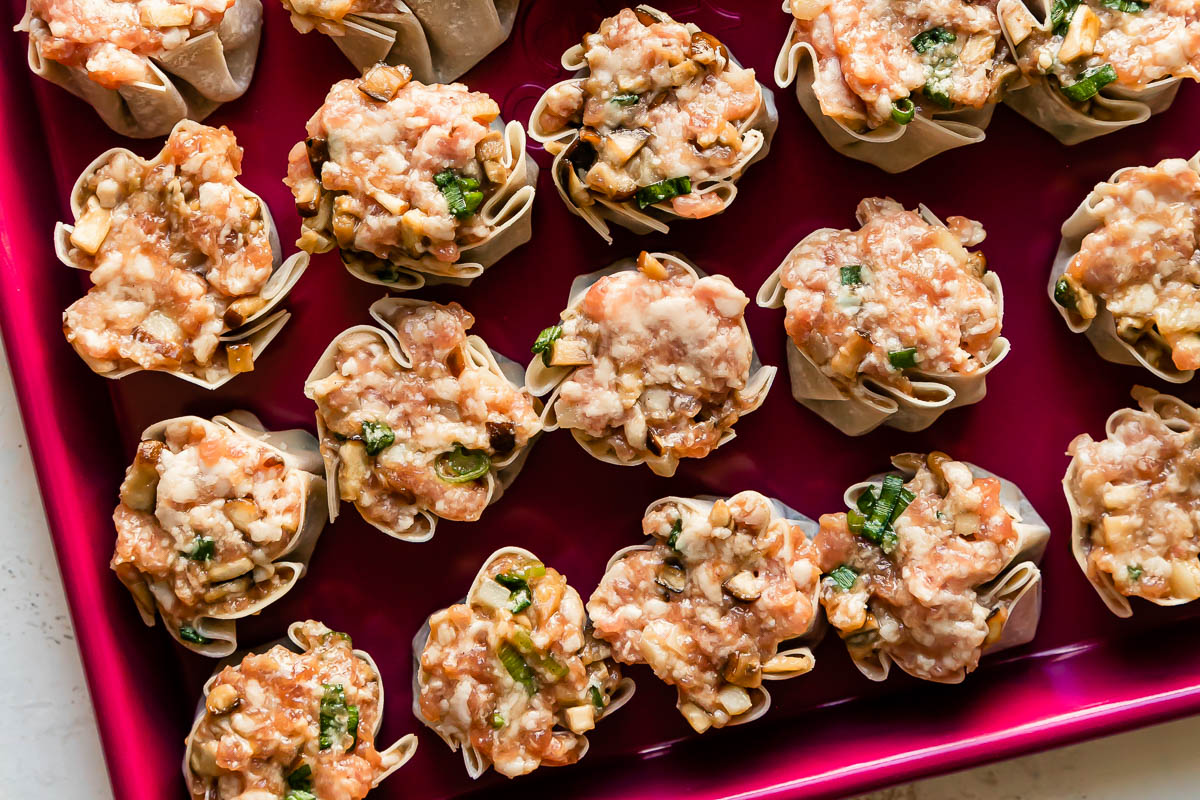
- Assemble the shumai: Line a quarter sheet pan with parchment or wax paper. To form each shumai, place a rounded tablespoon of filling in the center of a wrapper. Use the back of your spoon to press the filling out to the edges, leaving a ⅛-inch border. Place the wrapper in the palm of your non-dominant hand, cupping your hand slightly to raise the edges. With your other hand, pinch and pleat the wrapper all the way around. Flatten the top with the back of your spoon and the bottom with your thumb. Place on the prepared sheet pan and repeat until all filling is used. [gallery size="full" ids="37352,37354,37356,37358,37360,37362"]
- Repeat dumpling assembly until you’ve used all of the remaining pork mixture. You can leave the assembled dumplings uncovered if you’ll be preparing shortly after assembly. Transfer them to the refrigerator while you prepare your steamer pot, or transfer to a parchment-lined airtight container and store in the refrigerator for up to 1 day. (You may have some leftover siu mai wrappers, which can wrap well and freeze for the next time you make siumai).
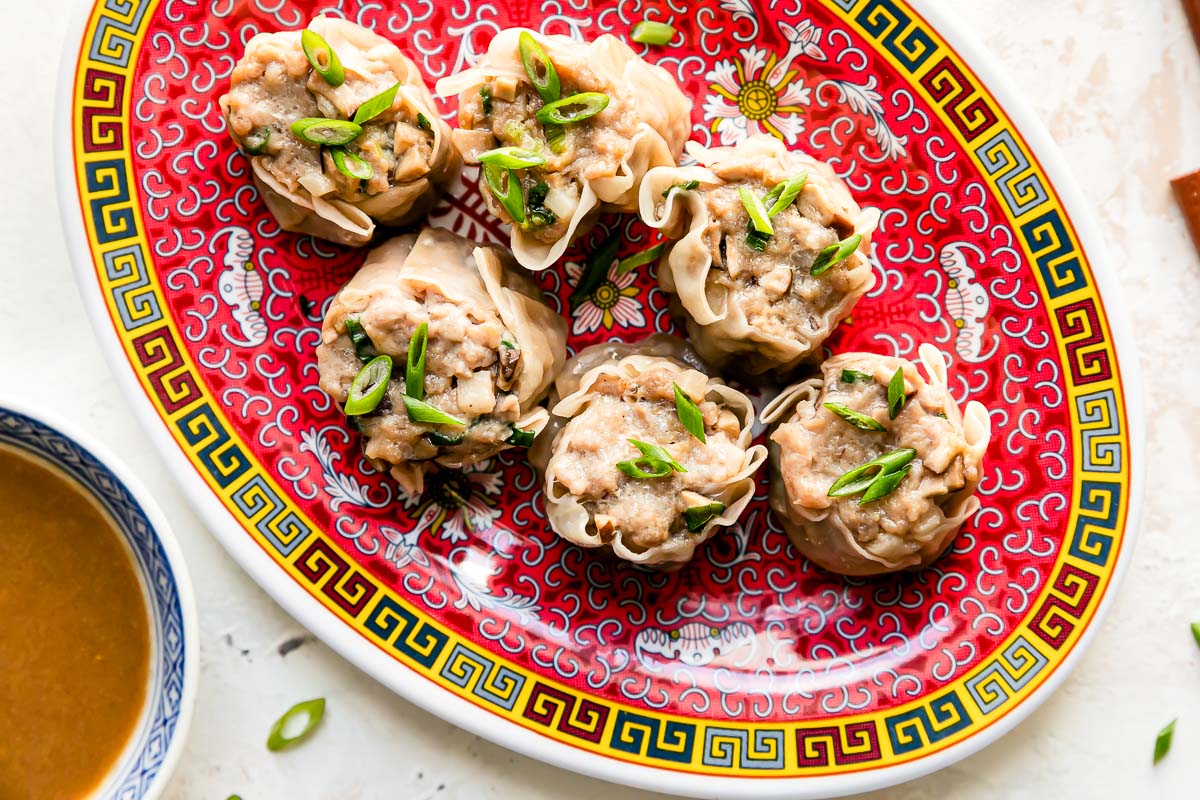
- Steam the siumai: Set up your steamer pot with 2-3 inches of water and bring to a boil over high heat. Lightly spray the steamer baskets with nonstick spray. Arrange the shumai in the baskets with ¼-½ inch of space around each dumpling. Cover and steam for about 7 minutes, until the wrappers are soft and the pork is fully cooked. Transfer to a plate and repeat with remaining dumplings. [gallery columns="2" size="full" ids="37366,37368"]
- Serving: Enjoy warm, straight from the steamer with a simple dipping sauce of Chinese hot mustard and soy sauce. At our house, we mix 1 tablespoon mustard powder with 1 tablespoon cold water to form a paste, then stir in 3 tablespoons soy sauce—adjust to taste. We love serving shumai alongside a full dim sum-style spread: Mom’s egg rolls, sesame chicken wings, char siu bao, and stir fried noodles….the works! Enjoy!


Notes
Ingredient & Equipment Notes:
- Siu mai dumpling wrappers: We always use store-bought wrappers for shumai. Look for 2½-3-inch round wrappers, usually found in the freezer section at well-stocked Asian grocery stores. Can’t find round ones? Use square wonton wrappers and trim off the corners to create a circular shape. Want a fun DIY project? My friend Kristina has a great recipe for homemade shumai wrappers made with flour, cornstarch, and water.
- Shiitake mushrooms: Shiitakes add delicious earthiness and a meaty texture to the filling. If you have access to fresh shiitake mushrooms, use about 1½ ounces (roughly 3 mushrooms). No shiitake? Swap in any mushrooms you like—cremini or white button both work well.
- Canned water chestnuts (often found in the “International” aisle of most grocery stores) are mild in flavor but add irresistible crunch. We always mix them into shumai for texture, and they’re just as good in manapua (char siu bao) or stir-fries.
- Steamer set up: You’ll need a steamer to cook shumai at home, but there are lots of options! My mom uses a classic stainless steel steamer pot similar to this one. I prefer bamboo steamer baskets, which nest perfectly in my Staub Dutch ovens. Our Place also makes spruce steamer baskets designed for their Always Pan.
Storage and Freezing:
- Storage and Reheating: Steamed shumai will keep in an airtight container in the fridge for 3–4 days. Reheat gently in the microwave until warmed through.
- Freezer Instructions: Let the steamed shumai cool completely, then transfer to a freezer bag and freeze for up to 3 months. Thaw in the refrigerator overnight and reheat in the microwave.
Make-Ahead Pork Shumai:
- Option 1: Make the filling ahead. Prepare the filling (Steps 1-2), store in an airtight container, and refrigerate for up to 1 day. Fill and fold dumplings when ready to steam.
- Option 2: Assemble ahead. Make the dumplings (Steps 1-4) and store in a parchment-lined airtight container in the fridge for up to 1 day. Leave a little space between dumplings to prevent sticking. Let them sit at room temp for a few minutes before steaming (Step 5).
Nutrition
- Serving Size:
- Calories: 76
- Sugar: 0.2 g
- Sodium: 134.8 mg
- Fat: 3.8 g
- Saturated Fat: 1.3 g
- Trans Fat: 0 g
- Carbohydrates: 6.7 g
- Fiber: 0.3 g
- Protein: 3.5 g
- Cholesterol: 11.6 mg